
Uber has confirmed that it has begun a collective redundancy process in Portugal, where the American technology company employs approximately 650 people. The announcement, made on Friday, 6 November 2026, follows a worldwide restructuring plan involving around 3,300 jobs. Uber has not disclosed how many positions will be eliminated in Portugal.
The company confirmed the decision to Portuguese business publication ECO. Employees affected by the proposed redundancies have been informed, and the legally required consultation process is under way. However, the departments involved and the timetable for any departures have not been made public.
The announcement raises questions about Uber’s European support operations in Lisbon, where most of its Portuguese employees are based.
Lisbon’s European support centre faces uncertainty
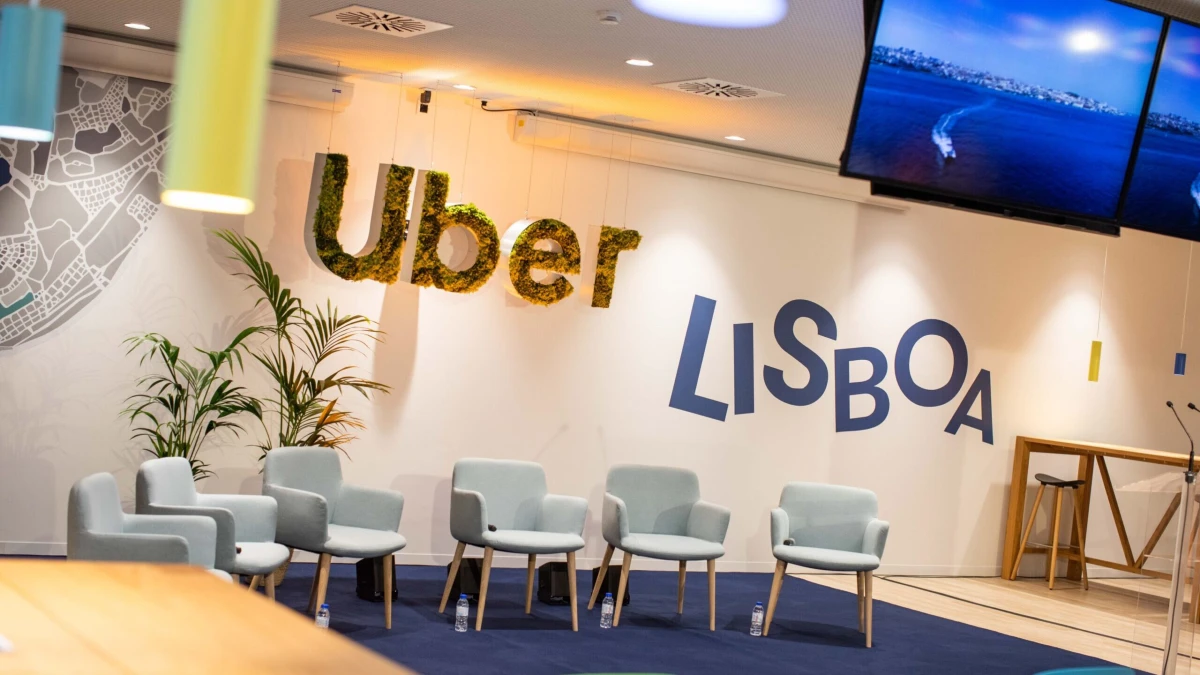
Lisbon plays an important role in Uber’s European operations. The city hosts a European Centre of Excellence, which provides multilingual assistance to customers, drivers and restaurant partners using Uber and Uber Eats across several markets.
According to employment figures previously communicated by the company, most of Uber’s approximately 650 employees in Portugal work at this centre.
This number does not include the drivers and delivery couriers who use Uber’s platforms under separate working arrangements. The collective redundancy process concerns the company’s workforce, rather than everyone earning income through its services.
Although the announcement has created uncertainty around the Lisbon operation, Uber has not announced the closure of its European support centre. Nor has it confirmed which departments will face reductions.
The consultation procedure also means that the announcement should not be interpreted as evidence that all proposed job losses have already taken place.
A global restructuring affecting around 3,300 jobs
The Portuguese decision follows a wider restructuring announced on 2 September 2026 by Uber chief executive Dara Khosrowshahi.
In a message published on the company’s official website, Khosrowshahi outlined plans to reduce Uber’s global workforce by approximately 10%, equivalent to around 3,300 positions.
The company said the changes were intended to simplify its organisation, remove management layers and improve decision-making after years of international expansion.
Uber also plans to reorganise teams and redirect resources towards areas it considers important for future growth. According to the chief executive, the savings generated by the restructuring will help fund innovation and new investments.
Although artificial intelligence and automation have become important subjects across the technology industry, Uber has not identified AI as the direct reason for the redundancies announced in Portugal.
There is another important distinction: the global reduction target cannot simply be applied to Portugal’s workforce. A worldwide cut of 10% does not mean that 65 of Uber’s 650 Portuguese employees will necessarily lose their jobs.
The scale of the local restructuring remains unknown.
A Lisbon operation with a history of workforce cuts
Uber’s European support centre has experienced several changes since its arrival in Portugal.
When the Lisbon operation was announced in October 2017, the company initially expected to create approximately 250 direct jobs. The centre subsequently expanded as Uber developed its services across European markets.
During the Covid-19 pandemic, however, Uber announced a reduction of around 30% of the centre’s workforce in June 2020. At the time, approximately 500 people were employed there.
The operation later recovered. By 2022, Uber was describing Lisbon as its largest centre of this kind in Europe, highlighting the creation of more than 500 direct positions.
The new redundancy procedure therefore represents another significant adjustment for a facility that has become an established part of Lisbon’s international services sector.
For now, the central question is how many jobs will ultimately be affected and which activities will be reorganised. Those details are expected to become clearer as the consultation process progresses.
Until then, Uber’s announcement confirms that Portugal is included in the company’s worldwide restructuring, but not the final extent of its impact on employees in Lisbon.