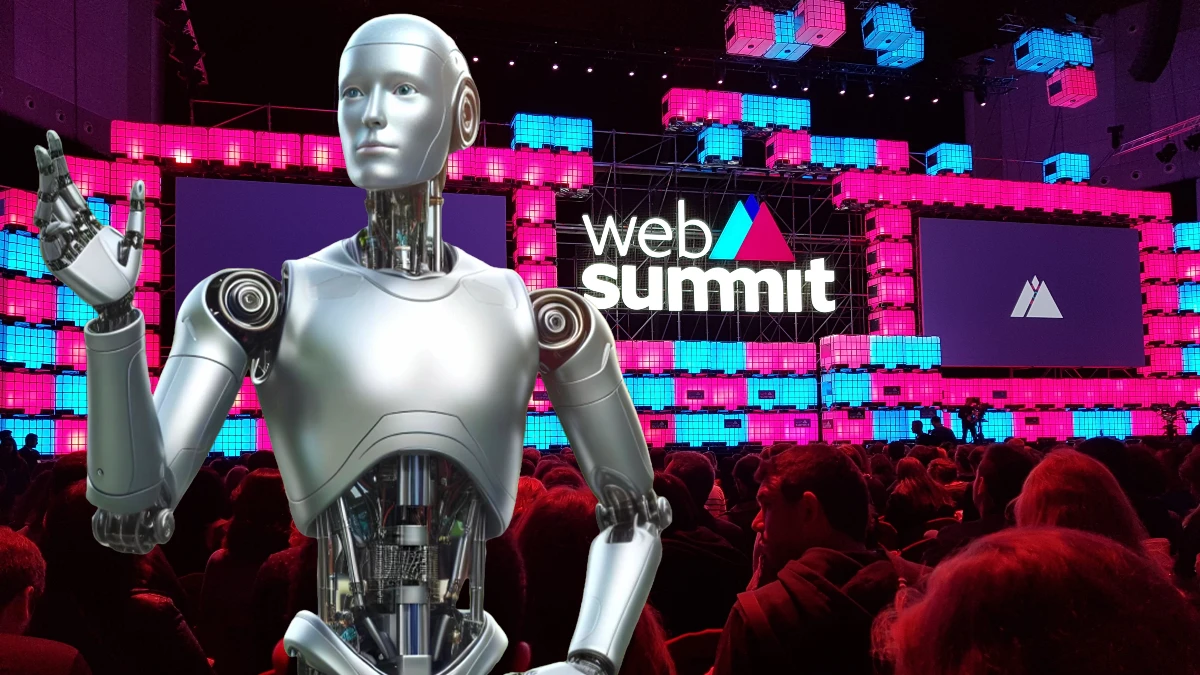
9 Chinese humanoid robots dancing in front of thousands of spectators were among the unexpected stars of Web Summit’s opening night in Lisbon. The performance, held on 9 November 2026 at the MEO Arena, marked a striking start to the technology conference’s tenth edition in Portugal. It also reflected a significant shift in the event’s international profile: China has sent its largest-ever delegation to Web Summit, with artificial intelligence and robotics at the centre of its presence.
The four-day conference, running until 12 November, is expected to attract nearly 70,000 participants, around 900 speakers and more than 2,000 startups. This year, however, some of the most talked-about speakers are not human.
For the first time, humanoid robots have been included among the event’s official speakers, highlighting the growing interest in physical AI: artificial intelligence designed to interact with the real world rather than operate exclusively through software.
Chinese robots make their debut on the Lisbon stage
The opening ceremony began with a synchronised performance by nine humanoid robots developed by Chinese company AgiBot. The machines danced on stage before an audience of thousands, introducing visitors to technologies that are increasingly moving beyond research laboratories.
Other Chinese manufacturers were also represented in the official programme, including UBTech and Galbot.
Among the machines presented was Galbot G1, a wheeled robot equipped with two arms and designed to perform physical tasks in commercial and industrial environments. Its developers envisage applications in shops, pharmacies and factories, where robots could eventually handle repetitive activities and assist human workers.
The demonstrations continued with humanoid machines capable of interacting with presenters and responding to spoken instructions. According to Portuguese broadcaster Renascença 1, the opening event also featured a robotic bartender and a presentation of Chinese aerial mobility technology.
These appearances generated considerable interest, although a staged demonstration should not be confused with proof that a robot can already perform complex jobs independently in everyday working conditions.
Throughout the conference, visitors can discover more of these machines at exhibition stands in Lisbon’s Feira Internacional de Lisboa (FIL) and the MEO Arena.
China’s largest-ever Web Summit delegation

The prominence of Chinese robotics companies is no coincidence. According to Euronews 2, China has brought its largest delegation yet to the Lisbon conference, including representatives of the country’s Ministry of Commerce and Cyberspace Administration.
The growing presence reflects China’s ambitions in a technology sector attracting significant international attention.
While recent discussions about artificial intelligence have largely focused on chatbots, image generators and digital assistants, physical AI seeks to give machines the ability to perceive, navigate and manipulate their surroundings.
For manufacturers, the potential applications extend from warehouses and factories to retail environments and personal assistance. Yet challenges remain, particularly around reliability, safety, operating costs and the ability to adapt to unpredictable situations.
The official Web Summit programme reflects this wider technological transition, with sessions addressing autonomous AI agents, scientific research, digital regulation and the future of work.
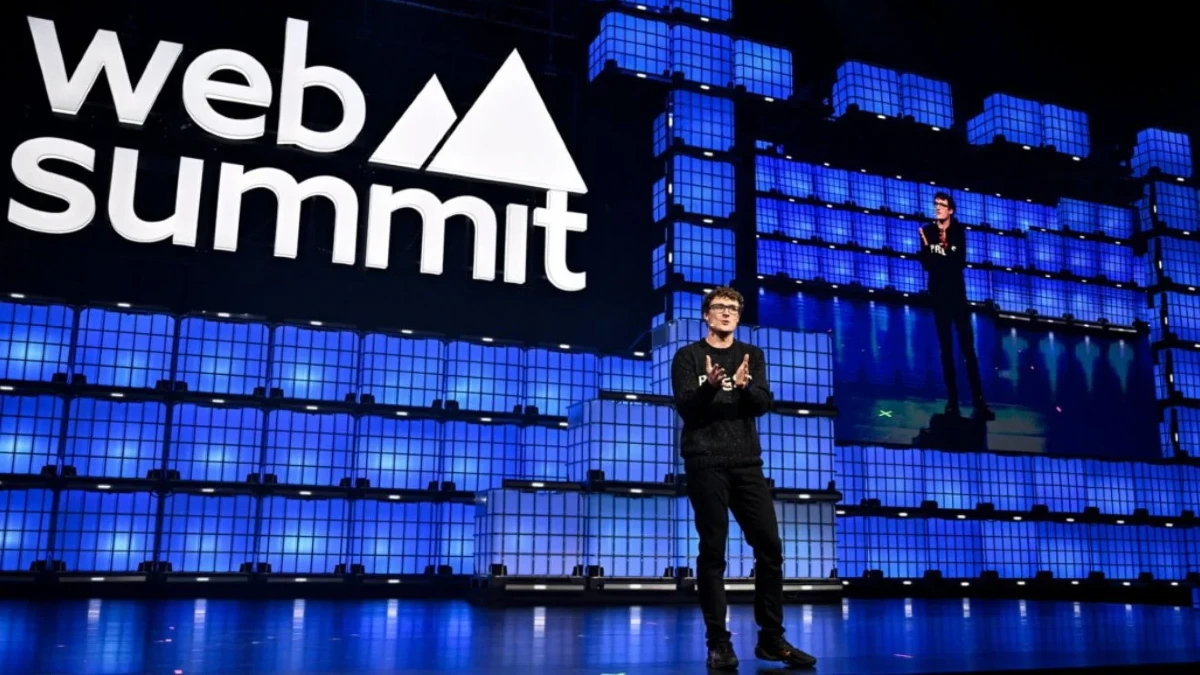
Speaking during the opening ceremony, Web Summit founder Paddy Cosgrave emphasised China’s growing influence in the development of emerging technologies, signalling how the balance of attention between Silicon Valley and Asian manufacturers is changing.
Portugal and Brazil bring hundreds of startups to Lisbon
China may be attracting attention with its robots, but the conference also provides an important international platform for Portuguese-speaking technology companies.
Portugal is represented by 78 startups and technology businesses, with artificial intelligence and health technology among the leading sectors.
According to figures reported by the Portuguese economic press, AI accounts for approximately 18% of the selected companies, followed by health technology at 16%. Around 58% are already generating revenue, with combined annual turnover exceeding €11 million.
The delegation also reflects a broader geographical distribution of entrepreneurship: 39% of the Portuguese startups come from outside the Lisbon and Porto metropolitan areas.
Brazil has an even larger presence, with approximately 300 startups participating. Around 100 are attending through a mission organised by Sebrae and ApexBrasil, two organisations supporting Brazilian businesses and their international development.
On 10 November, the organisations are expected to announce up to 20 startups selected for an incubation programme in Lisbon, scheduled to begin in March 2027.
The initiative is intended to strengthen connections between Brazilian entrepreneurs and European investors, reinforcing Lisbon’s position as a meeting point for technology businesses operating across international markets.
A major technology event with an uncertain future in Portugal
The tenth anniversary also comes at a significant moment for Web Summit’s relationship with Lisbon.
The current agreement, involving an initial public funding commitment of €110 million over ten years, secures the conference’s presence in the Portuguese capital through 2028. Its future beyond that date has not yet been confirmed.
In comments reported by the Portuguese newspaper Expresso, Paddy Cosgrave acknowledged discussions with other major European cities and indicated that a decision could be announced during the 2027 edition.
Venue capacity remains one of the practical challenges. The conference has required approximately 30,000 square metres of temporary structures to accommodate its expanding activities.
For now, however, the focus remains firmly on Lisbon. With Chinese humanoid robots on stage, Portuguese startups seeking international opportunities and a substantial Brazilian delegation, Web Summit 2026 illustrates how the global technology conversation is moving towards machines capable of acting in the physical world.
Whether those robots become everyday colleagues or remain specialised industrial tools will depend on developments far beyond the conference stage.