In the wild landscapes of northeastern Portugal, an ambitious conservation project could help prepare the Douro’s waterways for an extraordinary comeback. Rewilding Portugal hopes to restore three streams and plant 5,000 native trees, creating healthier habitats for European beavers that may gradually return to the region. To make it happen, the organisation is competing for €30,000 in funding through an international conservation initiative.
The project follows a remarkable discovery in 2025, when a European beaver was captured on a wildlife camera in the Douro International Natural Park. It was the first confirmed record of the species in Portugal after centuries of absence.
But a single sighting does not mean that beavers have established a permanent population in the country. The challenge now is to restore the waterways that could support their natural expansion, while improving the surrounding ecosystems for many other species.
Three waterways in the International Douro Natural Park could be restored
Known as The Beaver’s Return: Preparing Rivers for Their Expansion, the initiative focuses on three streams in the International Douro Natural Park, close to Portugal’s border with Spain.
This is a landscape of deep valleys, rocky hillsides and winding waterways, where the Douro and its tributaries form part of one of the Iberian Peninsula’s most distinctive natural environments. Yet not every stretch of river remains in good ecological condition.
According to Rewilding Portugal, several potentially suitable habitats have suffered from the loss of native riverside vegetation. Invasive plant species have also spread along some watercourses, competing with local trees and disrupting the natural character of the riverbanks.
One of the project’s central proposals is to plant 5,000 native trees. Restoring this vegetation would help stabilise riverbanks, limit soil erosion and gradually recreate the wooded corridors on which many forms of wildlife depend.
The plans also include removing invasive species and building two small structures inspired by the dams that beavers construct naturally.
These structures would be designed to slow water flow and retain moisture in the landscape, reproducing some of the ecological benefits associated with beaver activity.
For a region where summer droughts place increasing pressure on water resources, such interventions could help improve local water retention. Amphibians, birds and invertebrates that depend on freshwater habitats may also benefit from healthier river corridors.
The aim is not simply to prepare a home for one returning animal, but to restore the natural processes that allow rivers and their surrounding habitats to function more effectively.
The remarkable animal that can reshape entire landscapes

Few European mammals have the ability to alter their surroundings quite like the beaver.
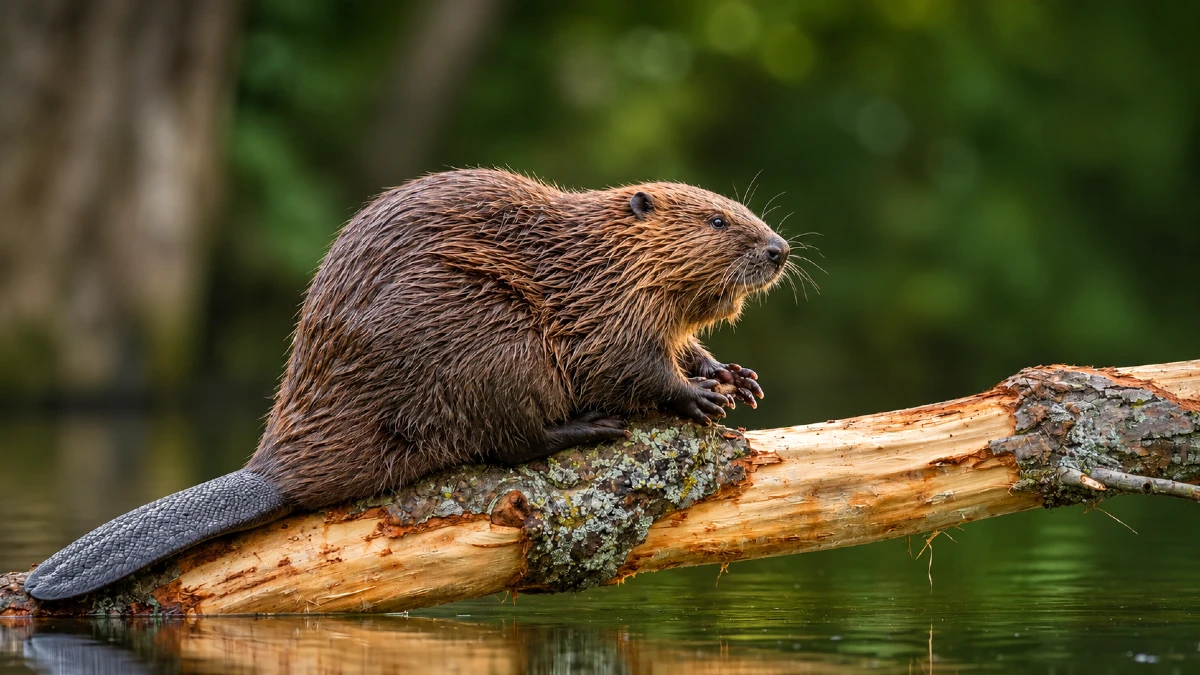
The European beaver (Castor fiber) is often described as an ecosystem engineer, a term used for species whose behaviour can significantly change the physical environment around them.
By cutting branches, gathering wood and constructing dams, beavers can slow the movement of water through certain waterways. In suitable conditions, their activity creates ponds, small wetlands and a mosaic of habitats that support a remarkable variety of wildlife.
These changes can encourage sediment retention, reduce erosion and help some areas remain wetter during dry periods. They can also create new feeding and breeding grounds for amphibians, aquatic insects and birds.
Of course, beaver activity does not have identical effects everywhere. The benefits depend on the characteristics of each watercourse, and dams can sometimes create challenges for nearby human activities. But in degraded freshwater environments, the animals can play an important role in ecological recovery.
Their return to Portugal was documented in 2025, when cameras installed by Rewilding Portugal recorded an individual near the mouth of the Tormes River, within the International Douro Natural Park.
The sighting was not entirely unexpected. Evidence of beaver activity had already been found on the Spanish side of the border, just a few kilometres away, suggesting that the species might eventually cross into Portuguese territory.
We previously explored the historic return of the European beaver to Portugal, following an absence generally estimated at around five centuries.
The new project is not a reintroduction programme. No beavers will be captured, transported or released into Portuguese rivers.
Instead, Rewilding Portugal wants to encourage a natural process: allowing the animals to spread into suitable habitats at their own pace, while ensuring that those habitats are in better ecological condition when they arrive.
That distinction matters. The 2025 observation confirmed the species’ presence, but it did not establish that a breeding population had settled permanently in Portugal.
A €30,000 conservation grant depends on an international vote
Turning these restoration plans into reality will require funding. Rewilding Portugal has entered its proposal into a competition organised by the European Outdoor Conservation Association (EOCA), a conservation initiative supported by companies from the outdoor recreation industry.
The association helps finance environmental projects around the world, ranging from wildlife protection to habitat restoration.
The Portuguese proposal is among the finalists in the November 2026 public vote. It faces competition from initiatives including pangolin conservation in Laos, wetland restoration for fishing cats in Nepal and the recovery of underwater kelp forests in Norway.
Under the competition’s announced arrangements, two selected projects will each receive €30,000 in funding. The Portuguese initiative has not yet secured that support.
For Rewilding Portugal, a successful application would provide an opportunity to begin practical restoration work across the three selected streams, removing invasive plants, re-establishing native vegetation and improving the conditions needed for healthy freshwater ecosystems.
The work would be valuable even if beavers take years to establish themselves in the area.
That is what makes this project particularly interesting. The return of a long-absent species has become a reason to restore a wider landscape, rather than simply a wildlife discovery to celebrate.
Whether beavers continue their natural expansion into Portugal remains uncertain. But by repairing damaged river habitats now, conservationists hope to create waterways that are more resilient, more diverse and better equipped to support the wildlife of the Douro for years to come.