In Portugal, the smell of sardines sizzling over charcoal is often the first sign that a celebration is underway. As June arrives, neighbourhood streets fill with smoke, music and conversation, while this humble silver fish takes centre stage at some of the country’s most beloved festivals. Yet Portugal’s relationship with the sardine goes far beyond food. It is a story of fishing communities, family traditions, colourful art and an unmistakable sense of Portuguese identity.
Once regarded as an inexpensive meal for working families, the sardine has become one of Portugal’s most recognisable cultural symbols. It appears on restaurant grills, in beautifully decorated tins, on ceramic souvenirs and across the streets of Lisbon during the festivities of Saint Anthony. Few ingredients capture the country’s blend of simplicity, creativity and conviviality quite so vividly.
From humble beginnings to a national favourite

For generations, sardines were an important part of everyday life in Portugal, particularly among coastal communities and working-class families. Relatively affordable and widely available, they offered a valuable source of nourishment at a time when meat was often beyond the reach of poorer households. Served with bread, boiled potatoes or seasonal vegetables, they could turn a handful of basic ingredients into a satisfying meal.
In households where every ingredient mattered, making food stretch was a necessity. A single fish might be shared, with bread used to soak up its juices and capture its rich flavour. Such practices reflect a resourceful approach to cooking, shaped by modest means and a determination to waste as little as possible.
Over time, the sardine shed its reputation as merely a poor person’s food. Today, it is enjoyed across Portuguese society, from informal neighbourhood gatherings to traditional restaurants. The summer months, particularly June through September, are especially associated with fresh sardines, when their higher fat content can give them a richer flavour and more succulent texture.
Despite this transformation, the most celebrated preparation remains remarkably uncomplicated. Fresh fish, coarse salt and glowing charcoal are often all that is needed. The appeal lies not in elaborate recipes, but in knowing how to bring out the best in an ingredient that generations of Portuguese cooks have learned to appreciate.
Why sardines are part of Portuguese culture

In Portugal, sardines belong as much to the streets as they do to the dinner table. Nowhere is this more apparent than in Lisbon during the Festas de Santo António, the celebrations held every June in honour of Saint Anthony. Historic neighbourhoods such as Alfama, Mouraria and Bica come alive with decorations, music, dancing and the irresistible aroma of fish cooking outdoors.
The celebrations reach beyond the capital. In Porto, the festivities surrounding São João, or Saint John’s Day, also bring families and friends together around food, music and late-night street parties. Grilled sardines are among the traditional foods associated with these occasions.
These customs help explain why the fish has become such an enduring national symbol. It represents the fishing heritage of Portugal’s Atlantic coast, but also something less tangible: the pleasure of sharing a meal, gathering with neighbours and celebrating ordinary life.
From ceramic souvenirs to contemporary design
The sardine has also become one of the most distinctive motifs in Portuguese visual culture. Its familiar silhouette lends itself to almost endless reinterpretations, appearing on ceramics, textiles, posters and decorative objects. Some designs draw on traditional patterns, while others use bold colours, playful illustrations or contemporary graphic styles.
Lisbon has turned this creative tradition into a public celebration. The Sardinhas competition, associated with the city’s June festivities, invites artists and members of the public to reinvent the shape of a sardine through original illustrations. Selected designs help give the celebrations their visual identity, transforming an everyday fish into a canvas for artistic expression.
Portuguese ceramics provide another connection between nature, humour and decorative art. The country’s artistic heritage includes the work of Rafael Bordalo Pinheiro, the nineteenth-century caricaturist and ceramic artist celebrated for his naturalistic and satirical creations. Although he should not be credited with inventing today’s decorative sardine, his work belongs to the broader artistic tradition that helped make playful representations of everyday life a recognisable feature of Portuguese design.
Sardines also appear in the popular songs and festivities of June. Their cultural significance is so firmly established that they have even found their way into the Portuguese language, where a familiar expression involving sardines and hot coals describes the pursuit of personal advantage.
The art of grilling sardines in Portugal

There is something deceptively simple about a perfectly grilled sardine. The ingredients are minimal, the cooking time is short and the fish is usually served whole. Yet achieving the right balance between crisp skin and succulent flesh requires attention to freshness, seasoning and heat.
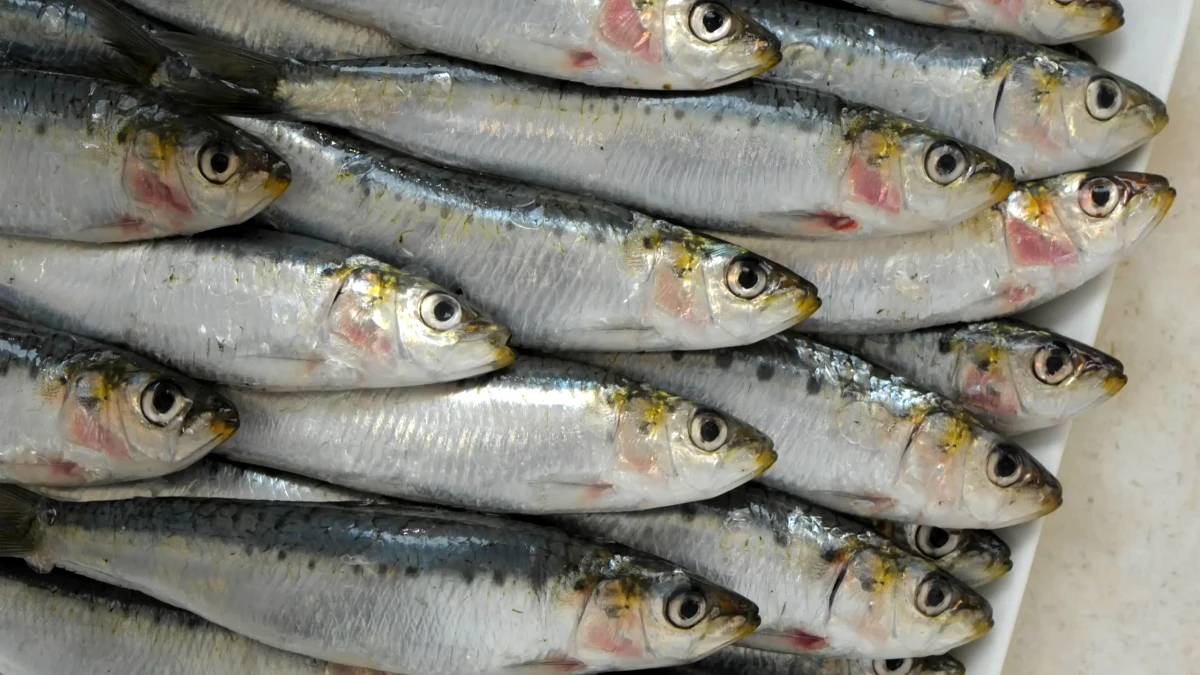
Fresh sardines are particularly sought after during the warmer months. When choosing them, look for bright, clear eyes, shiny silvery skin and firm flesh. They should have a clean, fresh smell of the sea rather than a strong or unpleasant fishy odour.
Traditional Portuguese cooking favours a charcoal grill, known as a grelha. The fish is generally cooked whole, with its bones intact, over hot embers rather than direct flames. This allows the skin to develop colour while helping the flesh retain its natural moisture.
A well-grilled sardine should have lightly crisp skin and tender, juicy flesh. The meat should separate easily from the central bone without becoming dry or falling apart excessively. Its distinctive richness is part of the pleasure, especially when the fish is in season.
Seasoning is usually restrained. A little coarse salt is enough to complement the natural flavour, while the charcoal contributes a subtle smoky note. Too much salt can overwhelm the fish, just as excessive cooking can rob it of its delicate texture.
How Portuguese people eat grilled sardines

The classic accompaniment is a plate of boiled potatoes, grilled peppers and a simple tomato or green salad. These familiar ingredients balance the richness of the fish without competing with its flavour.
But there is another, particularly satisfying way to enjoy sardines: served on a slice of rustic bread. The bread absorbs the juices and smoky oils as the fish is eaten, making the experience deliciously informal. During Portugal’s summer festivals, this combination is as much a part of the atmosphere as the music and street decorations.
Portuguese canned sardines: a tradition in a tin

Portugal’s affection for sardines does not end when the charcoal grills are extinguished. The country has a long-established fish-canning tradition, and Portuguese canned sardines have become a speciality in their own right.
Preserving sardines changes their texture and flavour rather than simply reproducing the taste of fresh fish. The result is a softer, richer product that can be enjoyed straight from the tin or incorporated into a wide variety of dishes. Olive oil is a popular preserving medium, although sardines are also sold in other oils and sauces.
The choice of oil makes a noticeable difference to the finished product. Extra virgin olive oil can contribute a particularly distinctive flavour, but it is not essential for safe preservation. That depends primarily on the canning process, including appropriate heat treatment and an airtight seal. Some producers also add ingredients such as chilli, garlic, tomato or aromatic herbs.
In Portugal, canned sardines are enjoyed as a simple snack, a starter or part of a larger meal. They work beautifully with crusty bread, can be added to salads and make a convenient ingredient for pasta dishes. In a traditional tasca, a small Portuguese tavern, good preserved fish can be every bit as appealing as a freshly cooked speciality.
When the packaging becomes part of the attraction
One of the pleasures of exploring Portuguese conservas, or preserved seafood, is discovering their packaging. Many tins feature vintage-inspired illustrations, intricate patterns or colourful designs that recall the country’s maritime and industrial heritage.
Some are attractive enough to become keepsakes, particularly those sold in specialist shops. Yet the best reason to buy them remains the quality of the fish inside. Portuguese conservas are appreciated not only for their appearance but also for the craftsmanship and variety behind the products.
They also make a practical culinary souvenir. Unlike fresh seafood, unopened canned sardines are easy to transport and can bring a taste of Portugal to the table long after a holiday has ended.
How to enjoy Portuguese canned sardines
For a simple tasting, start with sardines preserved in good-quality olive oil and serve them at room temperature with fresh bread. A squeeze of lemon or a little chopped parsley can add brightness without overpowering the fish.
Do not be too quick to discard the oil. When suitable for eating, it can be used to dress a salad, flavour toast or add depth to a simple pasta dish. Pair the sardines with a crisp Portuguese white wine, a refreshing beer or sparkling water for an uncomplicated meal.
Experimenting with different preparations is part of the enjoyment. Sardines in tomato sauce, spicy oil or herb-infused marinades offer quite different experiences, even when the fish itself is the same.
Sardines in the Portuguese language
The sardine’s place in Portuguese life is reflected in one of the country’s most colourful expressions: “puxar a brasa à sua sardinha”, literally meaning “to pull the hot coals towards one’s own sardine”.
The expression describes someone who tries to advance their own interests, sometimes at the expense of others. Its imagery is wonderfully domestic: imagine several people cooking fish over a shared fire, each attempting to draw the hottest embers towards their own meal. It is a small scene that captures a very recognisable aspect of human behaviour.
The fish also belongs to the world of Portuguese popular music, particularly the marchas populares performed during Lisbon’s June celebrations. These neighbourhood parades combine music, costumes and choreography, celebrating local identity and community traditions. While fado remains one of Portugal’s most internationally recognised musical genres, it is in the lively atmosphere of the summer street festivals that the sardine finds its most natural cultural setting.
From modest fishing villages to the streets of Lisbon, from charcoal grills to illustrated tins, the sardine tells a surprisingly rich story about Portugal. It connects generations, brings people together and continues to inspire new forms of creativity. Few foods have travelled so far beyond the plate while remaining so closely tied to the everyday life of a nation.