
Not a single public school appears in Portugal’s top 10 school rankings based on the 2025 national exams. All ten places are occupied by private institutions, while the highest-ranked public school comes in at just 38th. The results highlight a significant gap in exam performance, although they also raise an important question: how much can exam scores really tell us about the quality of a school?
The rankings cover 570 schools across Portugal, including 479 public and 91 private institutions. They are based on results from the first sitting of national examinations during the 2024–2025 academic year, with only schools recording more than 100 exam papers included.
Once again, Porto stands out, with three schools from the city and its surrounding area occupying the entire podium.
Porto takes the top three places in Portugal’s school rankings
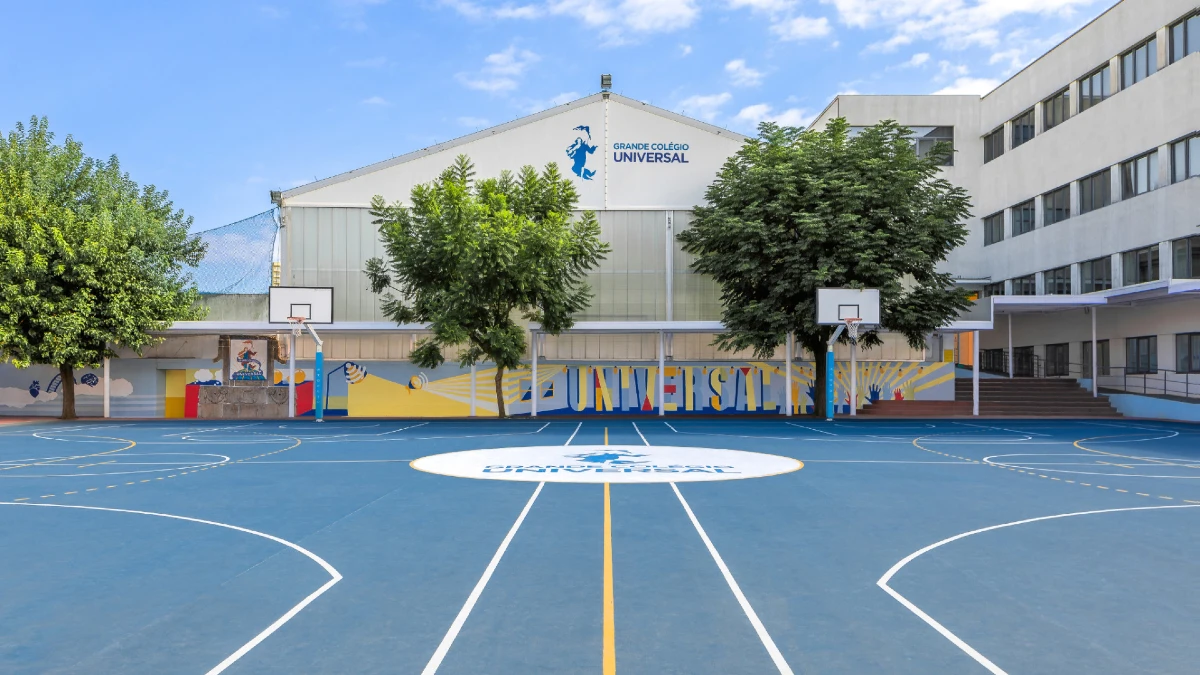
At the top of the table is Grande Colégio Universal, a private school on Rua da Boavista in Porto. Founded in 1910, the institution achieved an average exam score of 16.93 out of 20, retaining the first place it held in the previous edition.
Two other private schools from the Porto metropolitan area follow closely behind.
Colégio Nossa Senhora do Rosário, also in Porto, ranks second with an average of 16.59 out of 20. In third place is Colégio Efanor, located in neighbouring Matosinhos, with 16.32 out of 20.
The top six schools are:
| Rank | School | Location |
|---|---|---|
| 1 | Grande Colégio Universal | Porto |
| 2 | Colégio Nossa Senhora do Rosário | Porto |
| 3 | Colégio Efanor | Matosinhos |
| 4 | Academia de Música de Santa Cecília | Lisbon |
| 5 | Colégio Novo da Maia | Maia |
| 6 | Colégio D. Diogo de Sousa | Braga |
Completing the top ten are Colégio de S. Tomás, Salesianos de Lisboa – Colégio Oficinas de São José, Colégio Nova Encosta in Paços de Ferreira, and Colégio da Rainha Santa Isabel in Coimbra.
The strong showing by schools in Porto and northern Portugal is one of the ranking’s most notable geographical patterns. But the absence of public institutions from the top ten is even more striking.
Where does Portugal’s best public school rank?
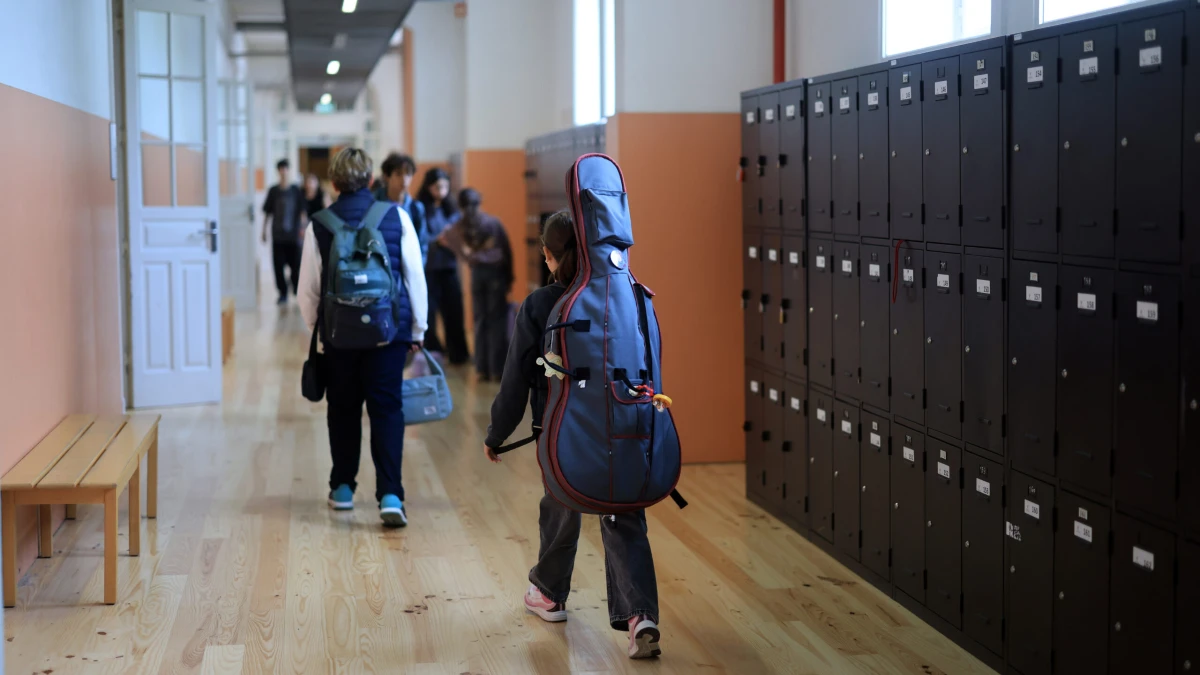
To find the first state-funded school, readers must go all the way down to 38th place.
That position belongs to Escola Artística do Conservatório de Música do Porto, which recorded an average score of 14.01 out of 20 across 121 examination papers.
Interestingly, this represents a higher score than the 13.85 out of 20 achieved by the best public school in the previous ranking. Yet its overall position has fallen: last year’s leading public institution was ranked 33rd, compared with 38th this time.
Other public schools also performed well.
Escola Secundária D. Filipa de Lencastre, in Lisbon, takes second place among state schools, while Escola Artística de Soares dos Reis, in Porto, ranks eighth within the public sector.
223 public schools achieving an average above the national mean, 61.9% are located in northern Portugal
Secondary schools in Monção, Alves Martins in Viseu and Eça de Queirós in Póvoa de Varzim are also among the better-performing public institutions.
The geographical distribution offers another revealing detail. Of the 223 public schools achieving an average above the national mean, 61.9% are located in northern Portugal, according to the figures accompanying the rankings.
This concentration suggests that regional differences deserve attention alongside the more widely discussed divide between public and private education.
At the other end of the table, exam scores fall below 10 out of 20

The rankings also expose substantial differences between individual schools.
At the bottom is Escola Portuguesa da Guiné-Bissau, a private institution, with an average score of 6.66 out of 20. Just above it is Escola Secundária da Baixa da Banheira, a public school in the municipality of Moita, which recorded 7.09 out of 20.
Other low-ranking institutions are located in areas including Odivelas, Lisbon, Coimbra and Camarate.
60 public schools with average exam results below 10 out of 20, 61.7% are situated in the Lisbon and Setúbal districts.
Among the 60 public schools with average exam results below 10 out of 20, 61.7% are situated in the Lisbon and Setúbal districts.
This regional contrast is significant. While northern Portugal accounts for a substantial proportion of public schools performing above the national average, Lisbon and Setúbal account for a large share of those at the lower end of the public-school rankings.
However, the results also demonstrate that weaker exam performance is not exclusive to state education. The lowest-ranked institution in the overall table is itself a private school.
Do Portugal’s private schools really provide a better education?
The top ten results might suggest a straightforward conclusion: private schools outperform public schools in Portugal.
But the rankings measure national examination results, not the overall quality of education. That distinction matters, particularly for families deciding where to enrol their children.
A school’s average examination score can be influenced by several factors beyond classroom teaching.
These include:
- Students’ socioeconomic backgrounds, which can affect access to educational resources and support outside school.
- Admissions and student selection, which may differ between institutions.
- The composition of each school’s student population, including differences in educational needs and academic pathways.
- Student progress over time, which is not captured by a single set of examination averages.
- The number of examination papers, especially for schools close to the minimum threshold required for inclusion.
The presence of Porto’s music conservatory as the highest-ranked public institution is another reminder that schools do not all follow identical educational models.
Specialist institutions may offer distinctive programmes, while other schools serve broader student populations with different needs and circumstances.
It would therefore be misleading to interpret the top ten as proof that private education is universally superior to public education across Portugal.
The figures establish something more specific: among schools meeting the ranking’s inclusion criteria, private institutions achieved the ten highest average scores in the first sitting of the 2025 national examinations.
For parents comparing schools, these results can provide a useful starting point. But exam performance is only one part of the picture. Teaching approaches, student support, school environment, available subjects and individual learning needs can be just as important when choosing an institution.