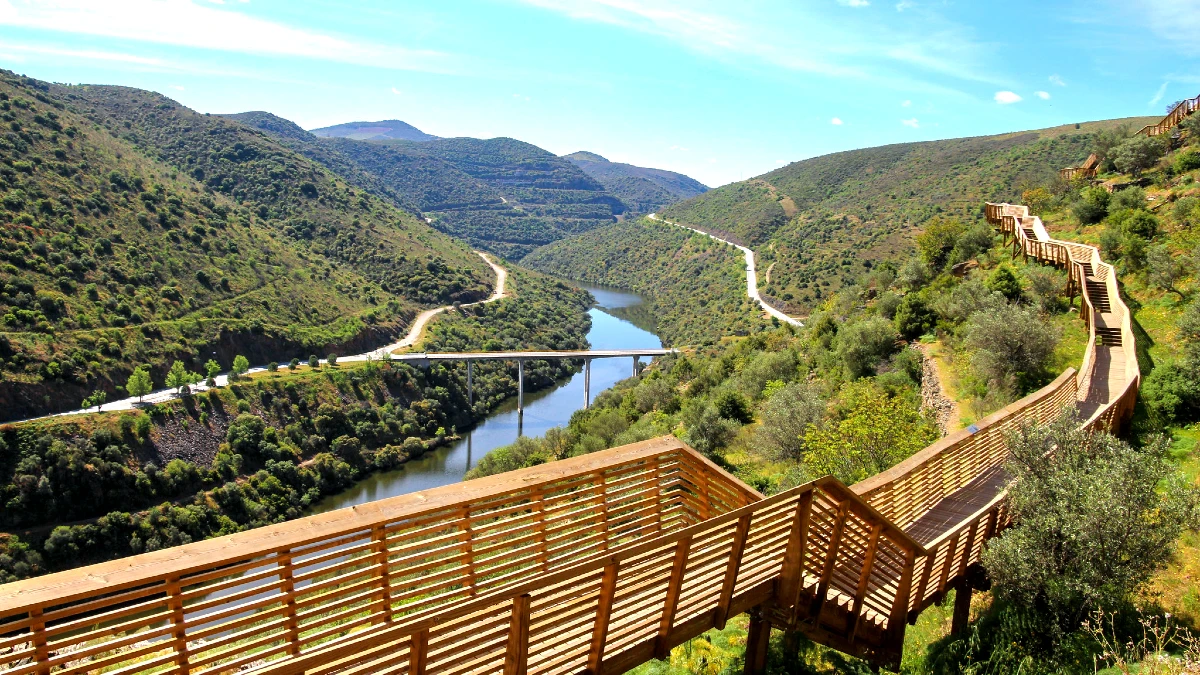
In a remote corner of northern Portugal, a wooden walkway descends a rugged hillside towards the meeting point of two rivers. It is just 930 metres long, yet its 890 steps reveal a landscape shaped by water, wildlife and thousands of years of human history. Welcome to the Passadiços do Côa, one of the most remarkable short walks in the Douro region.
Near Vila Nova de Foz Côa, the walkway follows the steep slopes above the Côa Valley, descending approximately 160 metres from the area surrounding the Côa Museum towards a disused railway station near the river’s confluence with the Douro.
The distance may seem modest, but the terrain tells a different story. Wooden staircases cling to the hillside, opening onto views of rocky slopes, terraced fields and the narrow ribbon of water below. In the surrounding valleys, birds of prey circle above cliffs that have sheltered wildlife for centuries.
What makes this particular walk extraordinary, however, is its setting. The Passadiços do Côa lie in a region associated with two UNESCO World Heritage landscapes: the prehistoric rock art of the Côa Valley and the Alto Douro Wine Region.
A short walk with a surprisingly demanding descent
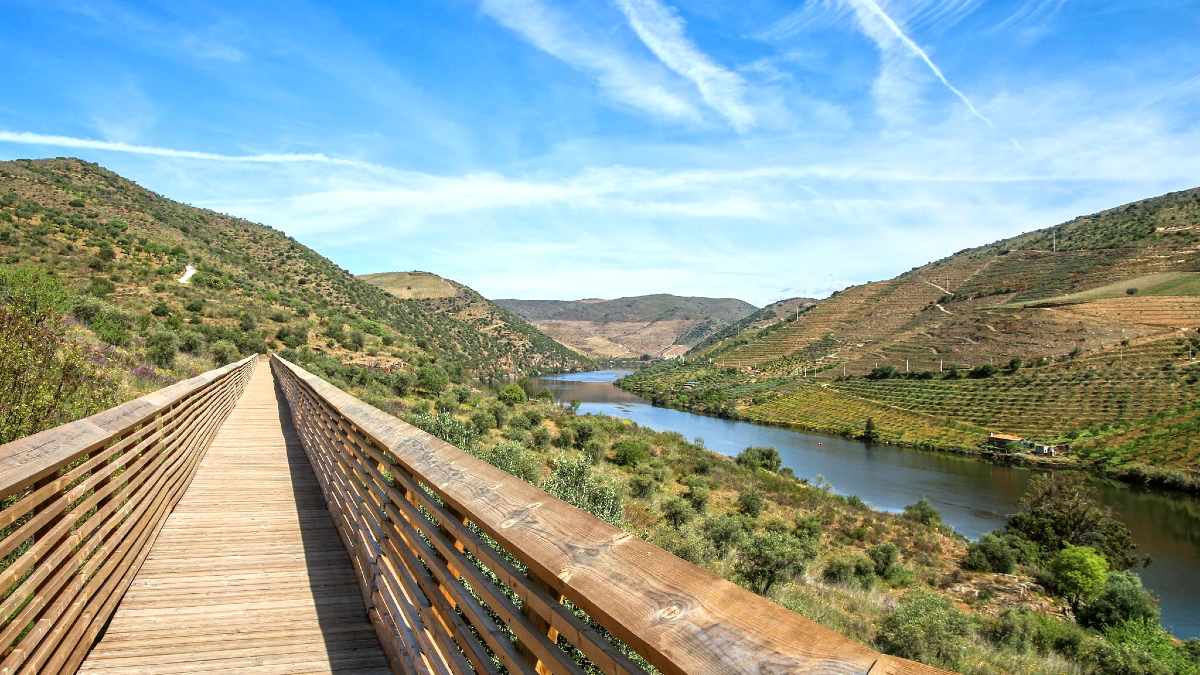
The Passadiços do Côa opened in September 2022, creating a walking route across a steep hillside that had previously been difficult to explore on foot.
The wooden structure follows the contours of the terrain rather than cutting through it. Staircases descend between rocky outcrops and Mediterranean vegetation, occasionally widening to reveal views across the valley. From higher sections, the river appears far below, framed by hills that stretch towards the horizon.
The route connects the Côa Museum area with the former Côa railway station, close to the point where the Côa flows into the Douro. Along the way, the landscape changes subtly: dry slopes give way to patches of vegetation, while terraces and old agricultural structures reveal how people have adapted to this demanding environment.
The numbers are deceptive. At 930 metres, the walk is shorter than many urban parks, but its 890 steps and approximately 160 metres of elevation change make it physically demanding.
A descent generally takes around 45 minutes, depending on the number of stops. Walking back uphill is a considerably greater challenge, particularly in warm weather. Anyone planning to return to the museum on foot should allow additional time and assess their fitness before setting out.
The route is unsuitable for pushchairs and visitors who cannot comfortably manage long flights of stairs. Yet for those prepared for the effort, the changing perspective on the valley is the walk’s greatest reward.
Where the Côa meets the Douro

The Côa River rises in the mountains of central Portugal and travels northwards before joining the Douro near Vila Nova de Foz Côa. Its valley is markedly different from the postcard image of the Douro associated with vineyards, river cruises and wine estates.
Here, the terrain is more austere. Rocky hillsides rise sharply from the water, their surfaces broken by low vegetation, olive trees and occasional agricultural terraces. The landscape has a distinctly Mediterranean character, shaped by hot summers, relatively dry conditions and centuries of cultivation.
The walk offers a particularly revealing perspective on this geography. From the wooden steps, visitors can observe the relationship between the river and the surrounding hills, as well as the traces of human activity that remain visible on the slopes.
This is also a landscape of considerable ecological importance.
Part of the Côa Valley Archaeological Park overlaps with the Côa Valley Special Protection Area, which forms part of the European Natura 2000 network. The designation recognises the importance of the area for protected wildlife, particularly birds associated with rocky habitats.
Among the species recorded in the wider region are griffon vultures, Egyptian vultures, golden eagles and Bonelli’s eagles. These birds depend on relatively undisturbed habitats, making the protection of cliffs and surrounding ecosystems especially important.
Sightings are never guaranteed, but the possibility of observing a large bird of prey soaring above the valley adds another dimension to the walk. Visitors should remain on the designated route and avoid disturbing wildlife.
A landscape inhabited since the Ice Age
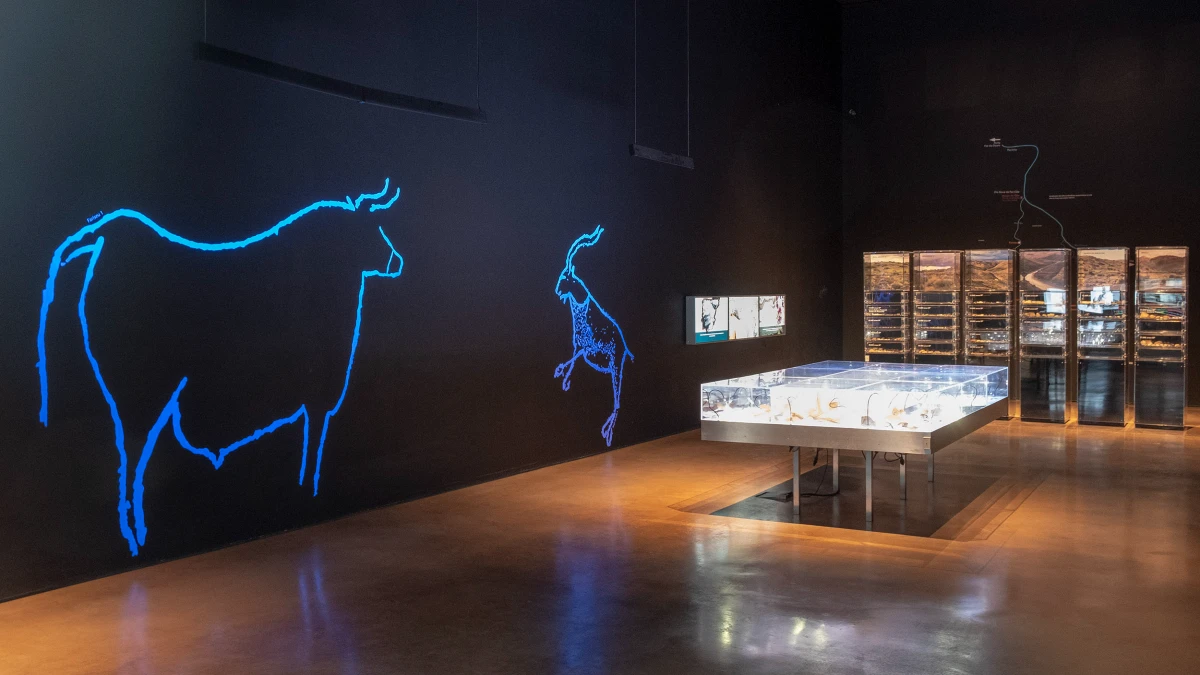
Long before the first vineyards appeared on the slopes of the Douro, people were leaving images on the rocks of the Côa Valley.
The region contains one of the world’s most important concentrations of open-air prehistoric rock art. Its engravings include representations of horses, aurochs and other animals, some dating back to the Upper Palaeolithic.
Unlike cave paintings hidden deep underground, many of the Côa Valley’s prehistoric images were created on exposed rock surfaces. Their survival offers an extraordinary record of human expression in a landscape that has been inhabited and transformed over thousands of years.
The Prehistoric Rock Art Sites in the Côa Valley were inscribed on the UNESCO World Heritage List in 1998. The Alto Douro Wine Region received its own World Heritage designation in 2001, recognising a cultural landscape shaped by centuries of viticulture.
These two UNESCO recognitions reflect different chapters of the region’s history. One preserves evidence of some of Europe’s earliest artistic traditions; the other acknowledges the long relationship between communities, agriculture and the steep slopes of the Douro.
The Passadiços do Côa offer an introduction to this setting, although the walkway itself should not be confused with a visit to the prehistoric engraving sites.
The principal rock art locations are visited separately, through organised tours. Travellers hoping to see the engravings should arrange their visit through the Côa Museum and its associated visitor services.
The Côa Museum: understanding the valley before exploring it
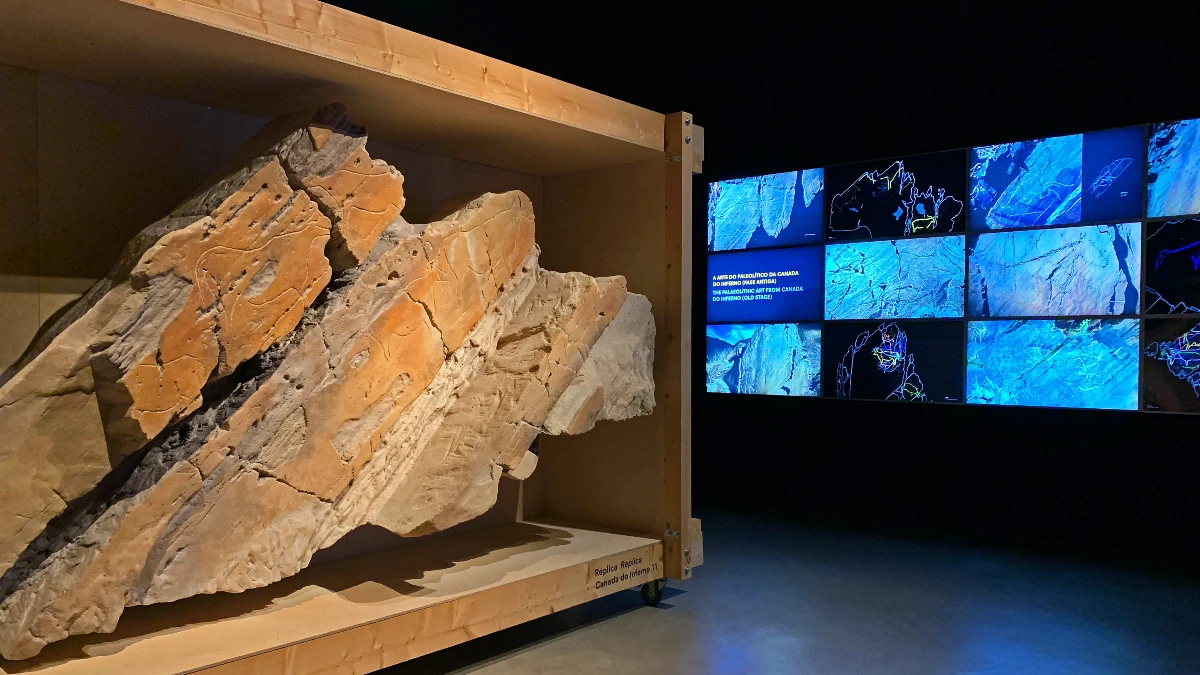
Perched above the valley, the Côa Museum is one of the most important cultural landmarks in this part of Portugal.
Its exhibitions explore the prehistoric communities that inhabited the region, the techniques used to create rock engravings and the archaeological discoveries that transformed our understanding of the valley.
The museum also provides a broader explanation of the surrounding territory, placing its prehistoric heritage within the geological and environmental history of the region.
Visiting before the walk can change the way the landscape is perceived. The hills and exposed rock faces become more than scenery; they form part of a territory where human presence can be traced across an exceptionally long period.
The museum is also the most convenient starting point for the Passadiços do Côa.
Visitors arriving by car can use the museum’s upper parking area. Access to the walkway is located near the lower part of the building, close to the restaurant area, from where the route begins its descent towards the river.
How to prepare for the Passadiços do Côa
Although the route is relatively short, preparation matters. The combination of steep steps, exposed slopes and seasonal heat can make the walk more demanding than expected.
| Practical information | Details |
|---|---|
| Distance | 930 metres |
| Number of steps | 890 |
| Elevation change | Approximately 160 metres |
| Estimated duration | Around 45 minutes, depending on direction and pace |
| Starting point | Côa Museum, Vila Nova de Foz Côa |
Sturdy walking shoes are essential, particularly on the longer flights of stairs. Carry drinking water, use sun protection and avoid the hottest part of the day during summer.
Spring and autumn are generally more comfortable seasons for exploring the valley. In late winter, the surrounding countryside can also be transformed by almond blossom, which typically appears between February and March, depending on the weather.
Visitors should remember that the route is linear rather than circular. Reaching the bottom does not automatically provide transport back to the museum, so arrangements for the return journey should be considered in advance.
Opening conditions may change because of maintenance or adverse weather. Checking with the Côa Museum or local tourism services before travelling is advisable.
Beyond the walkway: villages, viewpoints and the Douro’s quieter landscapes

The Passadiços do Côa are an excellent starting point for exploring a region that remains less familiar to many international visitors than the western stretches of the Douro Valley.
A short drive away, Castelo Melhor preserves the remains of a medieval castle overlooking the surrounding countryside. The village offers a glimpse of rural life in a territory where stone buildings, narrow streets and agricultural traditions remain closely connected to the landscape.
Almendra, another historic village in the municipality of Vila Nova de Foz Côa, is known for its traditional architecture and traces of its long history.
Travellers with more time can venture towards the Douro International Natural Park, where the river forms part of the border between Portugal and Spain. The viewpoints of Penedo Durão and Carrascalinho reveal vast river gorges and cliffs, providing a striking contrast with the more cultivated landscapes of the central Douro.
These destinations require separate journeys by road, but together they reveal the geographical diversity of northeastern Portugal.
The region’s food and wine traditions are another reason to stay longer. Local restaurants serve dishes rooted in the agricultural and pastoral history of the interior, while the wines of the Douro reflect one of Europe’s most distinctive wine-growing landscapes.
For visitors accustomed to the better-known attractions of Porto and the Douro’s wine estates, the Côa Valley offers a different perspective on northern Portugal.
Its appeal lies not in the distance covered, but in the concentration of landscapes and history encountered along the way. In less than a kilometre, the Passadiços do Côa bring visitors face to face with steep river valleys, protected wildlife and a territory whose human story stretches back to the Ice Age.