
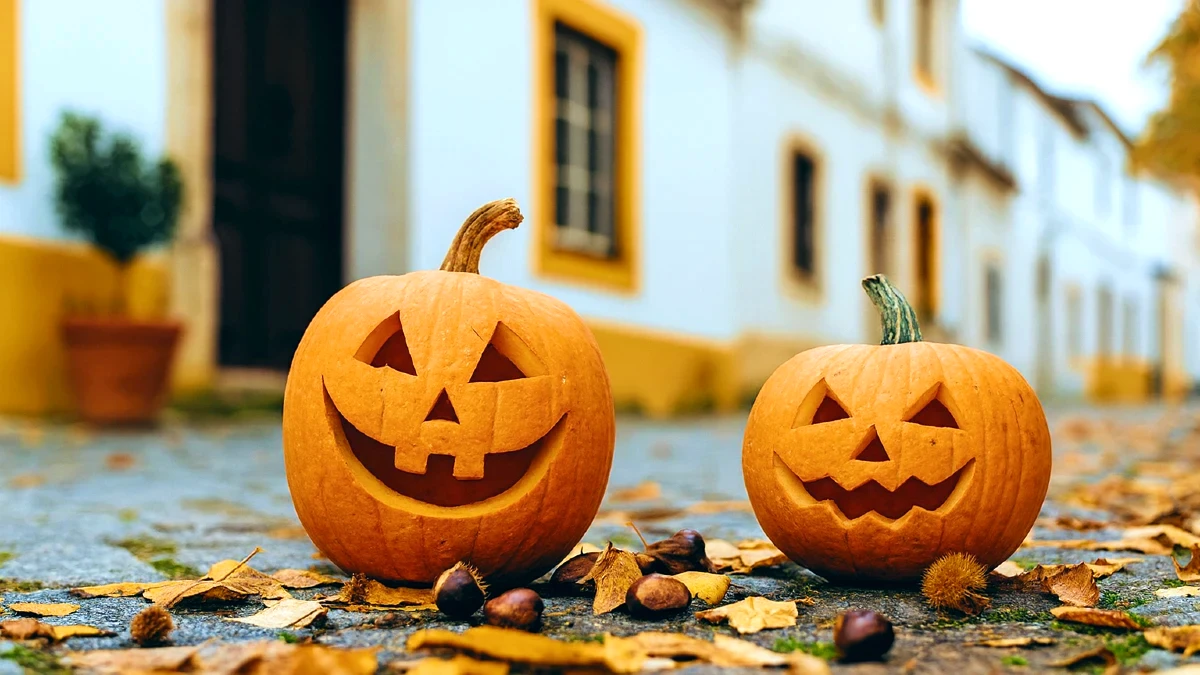
By the end of October, two very different scenes begin to unfold across Portugal. Shop windows fill with pumpkins, plastic cobwebs and Halloween costumes, while outside cemeteries, flower stalls prepare for one of the most important dates in the Portuguese calendar. For some families, the coming days mean parties and sweets. For others, they are a time to visit the graves of loved ones and continue traditions passed down through generations.
Halloween has become increasingly visible in Portugal, particularly in cities and areas with international communities. Yet the country already had its own customs for the beginning of November, including a centuries-old tradition in which children go from door to door collecting small gifts.
Known as Pão por Deus, it bears a passing resemblance to trick-or-treating, but belongs to a different cultural history. The two traditions now share the same season, sometimes even the same households.
Halloween has found a place in modern Portugal

Halloween, celebrated on 31 October, is no longer an unfamiliar occasion in Portugal. Supermarkets stock costumes and decorations, schools organise themed activities, and bars and entertainment venues increasingly make the most of the night.
Its modern popularity owes much to international films, television, social media and the influence of English-speaking culture. In Lisbon, Porto and parts of the Algarve, Halloween parties have become a familiar feature of the autumn calendar. Children may dress as witches, vampires or ghosts, while some neighbourhoods organise their own version of trick-or-treating.
The tradition itself has a much longer history than its modern commercial image suggests. Halloween is associated with the ancient Celtic festival of Samhain, which marked the transition from the harvest season towards winter. Its name comes from All Hallows’ Eve, the evening before All Saints’ Day, although the development of today’s Halloween involved centuries of changing religious and popular customs.
In Portugal, however, Halloween celebrations do not follow a single pattern. In some communities, children visit neighbours asking for sweets; elsewhere, the occasion is largely confined to schools, organised parties and public events. For many Portuguese families, the following morning still carries greater cultural significance.
Pão por Deus: Portugal’s own door-to-door tradition

On 1 November, children in parts of Portugal continue a custom known as Pão por Deus, literally meaning “bread for God’s sake“.
Traditionally, groups of children set out in the morning carrying small cloth bags. They knock on doors and recite short verses, receiving bread, homemade cakes, nuts, dried figs, chestnuts or fruit in return. Sweets and sometimes coins have gradually joined the more traditional offerings.
One familiar rhyme begins “Pão por Deus, fiel de Deus, bolinho no saco“, asking for a small cake to be placed in the bag. The wording varies considerably between regions, reflecting the tradition’s strong local character.
Unlike modern Halloween, costumes and frightening masks are not central to Pão por Deus. The emphasis is on generosity, neighbourly exchange and the sharing of food. In some areas around Leiria and Coimbra, related customs are known as Dia do Bolinho or Bolinhos e Bolinhós, while other communities have their own names, recipes and verses.
The origins of Pão por Deus are not entirely certain. One widely repeated explanation connects its development to the devastating Lisbon earthquake of 1 November 1755, when survivors desperately needed food and assistance. The date undoubtedly gave the story particular resonance, although historians also identify older European traditions of distributing food and alms around All Saints’ Day.
Today, Pão por Deus survives most visibly in communities where families and local institutions continue to pass it on. It is not practised uniformly throughout Portugal, and its survival depends as much on neighbourhood habits as on regional identity.
All Saints’ Day: flowers, family and remembrance

While Halloween is associated with the evening of 31 October, 1 November is All Saints’ Day, known in Portugal as Dia de Todos os Santos. It is a national public holiday and an important date in the Catholic calendar.
For many families, the days surrounding the holiday are a time to remember relatives who have died. Cemeteries become particularly busy as people clean and decorate graves, bring fresh flowers and light candles. Chrysanthemums are a familiar sight at this time of year, with flower sellers often appearing near cemetery entrances.
The religious calendar makes a distinction between All Saints’ Day on 1 November and All Souls’ Day, known as Dia de Finados or Dia dos Fiéis Defuntos, on 2 November. The first honours the saints; the second is devoted specifically to remembering the dead. In everyday Portuguese family life, however, visits to cemeteries and acts of remembrance often take place across both dates.
The atmosphere can be strikingly different from the Halloween celebrations of the previous evening. Yet neither occasion entirely defines the country. Portugal’s traditions vary according to family background, religious practice and place, and not everyone observes these dates in the same way.
The seasonal food offers another link between the celebrations. Chestnuts, walnuts, dried figs and homemade cakes are associated with autumn gatherings, while some bakeries prepare broas dos Santos, small traditional cakes whose ingredients and recipes vary from one region to another. These foods also help connect Pão por Deus to the agricultural rhythms from which many Portuguese customs developed.
Two traditions sharing the same autumn
The growing popularity of Halloween has sometimes raised questions about whether imported celebrations are replacing local customs. But the reality is less straightforward. A child might attend a Halloween party at school on Friday, dress up on Saturday evening and still join relatives or neighbours for Pão por Deus on Sunday morning.
Schools, local associations and municipalities have helped keep both traditions visible. Some organise Halloween activities, while others teach children the songs and customs of Pão por Deus. In places where the older practice has become less common, these initiatives can introduce it to families who may never have experienced it themselves.
For people who have recently moved to Portugal, the distinction is worth understanding. Halloween is increasingly celebrated, but it does not mean that every street will be full of trick-or-treaters. Similarly, children asking for Pão por Deus are following a local tradition rather than simply celebrating Halloween a day late.
Anyone wishing to take part should first find out what happens in their neighbourhood. Where Pão por Deus is customary, offering small cakes, nuts, fruit or sweets can be a simple way to participate. Visitors to cemeteries during the holiday should remember that, for many families, these are personal moments of remembrance rather than tourist occasions.
In 2026, Halloween falls on Saturday 31 October, followed by All Saints’ Day on Sunday 1 November. All Souls’ Day is observed on Monday 2 November, but it is not a national public holiday in Portugal.
Over these three days, the country’s streets may move from costumes and carved pumpkins to flowers, candles and children’s traditional songs. The contrast is part of what makes this period distinctive in Portugal: modern celebrations have found a place alongside older customs that continue to shape family and community life.