Long before the Roman conquest, the lands of present-day Portugal were home to communities that built fortified settlements, worshipped local gods and spoke languages that have almost entirely disappeared. Some belonged to the Celtic world; others had connections to it that are far more difficult to define. From the mountains of Minho to the ancient sanctuaries of Alentejo, their remains tell a fascinating story, although one considerably more complex than the idea of Portugal simply being descended from the Celts.
On the hills above Briteiros, near Guimarães, granite walls still trace the outlines of a vanished town. Paved lanes run between the remains of houses, some built on circular foundations. Beyond them, the ruins of imposing defensive walls reveal communities with sophisticated building techniques and an ability to organise and protect their settlements.
It is here that one of the most intriguing questions in Portuguese history begins: what role did the Celts really play in shaping the cultures of this territory? The answer lies less in legends of a single ancestral people than in the stones, inscriptions and scattered evidence left behind by societies whose histories we can only partially reconstruct.
Stone settlements in the mountains of northern Portugal
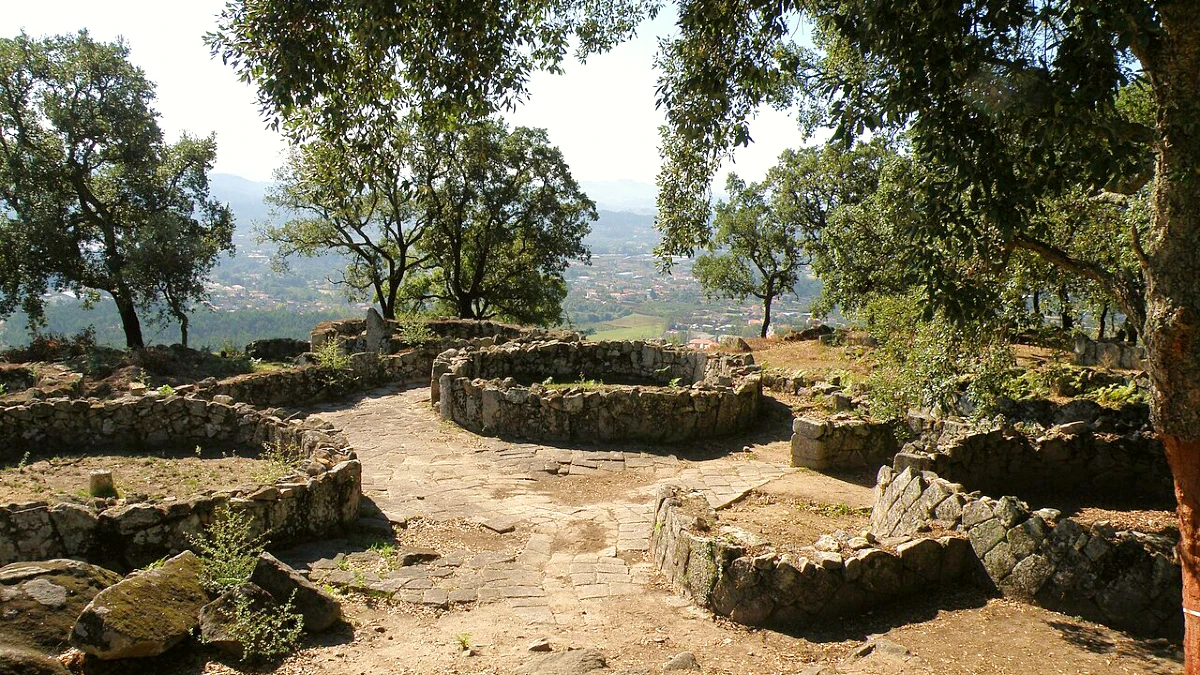
During the first millennium BC, numerous communities in the north-western Iberian Peninsula lived in fortified settlements known as castros. Usually built on elevated ground, these settlements overlooked valleys, agricultural land and important routes through the surrounding countryside.
Their inhabitants were by no means isolated. Archaeological discoveries reveal trading connections, technological developments and contact with communities elsewhere in Iberia and across Europe.
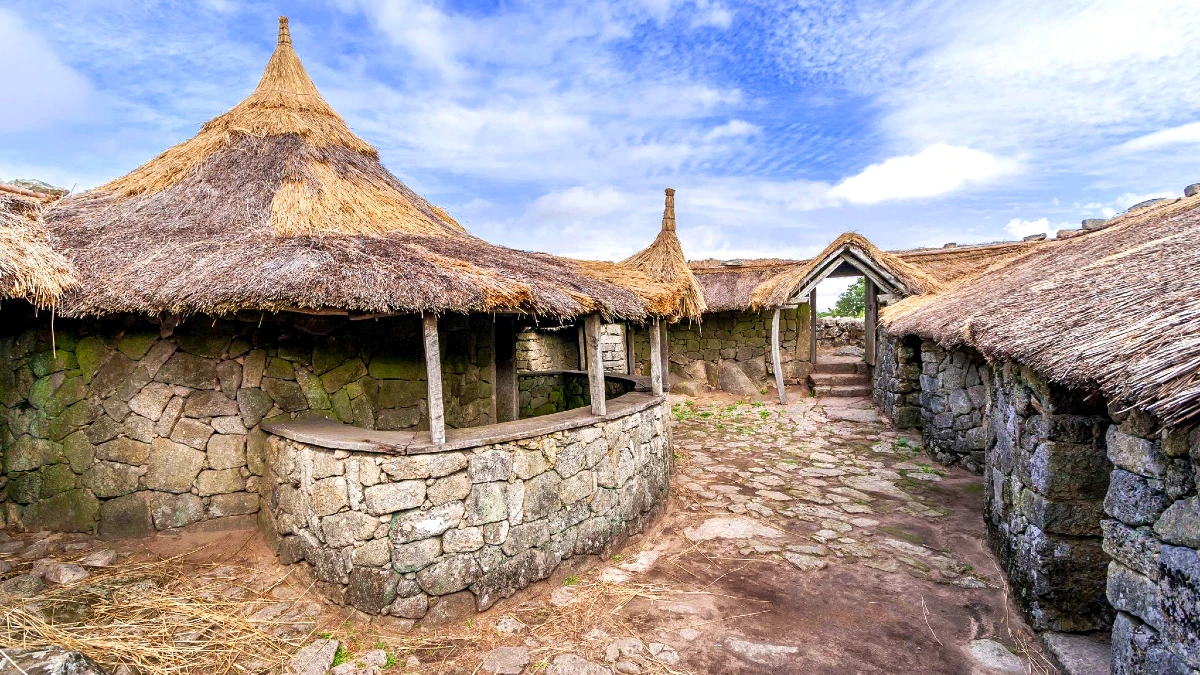
At Briteiros, excavations have uncovered a complex settlement whose occupation continued into the Roman period. The site became one of the landmarks of Portuguese archaeology, particularly through the pioneering research undertaken by Francisco Martins Sarmento in the 19th century.
Further south, near Paços de Ferreira, the Citânia de Sanfins offers another remarkable glimpse into these ancient societies. Its defensive walls and surviving buildings reflect centuries of development, including significant changes as Roman influence began to spread.
Both sites belong to what archaeologists call the Castro culture, or cultura castreja. The term describes a collection of material traditions and settlement patterns particularly widespread in northern Portugal and Galicia.
Yet an archaeological culture does not necessarily represent a single people. Communities may share building methods, objects and customs without speaking the same language or identifying as members of one group. This is precisely what makes it so difficult to describe all these ancient inhabitants simply as Celts.
Who were the Celts of Portugal?

Today, the word Celtic often brings to mind Ireland, Brittany or Scotland. In antiquity, however, Celtic languages and cultural traditions extended across a much larger part of Europe, including sections of the Iberian Peninsula.
Greek and Roman writers recorded the names of several peoples inhabiting western Iberia. Among them were the Gallaeci in the north-west, the Lusitanians further south and various communities described as Celtici.
These names did not all represent the same kind of identity. Some referred to broad regional groupings, while others reflected the classifications used by outsiders. They cannot be assembled into a straightforward ethnic map of ancient Portugal.
The Lusitanians present a particularly revealing case
Often portrayed as the Celtic ancestors of the Portuguese, the Lusitanians are especially remembered for their resistance to Roman expansion during the second century BC, under the leadership of Viriathus. Yet their language is generally not classified as Celtic by specialists. Although it belonged to the Indo-European language family, it also shows evidence of contact with the Celtic world.
The surviving evidence is exceptionally limited. Only a handful of inscriptions preserve Lusitanian words and grammatical forms, leaving researchers to work with fragments, personal names and religious dedications.
It would therefore be misleading to describe the Lusitanians as a single, homogeneous Celtic people and then claim a direct ancestral connection with the entire population of modern Portugal.
Portuguese territory has been shaped by many successive layers of history. Its pre-Roman influences are an important part of that story, but they do not represent a single beginning or an identity that has remained unchanged for two thousand years.
The forgotten gods of Lusitania
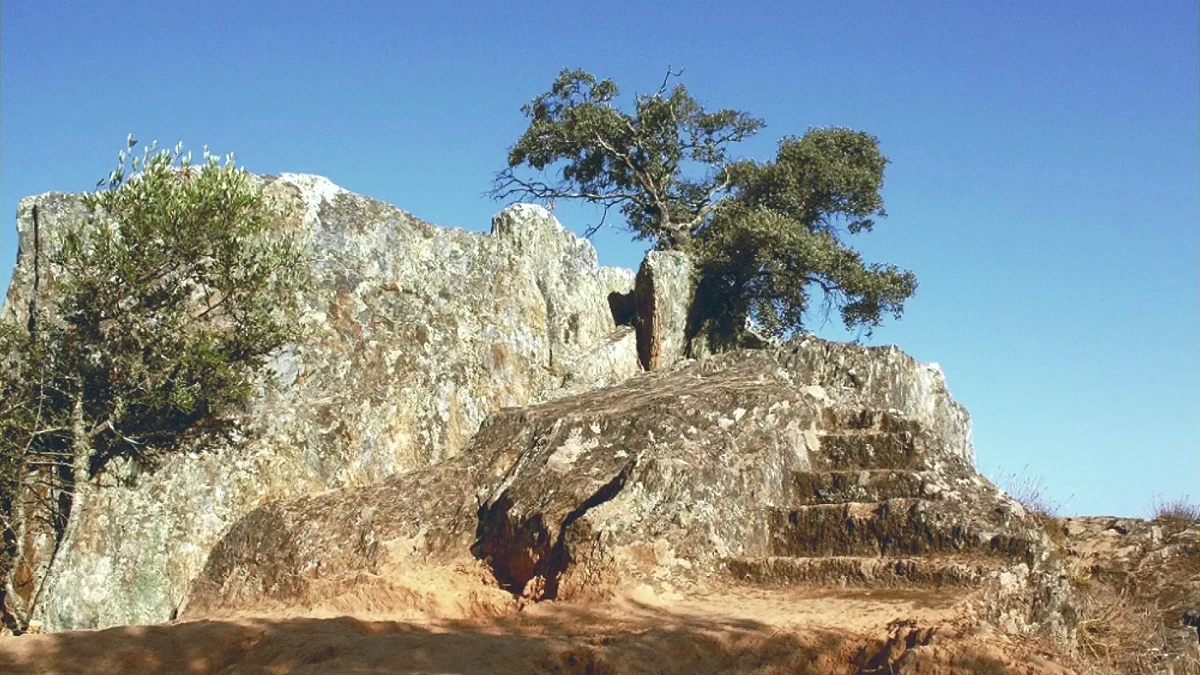
While ancient languages have survived only in fragments, religious beliefs have sometimes left a richer archaeological record.
In Alentejo, near Terena, a sanctuary was dedicated to Endovélico, one of the best-documented pre-Roman deities of western Iberia.
Dozens of Latin inscriptions discovered in the area testify to the worship of this god. They also demonstrate that local religious traditions did not simply vanish when the Romans arrived.
Instead, worshippers could continue honouring an ancient deity while adopting the language and dedicatory conventions of Roman society.
This coexistence reveals a subtler history than one civilisation abruptly replacing another. Religious practices evolved, changed language and sometimes took on new forms, while certain divine names endured across generations.
Other inscriptions from western Iberia mention local deities whose exact roles remain difficult to establish. The surviving names suggest a remarkably varied religious landscape, but they do not allow historians to reconstruct the myths and ceremonies of these communities in full.
This is one of the fundamental limits of the evidence: we may know the name of an ancient god without knowing the stories people told about that deity.
A lost language and names that have survived the centuries

The Roman conquest profoundly transformed the Iberian Peninsula. Latin gradually became dominant in administration, trade and everyday communication. Centuries later, it would provide the foundations of the Portuguese language.
Yet Romanisation did not erase every trace of the past. Personal names, tribal names, place names and the names of deities survived in ancient inscriptions. Some show Celtic influences; others belong to pre-Roman languages whose origins and relationships remain uncertain.
Place names offer particularly valuable, though challenging, evidence. The ancient name of Braga, Bracara Augusta, refers to the Roman city associated with the Bracari, a people of north-western Iberia. Its history reflects the meeting of a local name and Roman authority, although it does not justify the simplistic translations sometimes proposed to explain its origins.
Linguists must compare historical forms, sound changes and surviving inscriptions before drawing conclusions. A resemblance between two words is not enough to establish a common origin.
Portugal’s pre-Roman linguistic heritage therefore survives largely in scattered traces. Modern Portuguese remains fundamentally a Romance language, subsequently shaped by centuries of cultural contact and linguistic change.
Are Portuguese festivals really descended from Celtic traditions?

he search for Celtic roots becomes even more complicated when it turns to popular traditions.
In northern Portugal, masked festivals, seasonal rituals and certain rural celebrations are sometimes linked to ancient practices. The caretos of Trás-os-Montes, with their striking masks and elaborate costumes, have particularly captured the imagination of those searching for traces of a pre-Christian past.
Such connections are appealing. But they do not, by themselves, prove that a tradition has been passed down continuously since the Iron Age.
A festival may preserve older elements while having been profoundly transformed by Christianity, local customs and changing social conditions. Similar traditions can also develop in different regions without necessarily sharing a single origin.
The same difficulty arises with Samhain, an ancient Gaelic festival frequently associated with the origins of Halloween. Its history is important to understanding certain traditions in the British Isles, but it does not demonstrate that Portugal’s All Saints’ Day customs or Pão por Deus descend directly from Celtic rituals practised in what is now Portugal.
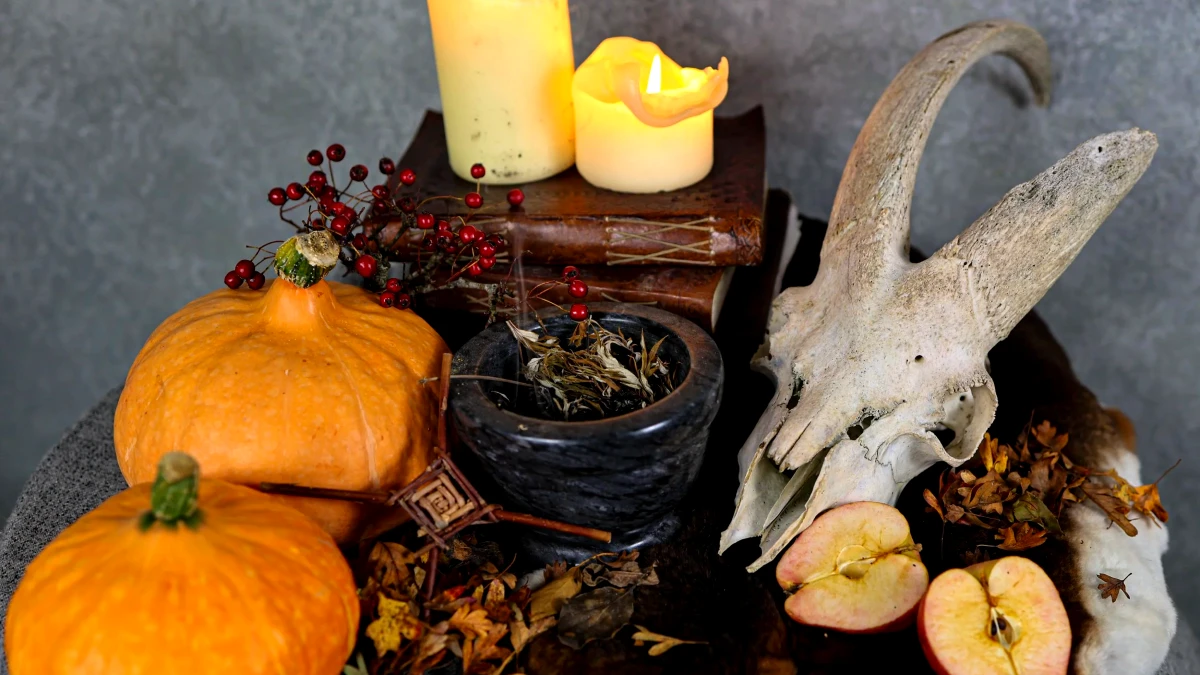
Nor does the antiquity of spring festivals, Carnival celebrations or folk dances automatically make them Celtic.
Music offers a comparable example. The gaita-de-foles, a traditional bagpipe found in parts of northern Portugal and Galicia, resembles instruments played elsewhere in Europe. It reflects musical connections and exchanges, but cannot, on its own, establish the existence of an unchanged musical tradition stretching back to antiquity.
There is, however, a genuine contemporary Celtic culture, expressed through music, festivals and cultural exchanges between European regions. This modern movement deserves recognition in its own right, while remaining distinct from what archaeology can demonstrate about pre-Roman communities.
Portugal’s dolmens tell an even older story
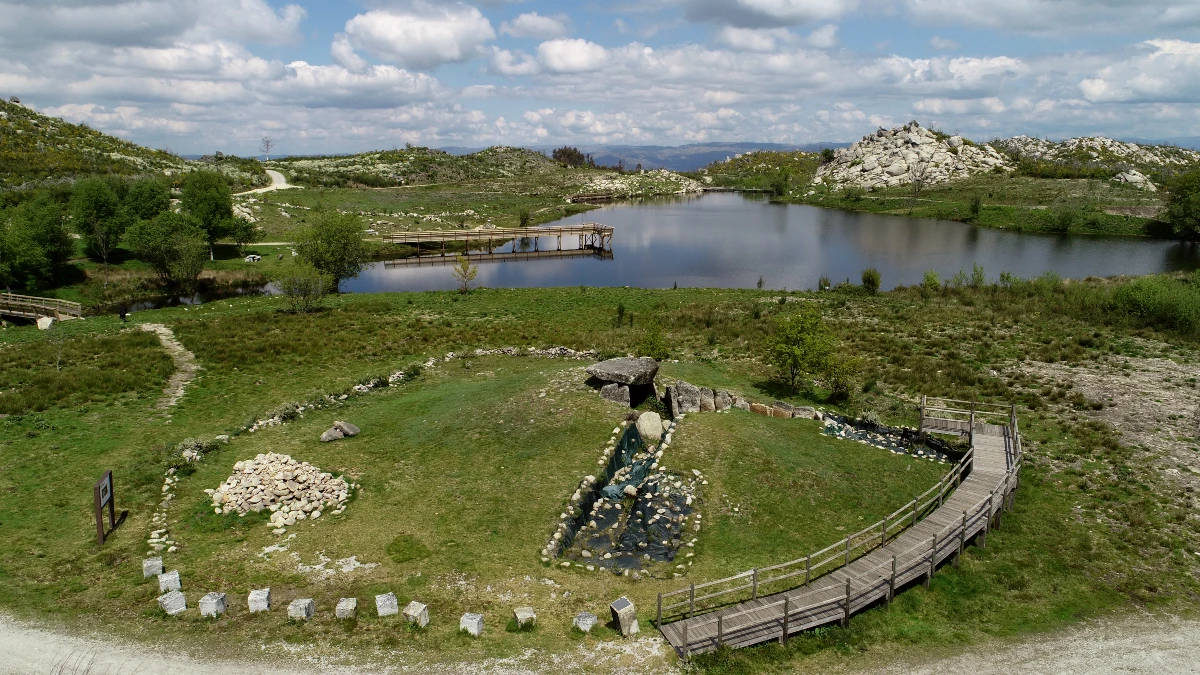
Dolmens, standing stones and stone circles are among the monuments sometimes mistakenly associated with the Celts.
Yet much of Portugal’s megalithic heritage dates from the Neolithic and Chalcolithic periods, several thousand years before the Iron Age and the peoples usually associated with Celtic cultures.
These monuments belong to an even deeper chapter of human history: the first farming communities, their burial practices and their relationship with the land. Describing them as Celtic constructions risks overlooking a fundamental part of Portugal’s prehistoric heritage.
This does not mean that later populations never visited, used or reinterpreted these ancient monuments. But the date a monument was built and the ways it may subsequently have been used are two separate questions.
A heritage far more complex than a single origin
On the heights of Briteiros, the surviving stone houses do not reveal all their secrets. They nevertheless testify to communities capable of building elaborate settlements, maintaining connections with other regions and adapting their ways of life to changing circumstances.
At Terena, inscriptions dedicated to Endovélico show how a local deity could continue to be worshipped in a world increasingly shaped by Rome. Elsewhere, a few words carved into stone preserve the last surviving traces of languages about which we know remarkably little.
Perhaps this is where the real fascination of Portugal’s Celtic heritage lies: not in the search for a single founding people, but in discovering a territory where different cultures met, influenced one another and gradually changed.
Portugal undoubtedly has Celtic and pre-Roman roots. But their history is one of ancient diversity, not of a national identity that already existed in antiquity.