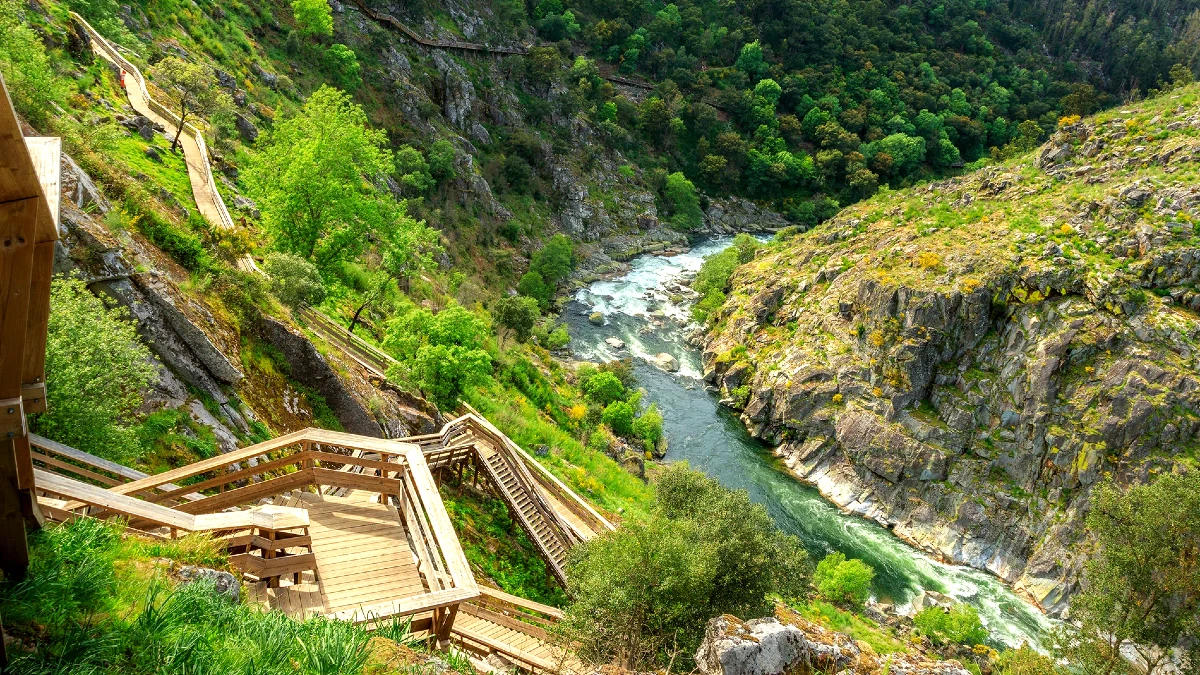
Portugal is home to seven UNESCO Global Geoparks, and some of their most remarkable landscapes can be explored without paying an entrance fee. From the volcanic craters of the Azores to dinosaur fossils along the Atlantic coast and the glacial valleys of Serra da Estrela, these extraordinary territories reveal a side of Portugal that goes far beyond its beaches and historic cities.
The latest addition is Algarvensis, recognised in April 2026, bringing the country’s total to seven. Each geopark tells a different chapter of the Earth’s history, with hiking trails, geological formations, dramatic viewpoints and natural landmarks waiting to be discovered.
There is, however, an important distinction for visitors. Exploring a geopark is generally free, but certain attractions within it charge admission. The famous 516 Arouca suspension bridge and Loulé’s underground salt mine are two examples. Knowing the difference makes it easier to plan a memorable trip without unnecessary expenses.
What exactly is a UNESCO Global Geopark?
A UNESCO Global Geopark is a geographical area recognised for its geological heritage of international significance. Its landscapes, rock formations, fossils and traces of ancient natural processes help tell the story of our planet, sometimes stretching back hundreds of millions of years.
Unlike a conventional nature reserve, a geopark places particular emphasis on understanding and interpreting geological heritage. It may encompass several municipalities, mountains, valleys, villages and historic sites, bringing together conservation, scientific research, education and sustainable tourism.
UNESCO recognition also reflects the involvement of local communities in protecting and celebrating their natural surroundings. The designation is not permanent: geoparks undergo a reassessment every four years to ensure they continue to meet the standards of the international network.
The 7 UNESCO Global Geoparks in Portugal and their highlights
1. Terras de Cavaleiros: lakes and wild landscapes in northeastern Portugal

<text>In the northeastern region of Trás-os-Montes, the Terras de Cavaleiros Geopark stretches across approximately 700 square kilometres around Macedo de Cavaleiros. Recognised in 2014, it contains 42 designated geosites, showcasing a geological landscape shaped by complex processes over millions of years.</text>
One of its most inviting destinations is the Albufeira do Azibo, a reservoir surrounded by protected countryside and popular for its freshwater beaches. In summer, the lakeside provides a refreshing alternative to Portugal’s Atlantic coastline, while the quieter months are ideal for walking and enjoying the scenery.
The geopark also features a network of marked trails through rural landscapes and areas of geological interest. Many outdoor sites can be enjoyed without an admission fee, although guided activities and specialist excursions may carry a charge.
2. Arouca: a spectacular suspension bridge and ancient geological wonders

Just inland from Portugal’s northern coast, Arouca Geopark has become one of the country’s best-known destinations for outdoor adventure. Recognised in 2009, it brings together 41 geosites, including the unusual pedras parideiras, or ‘birthing stones’, of Castanheira and remarkable giant trilobite fossils discovered near Canelas.
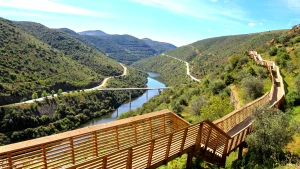
Its most famous attractions are the Passadiços do Paiva, a series of wooden walkways following the Paiva River through a dramatic valley, and 516 Arouca, a suspension bridge extending 516 metres above the landscape.
These two attractions require tickets. Admission to the bridge is listed at €12 per adult, including access to the Paiva Walkways on the same day. A family package for two adults and two children is listed at €40, while children under six are not permitted on the bridge.
Visitors who prefer to explore independently can discover other geological landmarks and landscapes throughout the wider geopark without purchasing these attraction tickets.
3. Estrela: Portugal’s remarkable glacial landscapes

The Estrela Geopark, recognised by UNESCO in 2020, covers nine municipalities around Serra da Estrela, mainland Portugal’s highest mountain range.
Its defining geological story is one of ice. During colder periods of the Earth’s history, glaciers carved the mountains into valleys and left behind distinctive formations that can still be recognised in the landscape.
The Zêzere glacial valley, near Manteigas, is particularly impressive. Stretching for roughly ten kilometres, its broad U-shaped profile is a classic example of glacial erosion, framed by steep mountain slopes.
Several roads, viewpoints and walking routes offer opportunities to appreciate the valley without an admission fee. Organised excursions may cost extra, and visitors should be mindful of changing mountain weather, especially during winter, when snow and ice can restrict access.
4. Naturtejo: ancient fossils and the dramatic Tagus River
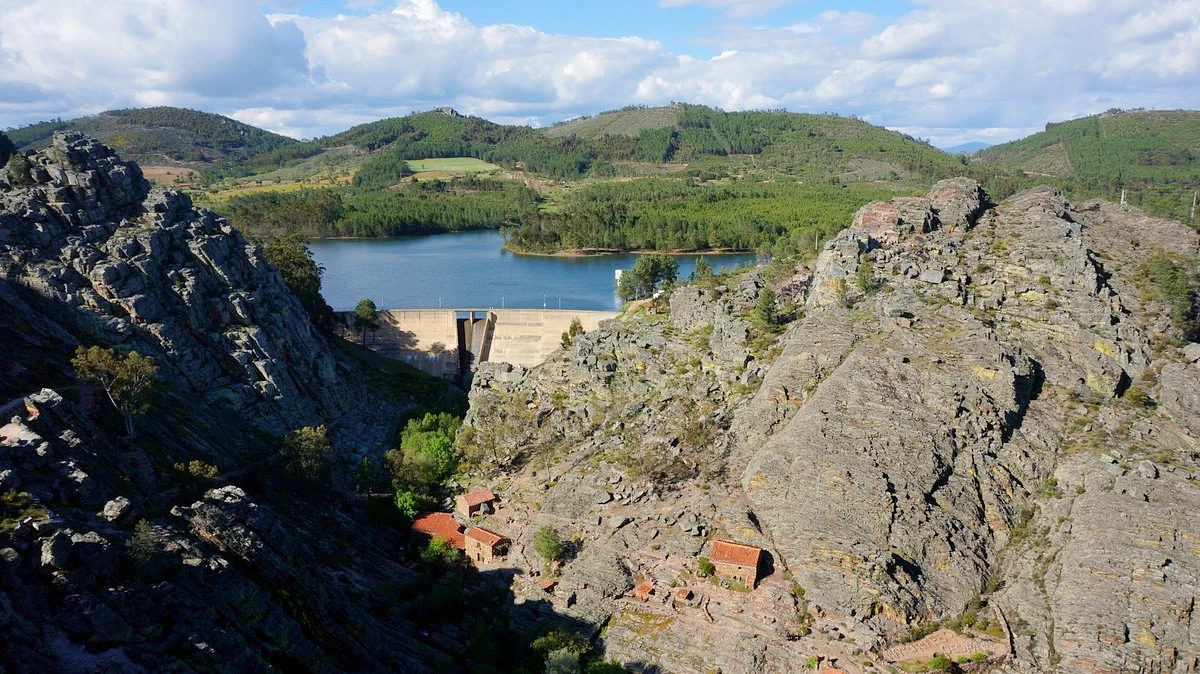
Naturtejo holds a special place in Portugal’s geological heritage. In 2006, it became the first Portuguese territory to join the UNESCO Global Geoparks network.
Covering approximately 5,000 square kilometres across Beira Baixa and Alto Alentejo, it combines ancient rock formations, traditional villages and landscapes shaped by the Tagus River.
One of its most striking landmarks is Portas de Ródão, where the Tagus passes through a narrow opening between imposing rocky ridges. The scenery can be admired from viewpoints on land without paying an entrance fee, while boat trips provide a different perspective at an additional cost.
Another highlight is the Penha Garcia fossil trail, a walking route of around three kilometres. Here, visitors can observe Cruziana, fossilised traces left by ancient marine animals associated with trilobites.
These markings are particularly fascinating because they preserve evidence of movement and feeding behaviour rather than the animals’ bodies themselves. They offer a rare glimpse into life on an ancient seabed.
5. Oeste: following the dinosaurs along Portugal’s Atlantic coast
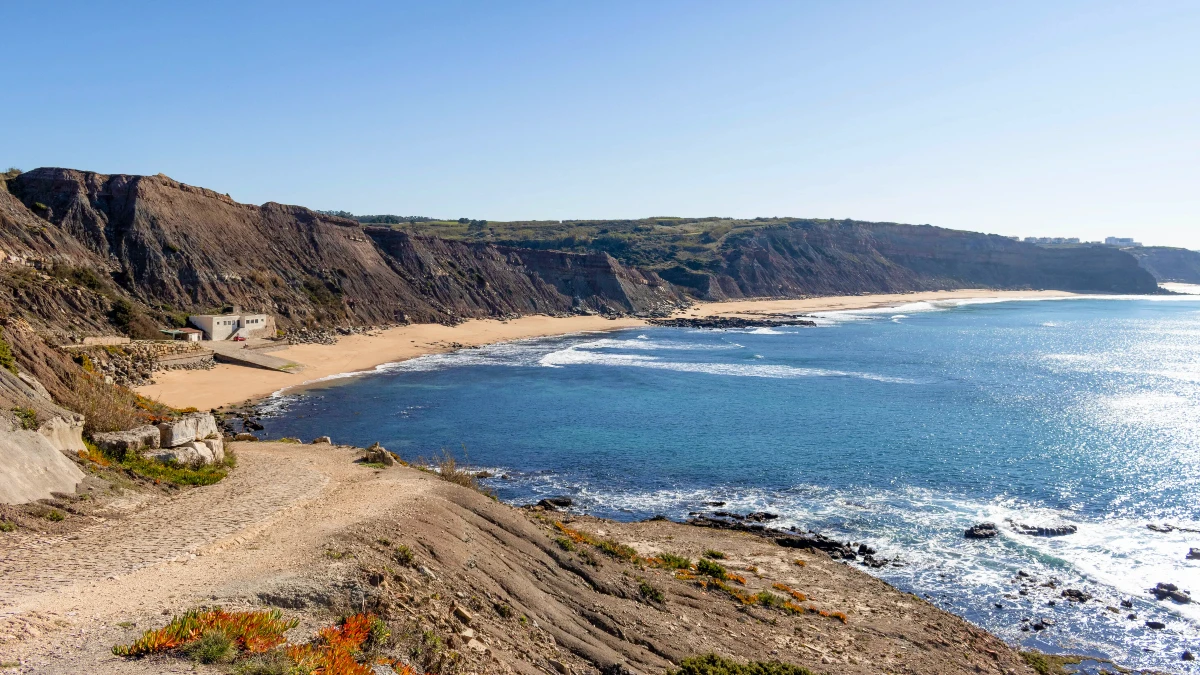
Portugal’s western coastline has a remarkable prehistoric past, and Oeste Geopark, recognised in 2024, is one of the best places to discover it.
Around Lourinhã and other coastal areas, rock formations dating from the Late Jurassic have yielded important dinosaur fossils. The region’s cliffs and geological layers preserve evidence of environments that existed long before the modern Atlantic coastline took shape.
Much of the coastal scenery can be explored freely, from beaches and viewpoints to outdoor walking routes. The landscape itself offers a compelling introduction to the geological forces and prehistoric life that shaped this part of Portugal.
Families looking for a more structured experience can visit Dino Parque Lourinhã, a privately operated dinosaur-themed attraction featuring large-scale reconstructions and educational exhibits.
Unlike the surrounding natural landscapes, the park charges admission. The indicative adult ticket price is €16 at the entrance, with online offers potentially available at lower rates.
6. Azores: nine volcanic islands and a world of geological discoveries

Few places reveal the power of volcanic activity quite like the Azores Geopark. Recognised in 2013, it encompasses all nine islands of the Portuguese archipelago and their associated marine environments, with 121 identified geosites.
Across the islands, volcanic activity has created crater lakes, lava fields, rugged cliffs, geothermal areas and extraordinary underground formations.
On São Miguel, the viewpoints overlooking Sete Cidades offer some of the archipelago’s most memorable scenery. The lakes, nestled inside a vast volcanic caldera, can be admired from several freely accessible locations.
Other experiences require tickets, including certain managed geothermal sites around Lagoa das Furnas.
Visitors planning a trip to Terceira should also note an important temporary closure. Algar do Carvão, a spectacular volcanic cavity, closed to the public on November 1, 2026, for work connected to its visitor facilities. Reopening is provisionally expected in March 2027, but the date should be confirmed before making travel plans.
The Azores demonstrate particularly well why a geopark is much more than a single attraction. Each island contains a different collection of geological landmarks, many of which can be appreciated simply by exploring the landscape.
7. Algarvensis: discovering a different side of the Algarve
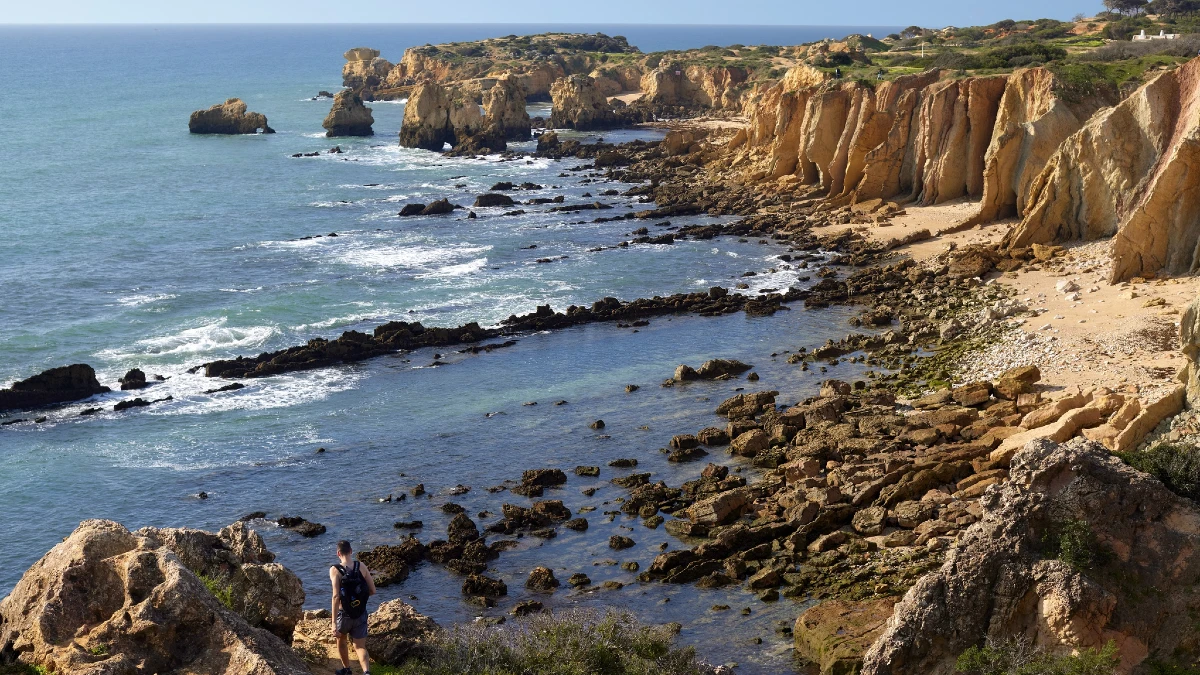
The newest addition to Portugal’s UNESCO Global Geoparks is Algarvensis, recognised in April 2026.
Spanning parts of Loulé, Silves and Albufeira, the geopark covers a reported 2,427 square kilometres, including marine areas. Its recognition draws attention to an Algarve that many visitors overlook: a landscape of limestone hills, inland valleys, ancient rock formations and rural walking trails.
Two particularly appealing places to explore are Rocha da Pena and Fonte Benémola.
Rocha da Pena is known for its elevated walking routes and expansive views across the Algarve countryside. Fonte Benémola offers a gentler setting, with natural scenery and paths that invite visitors to discover the region at a slower pace.
Both provide opportunities for outdoor exploration without a general entrance fee.
For something entirely different, visitors can descend into the Loulé rock salt mine, approximately 230 metres below ground. This underground experience introduces a geological world rarely seen by travellers who remain on the coast.
The indicative admission price is €25 for adults and €17 for children aged six to twelve. Advance booking is required, and children under six are not admitted.
How much do attractions in Portugal’s UNESCO Geoparks cost?
One of the most appealing aspects of Portugal’s geoparks is that many outdoor landscapes, viewpoints and geological trails can be visited without an admission ticket.
Paid attractions are usually specific facilities, organised experiences or privately operated visitor sites rather than the geoparks themselves.
The following prices provide a useful starting point for planning a trip.
| Geopark | Attraction | Indicative adult price |
|---|---|---|
| Arouca | Paiva Walkways | €1 in low season or €2 in high season when booked online |
| Arouca | 516 Arouca suspension bridge | €12, including same-day access to the Paiva Walkways |
| Azores | Algar do Carvão | Normally €10; closed since November 2026 |
| Oeste | Dino Parque Lourinhã | €16 at the entrance; online discounts may apply |
| Algarvensis | Loulé rock salt mine | €25; advance booking required |
These prices may change depending on the season, visitor category and booking conditions. Always consult the attraction’s official website before travelling.
It is also worth remembering that UNESCO recognition does not automatically make every museum, bridge, cave or visitor centre free to enter. The designation applies to the wider territory and its geological significance, not to the pricing policies of individual attractions.
How to explore Portugal’s geoparks on a budget
A rewarding geopark visit does not have to revolve around ticketed attractions. In many cases, the most memorable experiences come from walking through a valley, reaching a scenic viewpoint or discovering unusual rock formations along a marked trail.
A little planning can make a significant difference, particularly in the larger geoparks where points of interest may be spread across several municipalities.
Here are a few practical ways to keep costs under control:
- Focus on one area at a time. Exploring a smaller cluster of sites can be more enjoyable and economical than driving long distances between attractions.
- Make the most of free trails and viewpoints. Check access conditions, walking difficulty and seasonal restrictions before setting out.
- Book popular paid attractions in advance. This can help secure availability and, in some cases, reduce the ticket price.
- Compare individual and family tickets. Packages may offer better value, particularly for families travelling with children.
- Check temporary closures. Mountain routes, caves and underground attractions can be affected by weather, maintenance or conservation work.
In Arouca, for example, a ticket for the 516 suspension bridge already includes access to the Paiva Walkways on the same day. Buying separate tickets for both would therefore be unnecessary.
In the Azores, the cost of travelling between islands can be considerably higher than admission to individual attractions. Exploring several geosites on one island is often a more practical approach than attempting to visit every landmark across the archipelago.
Ultimately, Portugal’s seven UNESCO Global Geoparks offer seven very different ways of discovering the country. Whether your interests lie in volcanoes, prehistoric life, mountain scenery or quiet rural landscapes, much of their geological heritage can be experienced without paying an entrance fee. The paid attractions are optional additions, allowing each visitor to shape the journey around their interests, time and budget.