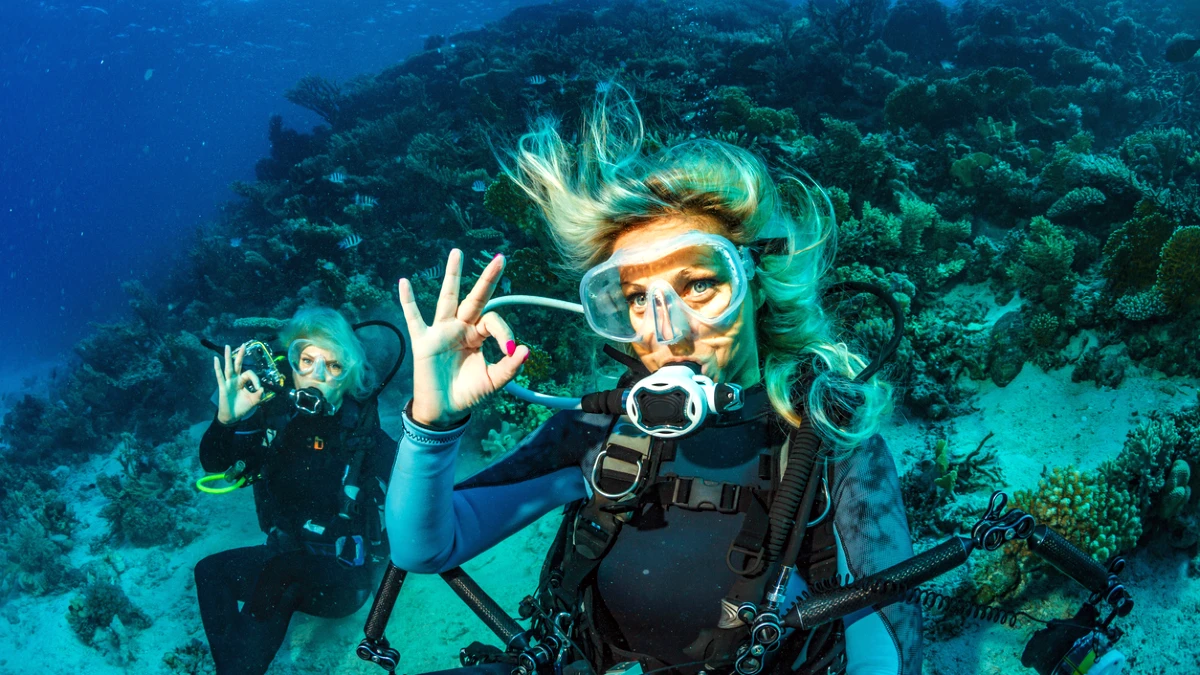
Madeira is famous for its dramatic cliffs, mountain trails and breathtaking Atlantic views. But some of the island’s most extraordinary landscapes lie beneath the ocean. Volcanic caves, underwater tunnels, rocky walls and an abundance of marine life reveal a side of the Portuguese archipelago that most visitors never experience.
Travellers usually explore Madeira from above, hiking along its famous levadas, watching the sunrise at Pico do Areeiro or visiting the natural pools of Porto Moniz. Yet the island’s volcanic scenery does not end at the shoreline. Beneath the waves, a remarkable underwater environment awaits, with groupers, rays and, occasionally, sea turtles or even Mediterranean monk seals.
A second Madeira lies beneath the Atlantic
The underwater scenery reflects the extraordinary geography of Madeira. Rising steeply from the Atlantic seabed, this volcanic island is surrounded by deep waters, with impressive underwater formations often found remarkably close to shore.
Rocky cliffs continue beneath the surface, forming caves, tunnels and enormous volcanic boulders that provide shelter for a wide variety of marine species. For divers, exploring these formations can feel like discovering an entirely different landscape.
Conditions are often favourable, particularly during the warmer months. Water temperatures generally reach around 22°C in summer, while winter temperatures can fall to approximately 18°C. In good conditions, underwater visibility may extend from 20 to 35 metres, revealing the scale of the volcanic terrain.
It is this combination of clear water and dramatic geology that makes diving in Madeira so distinctive. The island has a second landscape, one that begins just a few metres below the Atlantic’s surface.
Garajau, one of Madeira’s most remarkable dive sites
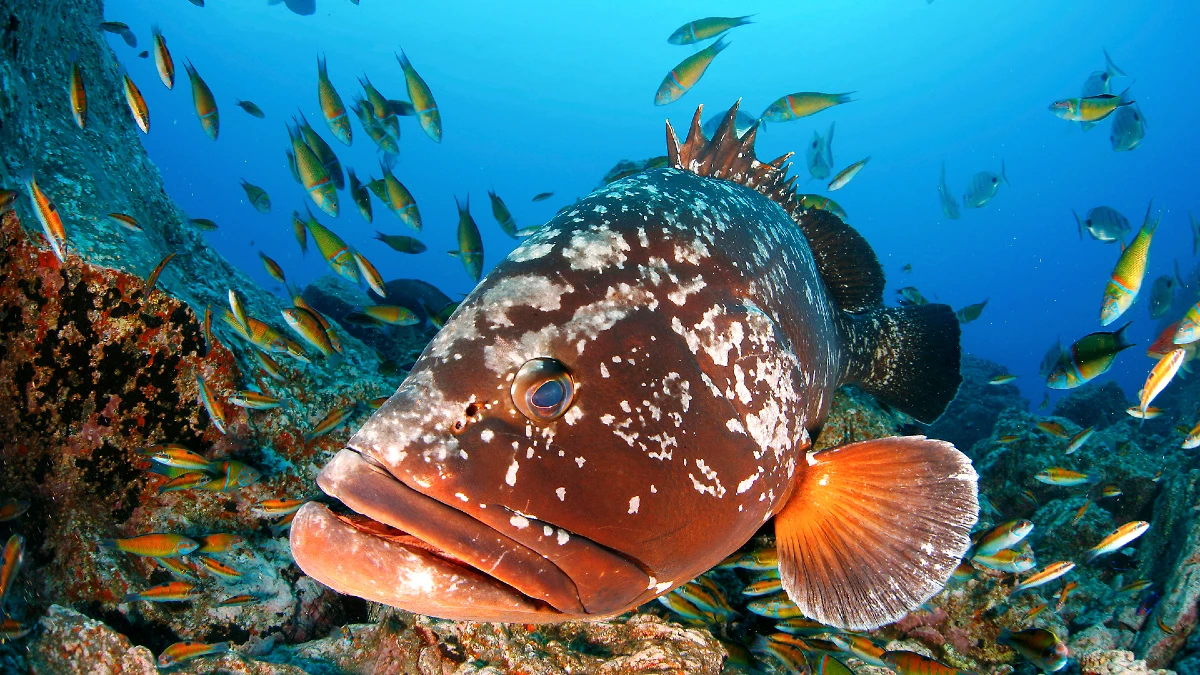
Among Madeira’s best-known diving destinations is the Garajau Partial Nature Reserve, located along the island’s southern coast. Its protected waters are home to moray eels, anemones, schools of fish and the impressive dusky groupers that have become one of the reserve’s most recognisable inhabitants.
Further east, Caniçal offers a different underwater experience, with rocky formations, caves and passages shaped by the island’s volcanic origins. Boat dives, wreck sites and night diving provide additional possibilities for certified divers.
Wildlife encounters, however, remain unpredictable. Sea turtles, rays, seahorses and monk seals are among the animals visitors may hope to encounter, but sightings can never be guaranteed.
“Nature doesn’t take reservations. We enter the water to observe whatever the ocean has decided to show us that day,” explains João Martins of Dive Around Madeira, in the account featured in the original Portuguese-language reporting.
Having completed more than 3,000 dives, Martins knows that even familiar underwater sites can offer a different experience each time.
Can beginners go scuba diving in Madeira?
You do not need previous diving experience to discover Madeira’s underwater world. Introductory scuba diving sessions allow beginners to experience their first dive under professional supervision, while certification courses provide opportunities to develop the skills needed for more independent exploration.
For João Martins, the essential principles are straightforward: breathe normally, develop buoyancy control and maintain clear communication with the instructor or diving partner.
Beginners sometimes try to concentrate on too many things at once. Between breathing, swimming, adjusting equipment and watching passing fish, it can be difficult to relax during the first moments underwater.
With appropriate instruction, these movements gradually become more familiar, allowing divers to focus on their surroundings.
Professional supervision remains essential. Safe diving involves understanding equipment, depth limits and emergency procedures, including why a rapid, uncontrolled ascent can be dangerous.
Protecting the underwater world as marine tourism grows
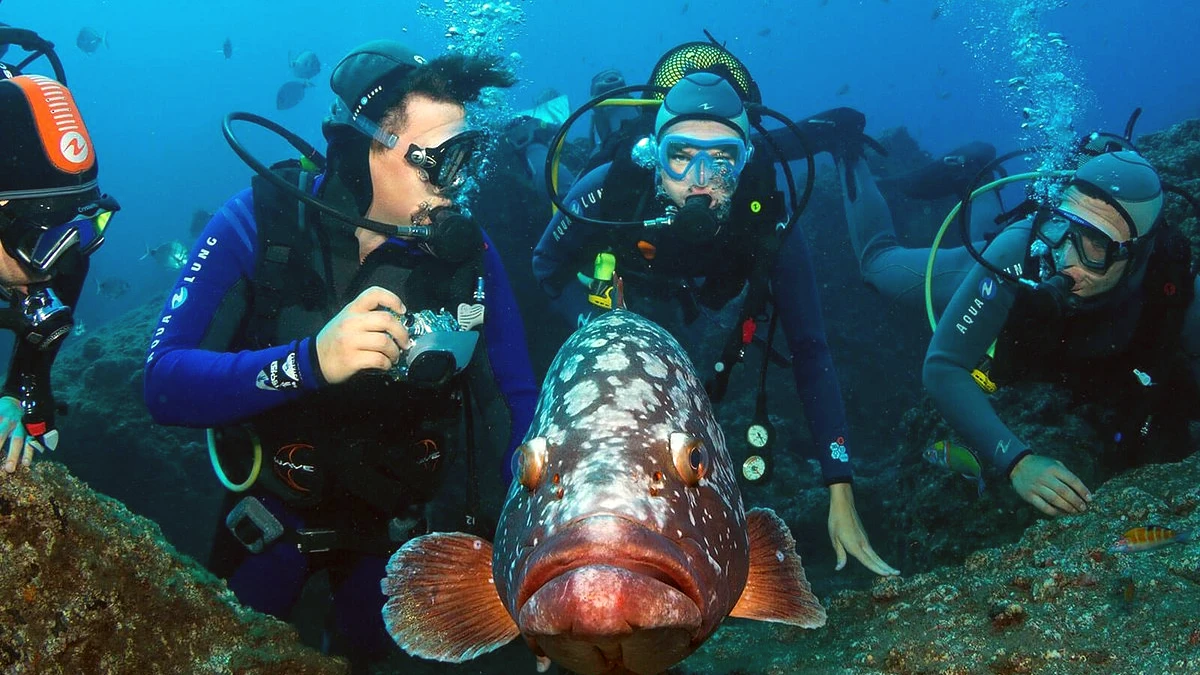
Madeira’s popularity as a diving destination raises an important question: how can more visitors discover its marine ecosystems without damaging them?
Smaller diving groups, careful supervision and environmental education can help reduce pressure on sensitive habitats. Respecting marine animals, avoiding contact with fragile underwater formations and maintaining good buoyancy are equally important.
After years of regularly diving around Caniçal, Caniço and Garajau, João Martins has noticed some encouraging changes. He reports seeing more fish, turtles and rays, alongside young groupers appearing in certain areas beyond the protected reserve.
These are personal observations rather than scientific evidence of a wider recovery. Martins has also noticed worrying developments, including changes affecting red algae, occasional sea urchin mortality and the disappearance of animals from previously familiar locations.
For someone who repeatedly explores the same underwater sites, diving becomes more than an occasional adventure. It also provides an opportunity to notice how marine environments change over time.
Discovering Madeira from beneath the surface
Scuba diving offers a completely different perspective on Madeira. The volcanic cliffs that dominate the island’s coastline continue underwater, forming dramatic rocky landscapes inhabited by an extraordinary variety of marine life.
A close encounter with a turtle, ray or monk seal may become an unforgettable memory. Yet the experience does not depend on finding a rare animal. The underwater scenery, clear Atlantic waters and colourful fish are compelling reasons to explore in their own right.
From Garajau to Caniçal, beginners and experienced divers can discover different aspects of this hidden environment, whether through a supervised first dive, a boat excursion or an exploration of volcanic formations.
To experience Madeira beneath the waves is to discover that the island’s remarkable landscapes do not end where the land meets the ocean. Some of them begin precisely where the familiar world disappears beneath the surface.
De Garajau à Caniçal, les sites permettent en outre de varier les expériences, entre premières immersions, plongées depuis le rivage ou en bateau, exploration de formations volcaniques, épaves et sorties nocturnes.
Visiter Madère sous l’eau, c’est finalement découvrir que l’île ne s’arrête pas à son littoral. Une partie de ses paysages commence précisément là où disparaissent les sentiers, quelques mètres sous la surface de l’Atlantique.