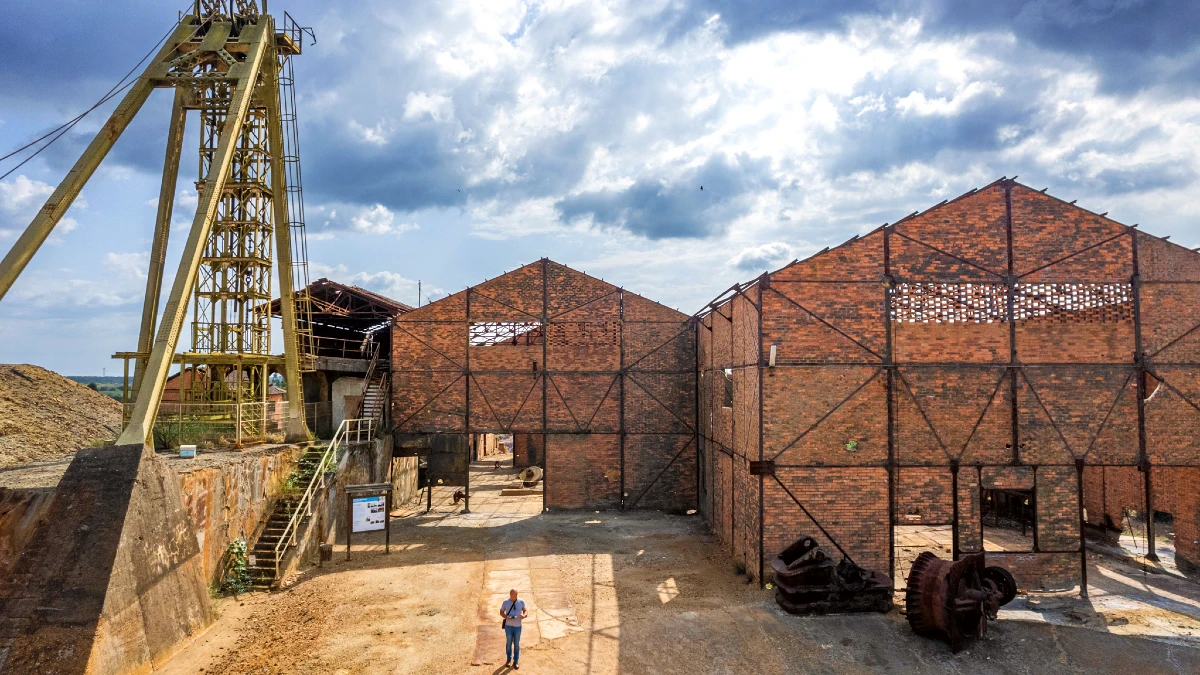
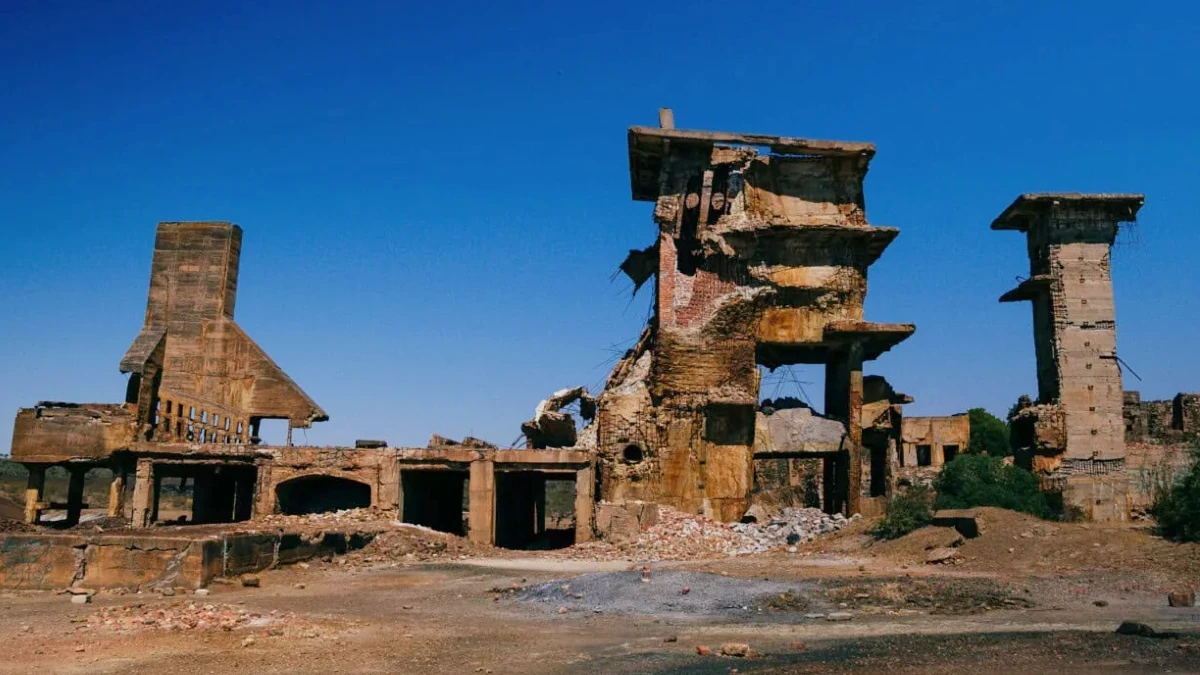
Abandoned industrial buildings, rust-coloured landscapes and the remains of a once-thriving mining industry reveal a very different side of southern Portugal. In the Alentejo, three former mining communities are joining forces to turn their industrial heritage into a new cultural and tourism opportunity. Mértola, Aljustrel and Grândola are working together on a €750,000 initiative, with projects planned through 2027 and a travelling festival scheduled for 2028.
Known as Min’Arte, the programme brings together three historic mining areas: São Domingos, Aljustrel and Lousal. Rather than creating a single new attraction, it aims to connect existing heritage sites, support local communities and develop new experiences around the region’s industrial past.
Three mining landscapes reveal a different side of the Alentejo
The Alentejo is often associated with whitewashed villages, vineyards and rolling countryside. Yet beneath its rural landscape lies a long history of mineral extraction that helped shape entire communities.
At São Domingos, near Mértola, abandoned industrial structures and strikingly coloured terrain create an almost otherworldly setting. The former mining complex is a powerful reminder of the region’s industrial history, but its unusual appearance also reflects the environmental consequences of decades of extraction.
In Aljustrel, mining remains closely connected to local identity. The town already has a mining park where visitors can explore elements of its industrial heritage and learn about the people and technologies that shaped the area.
Further north-west, Lousal, in the municipality of Grândola, has developed a different approach. Its Ciência Viva science centre uses the former mining environment to introduce visitors to geology, scientific discovery and the region’s industrial history.
All three sites belong to the Iberian Pyrite Belt, a mineral-rich geological formation stretching across southern Portugal and into Spain.
A €750,000 project to bring mining heritage back into focus
The Min’Arte initiative is led by Mértola’s municipal council, working alongside Aljustrel and Grândola, local parish authorities, the Serrão Martins Foundation and Lousal’s Ciência Viva centre.
According to information released by Mértola municipality and reported by Portuguese newspaper Público on 9 November 2026, the project has secured €750,000 through the Alentejo 2030 regional programme.
The investment is intended to support more than tourism promotion. The partners want to create opportunities for local participation, encourage cultural initiatives and find new uses for spaces linked to the mining industry.
One practical measure is planned for Aljustrel, where a pilot programme will train interested local residents as guides. The aim is to involve people from the area directly in presenting its history to visitors.
From abandoned mines to cultural and creative spaces
Art and community involvement are central to the programme’s ambitions.
At São Domingos, the Serrão Martins Foundation plans public art initiatives and artistic residencies. Another project would give the former Centro Republicano da Mina de São Domingos a new role as a creative and coworking space.
In Lousal, the proposed Innovation Village programme will combine science education with experiments in new technologies and ways of sharing local knowledge. Meanwhile, Mértola intends to develop public spaces designed to encourage social interaction and community activities.
These initiatives represent planned developments rather than attractions already open to visitors. Much of the programme is expected to be implemented by the end of 2027.
A travelling festival is planned for May 2028
One of Min’Arte’s main cultural ambitions is Estamina, a travelling festival whose first edition is scheduled for May 2028.
Organised by the Serrão Martins Foundation, the event is intended to strengthen the shared identity of the three mining territories while bringing their heritage to a wider audience.
Tourism development is another part of the strategy. Aljustrel plans to explore connections between industrial heritage and activities such as nature tourism, gastronomy, stargazing and creative experiences.
For travellers interested in discovering this less familiar side of Portugal, the three mining areas already offer places to explore, including heritage and interpretation centres. Min’Arte does not yet represent a fully operational new tourist route, but it could gradually make these destinations easier to discover together.
The next milestones will be the projects developed through 2027 and the planned Estamina festival in 2028. Their progress will determine how this ambitious collaboration translates into new experiences for visitors and opportunities for the communities that once depended on the mines.