
Lisbon is taking its startup strategy beyond the city limits. A new metropolitan network, Unicorn Factory AML, will connect all 18 municipalities in the Greater Lisbon area, bringing together startups, investors, universities and research centres under a regional innovation initiative.
The network is scheduled to launch on Monday, November 2, at Beato, one of Lisbon’s emerging technology and entrepreneurship districts. Its ambition is to extend the reach of Unicorn Factory Lisboa, an established startup support initiative, across a metropolitan region of more than three million people.
There is an important distinction behind the announcement: Lisbon is not opening 18 new Unicorn Factory buildings. Instead, the initiative is designed to connect existing innovation organisations, making it easier for companies and entrepreneurs to collaborate across municipal boundaries.
From a Lisbon startup initiative to a metropolitan network
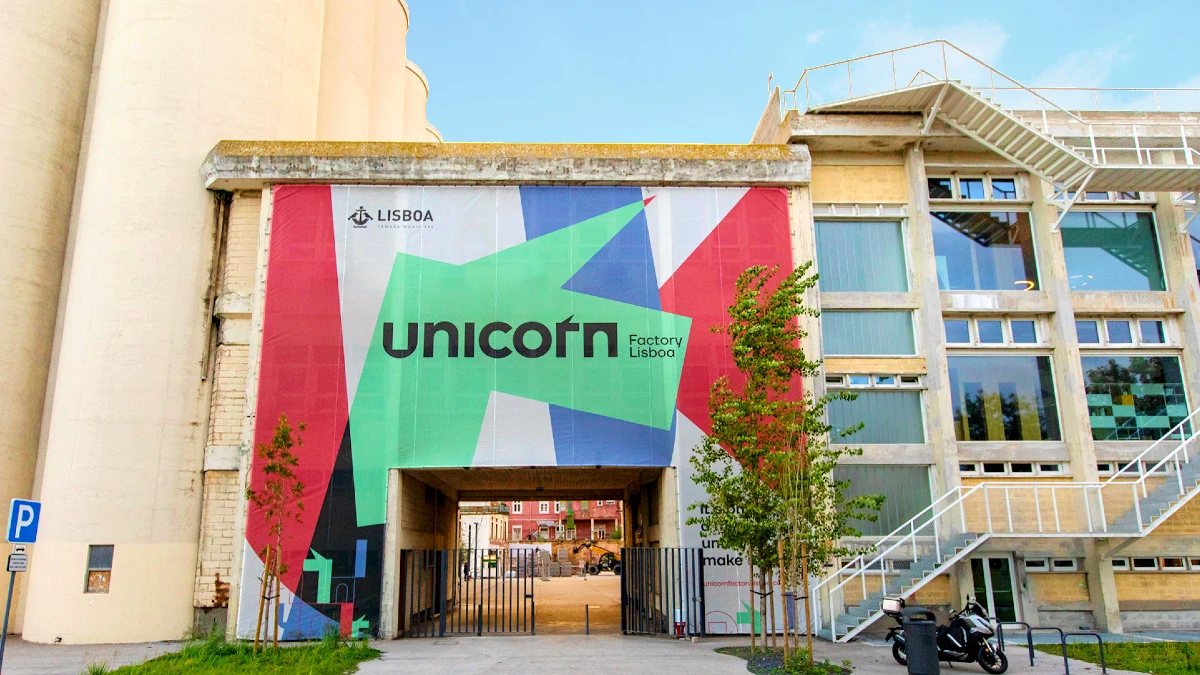
Unicorn Factory Lisboa has become part of the Portuguese capital’s strategy to support technology companies, entrepreneurial talent and businesses seeking to scale.
The new Unicorn Factory AML network takes that approach into a wider territory, linking municipalities on both sides of the Tagus River. Rather than concentrating startup support within Lisbon itself, the project aims to coordinate resources across the metropolitan area.
Its proposed network includes incubators, accelerators, universities, research institutions, established companies and investment organisations. These groups already perform different functions within the innovation economy, from helping founders develop early-stage ideas to supporting research partnerships and business expansion.
Bringing them into closer contact could make it easier for a startup based outside central Lisbon to identify a specialist mentor, find a research partner or connect with potential investors.
The project also addresses a familiar challenge for growing technology ecosystems: opportunities are not always distributed evenly across a region, even when businesses, talent and universities are geographically close.
The objective is to make the metropolitan area function more like a connected startup ecosystem, rather than a collection of separate local initiatives.
Why Greater Lisbon matters to Portugal’s technology sector
The scale of the region is central to the strategy.
According to the announcement, the Lisbon metropolitan area is home to more than three million people and accounts for approximately 40% of Portugal’s economic output. It brings together a substantial concentration of businesses, higher education institutions, skilled workers and potential customers.
For technology companies, this concentration can offer advantages beyond access to office space or startup programmes. Research partnerships, recruitment, specialised suppliers and connections to international markets all play a role in determining where businesses choose to establish themselves and expand.
The Unicorn Factory AML initiative seeks to strengthen those connections across the entire metropolitan area, rather than treating Lisbon’s city centre as the default destination for entrepreneurial activity.
That could be particularly relevant to startups operating in neighbouring municipalities, where founders may already have access to local talent and infrastructure but fewer direct connections to larger investment and acceleration networks.
The initiative is also intended to improve the region’s international visibility. A more coordinated metropolitan identity could help present Greater Lisbon to investors and technology businesses as a broader economic ecosystem.
Whether it delivers that advantage will depend on the programmes, partnerships and practical services established after launch.
The Web Summit provides an international stage

The network’s launch has been timed to coincide with the week of Web Summit, the international technology conference held in Lisbon.
The timing places the metropolitan initiative in front of a global audience of founders, investors and technology executives visiting Portugal.
It also reflects an increasingly regional approach to technology development. Startups may be founded in one municipality, recruit employees in another and collaborate with universities or corporate partners elsewhere in the metropolitan area. Administrative borders do not necessarily reflect how those businesses operate.
Carlos Moedas, Lisbon’s mayor and president of the Lisbon Metropolitan Council, has presented the initiative as an opportunity for municipalities to cooperate despite political differences.
He has also linked innovation to the ambition of improving employment opportunities and wages, particularly for younger residents.
Those remain policy objectives rather than established outcomes. The announcement does not specify how many jobs the network is expected to create, how much additional investment it could attract or whether it will offer direct financial support to startups.
What startups can expect and what remains unclear
The proposed benefits are centred on access and collaboration.
Entrepreneurs across the 18 municipalities are expected to gain opportunities to connect with mentors, investors and other companies. Incubators and accelerators may also be able to develop joint initiatives, while universities and research centres could become more closely involved in entrepreneurial projects.
For early-stage technology companies, the value of such a network would lie in the practical opportunities it creates: introductions to investors, access to expertise, collaborative research and participation in business development programmes.
However, the launch announcement leaves several operational questions unanswered.
It does not yet establish which services will be available immediately, how startups can apply to participate, which incubators will formally join the network or whether specific funding mechanisms will be introduced.
These details will be essential in determining whether Unicorn Factory AML becomes a useful resource for founders beyond Lisbon or primarily a framework for institutional cooperation.
For now, the confirmed development is the creation of a metropolitan innovation network covering all 18 municipalities. Its impact on Portugal’s technology sector will become clearer as the participating organisations and programmes are announced.