To discover Avis, you first have to look up. In northern Alentejo, this small town in the Portalegre district occupies a granite hill rising 201 metres above sea level. Beyond its whitewashed houses, the landscape stretches across open plains, olive groves and cork oak trees towards the waters of the Maranhão reservoir.
Yet Avis remains relatively unknown on Portugal’s tourist routes. That quiet reputation seems almost surprising when you consider its history. This modest town gave its name to one of Portugal’s most influential medieval military orders and, later, to the royal dynasty that would lead the country into an extraordinary period of maritime exploration.
Today, visitors come for its narrow streets, medieval remains and unmistakable Alentejo atmosphere. But Avis also offers an opportunity to discover how a seemingly remote town became closely connected to the history of an entire kingdom more than six centuries ago.
A small town that shaped Portuguese history
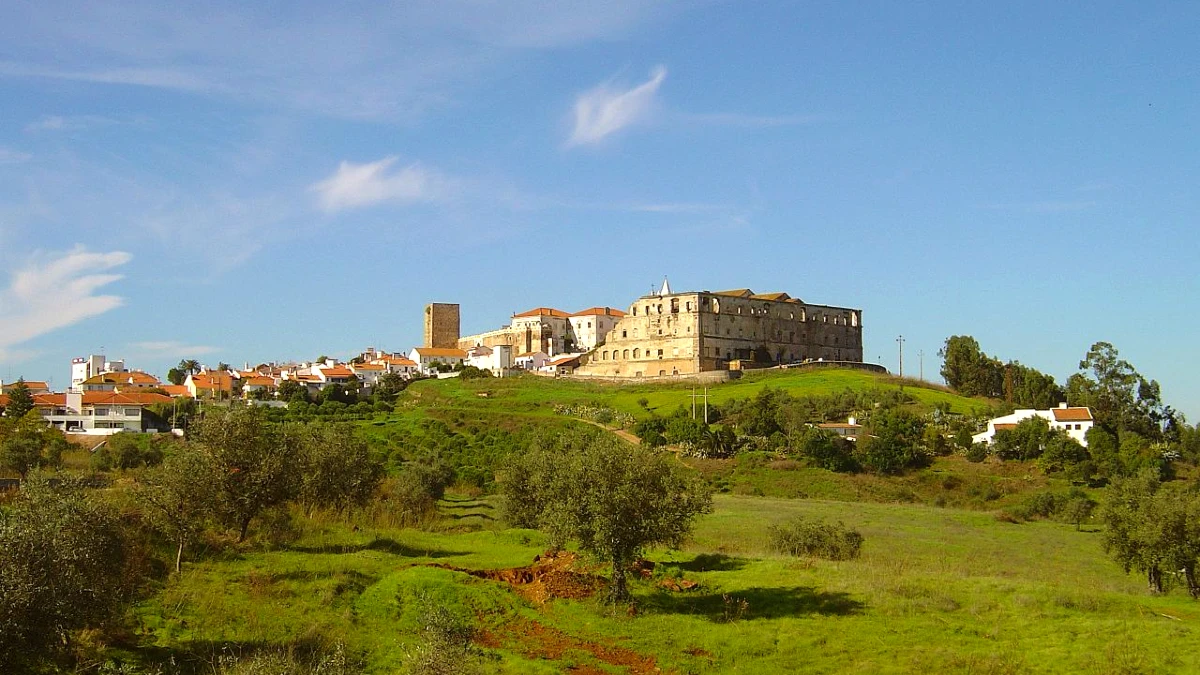
The origins of Avis are closely connected to the Christian Reconquest of the Iberian Peninsula. The settlement developed around its fortress in the early 13th century and gained importance with the arrival of the Military Order of Avis, an institution that would remain closely associated with the town for centuries.
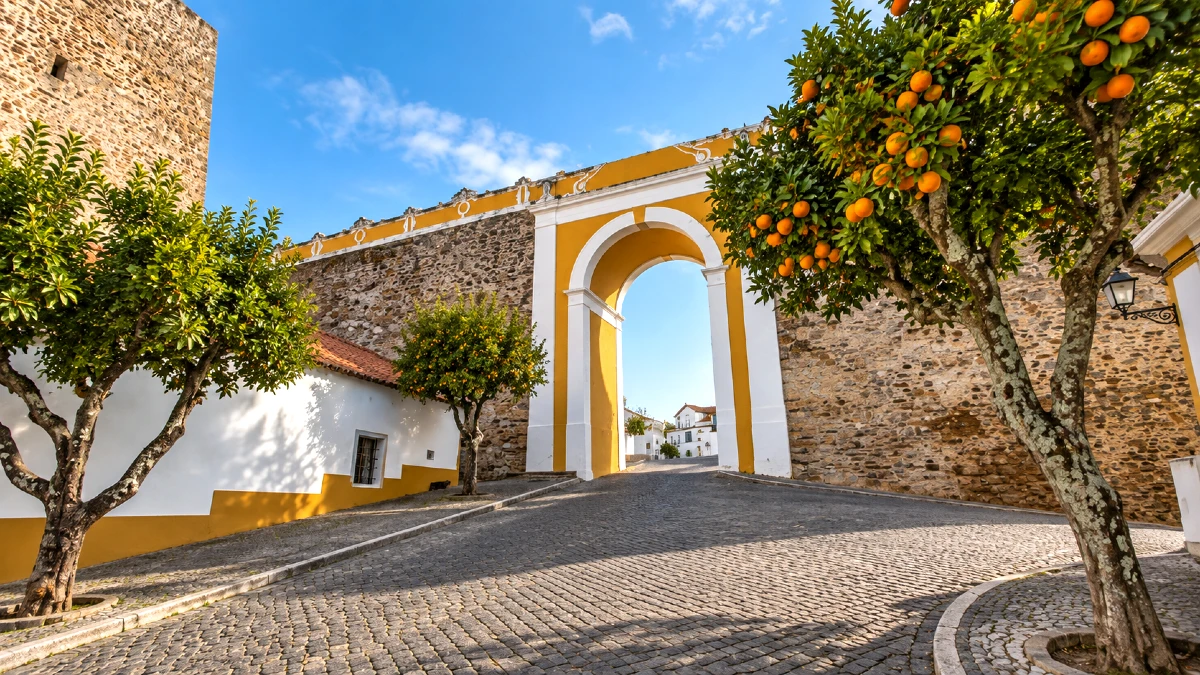
The castle is believed to have been built around 1214, during the reign of King Afonso II. Much of its original defensive structure has disappeared, but three of its six towers still survive: Torre da Rainha, Torre de Santo António and Torre de São Roque. Sections of the medieval walls can also be seen, sometimes incorporated into houses that were gradually built against the old fortifications.
Avis entered a particularly important chapter of Portuguese history in the late 14th century. Following the death of King Fernando I in 1383, Portugal faced a major succession crisis. Two years later, the Master of the Order of Avis became king under the name João I (John I of Portugal).
His accession marked the beginning of the House of Avis, a dynasty that would rule Portugal for nearly two centuries and oversee the beginning of the country’s great maritime explorations. Walking through the peaceful streets today, it is difficult to imagine that the name of this small Alentejo town would become associated with one of the defining periods of Portuguese history.
Medieval walls, a convent and the legend of the eagles
As with many ancient places, documented history and local legend are closely intertwined in Avis. One story tells of religious knights searching for a suitable place to build their fortress when they spotted two eagles resting on a cork oak tree, high above lands that were still under Muslim control.
They supposedly interpreted the birds as a favorable sign and chose the site for their stronghold. The town’s name was subsequently linked to the Latin word avis, meaning “bird”, while the eagles became associated with the order’s symbolism. Although this account belongs more to local tradition than established historical fact, it remains part of the town’s identity.
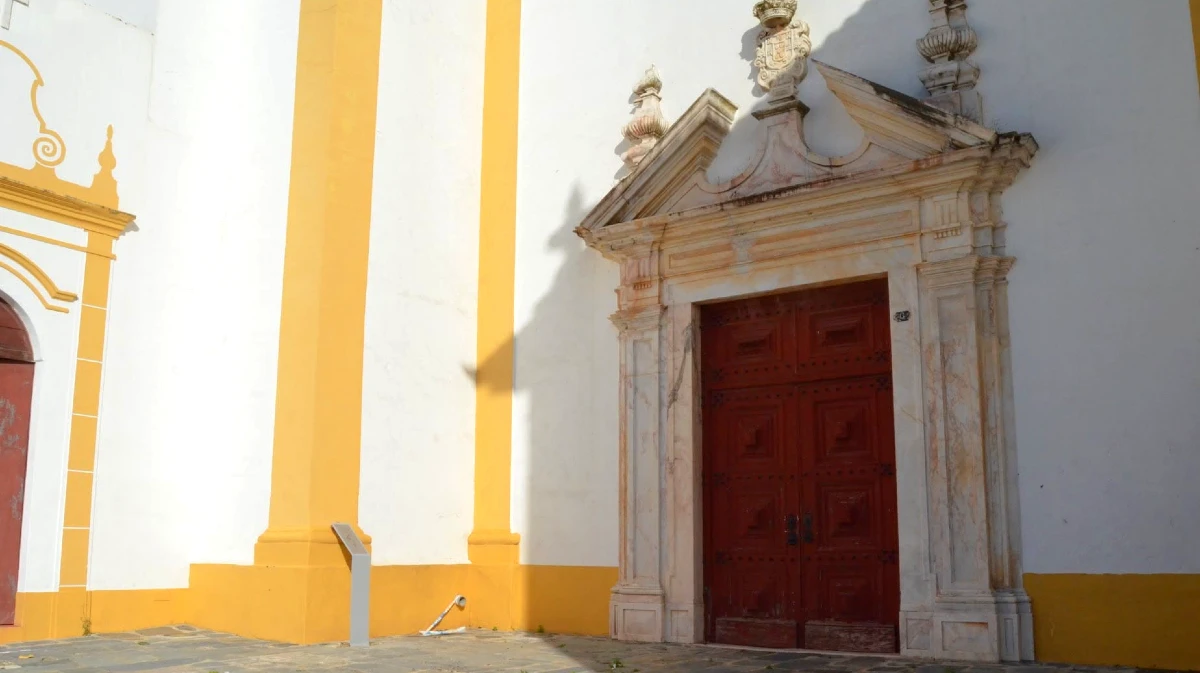
To understand the former importance of the military order, the best place to visit is the Convent of the Order of Avis. The complex once included a church, cloister, sacristy, refectory, chapter house, dormitories and bell tower. Its architecture preserves elements of its medieval origins alongside additions and alterations made over the following centuries.
Inside, visitors can still find fragments of blue and yellow azulejo tiles and decorative features from the Baroque period. The church also contains the tomb of Fernão Rodrigues de Sequeira, the last Master of the Order before the position became permanently associated with the Portuguese Crown.
Part of the former convent now houses the Museu do Campo Alentejano, a museum dedicated to the region’s rural landscape and traditions. The convent complex is officially classified as a Property of Public Interest in Portugal.
A few kilometres outside the town, the Church of Nossa Senhora da Orada offers another glimpse into the area’s religious heritage. Originally built in the 15th century and extensively altered in later periods, it is now distinguished by a neoclassical façade framed by two bell towers. Inside, a wooden ceiling, traditional tiles and religious furnishings reflect the different stages of its history.
From medieval streets to the waters of Maranhão
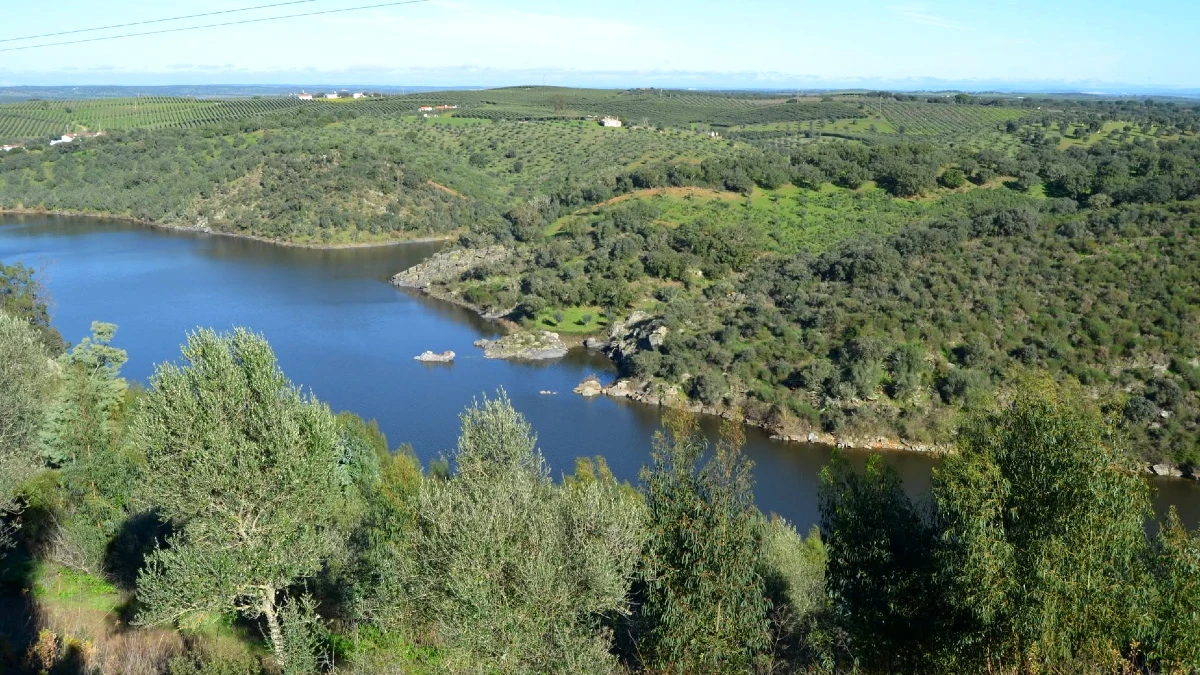
Avis has another unexpected attraction in the middle of Alentejo’s inland countryside: a vast expanse of water. Just outside the town, the Maranhão Dam and reservoir have transformed the surrounding landscape since their construction in the 20th century.
Originally developed in part to support agricultural irrigation, the reservoir has gradually become a destination for outdoor recreation. Its long shoreline and calm waters provide opportunities for water-based activities, creating a striking contrast with the dry landscapes of Alentejo during the hottest months.
The presence of the reservoir gives Avis a distinctive character. Within minutes, visitors can leave behind the narrow medieval streets and whitewashed houses for wide-open views across the water. This combination of history, countryside and lakeside scenery makes the area particularly appealing for a short escape.
Local food provides another reason to explore. Traditional Alentejo ingredients such as bread, olive oil, honey and wine remain central to the region’s cuisine. Among the local sweets are azevias, filhós and various handmade broas. Visitors may also encounter unusual regional liqueurs flavored with raspberry, acorn, cinnamon or blueberry.
Avis does not need an endless collection of spectacular monuments to justify a visit. Its charm lies in the way centuries of Portuguese history remain visible within a landscape that is unmistakably Alentejo. And when the medieval streets give way to the broad waters of Maranhão, this small destination suddenly reveals a much larger landscape to explore.
Practical information for visiting Avis
Avis makes an excellent day trip, although staying overnight allows more time to enjoy the town’s peaceful atmosphere and surrounding countryside. A car is the most practical way to explore this part of Alentejo, particularly if you plan to visit the Maranhão reservoir.
- Where is Avis? In the Portalegre district, in northern Alentejo, Portugal.
- What should you see? The remains of the medieval castle and walls, the three surviving towers, the Convent of the Order of Avis and the Museu do Campo Alentejano.
- For nature lovers: Allow time to explore the Maranhão Dam and reservoir, especially when the weather is mild.
- How long should you stay? One day is enough to visit the main historic sites. Two days offer a more relaxed experience combining heritage, local food and outdoor activities.
- When is the best time to visit? Spring and early autumn generally offer more comfortable temperatures for exploring Alentejo on foot than the height of summer.
Still largely overlooked by visitors following Alentejo’s better-known routes, Avis offers something increasingly rare in Portugal: the pleasure of discovering a place before it becomes a must-see destination.tejo, Avis possède ainsi ce qui devient de plus en plus précieux au Portugal : le sentiment de découvrir un lieu avant qu’il ne soit devenu une étape incontournable.