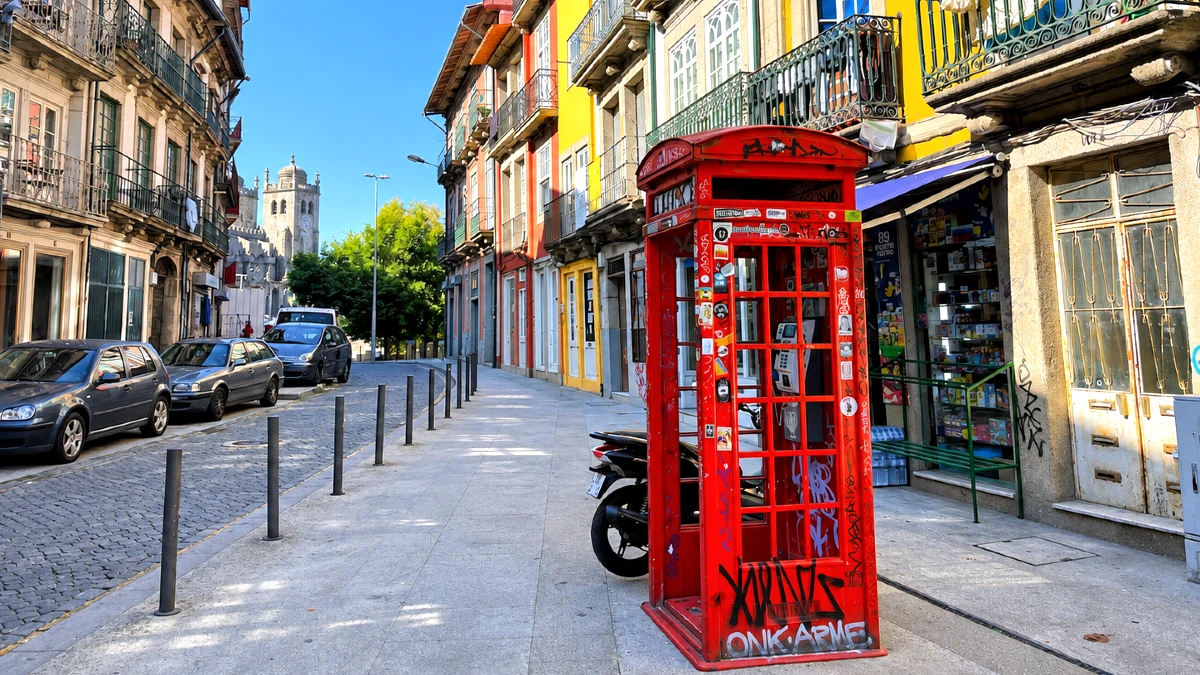
They have been part of Porto’s streetscape for decades, although their telephones are now rarely used. The city plans to restore 13 traditional red telephone booths located across some of Porto’s best-known neighborhoods, giving these familiar landmarks a new purpose. The initiative aims to preserve reminders of an earlier era as their condition gradually deteriorates.
The proposal, made public on November 13, 2026, is scheduled for a vote by the municipal executive on Tuesday, November 17. It would allow the city to take ownership of the booths, currently belonging to telecommunications operator MEO, at no cost. Their future use has yet to be decided, although the municipality intends to keep them in public spaces.
Porto wants to preserve a disappearing piece of its urban heritage
With their distinctive red color and instantly recognizable design, these old telephone booths recall a time when making a call from the street was part of everyday life. Before mobile phones became widespread, public telephone booths were essential facilities, found in squares, at intersections and along busy shopping streets.
Their original purpose has gradually disappeared as technology has evolved. According to the municipal proposal, several booths are now in poor condition. Some have also been used inappropriately or repeatedly damaged by vandalism.
Rather than remove them permanently, Porto’s municipal authorities want to protect their symbolic and historical value. Discussions have therefore taken place with MEO about transferring the booths to the city free of charge. If the donation is approved, Porto will be able to begin restoring them and consider new uses suited to the urban environment.
Thirteen red telephone booths across Porto’s neighborhoods
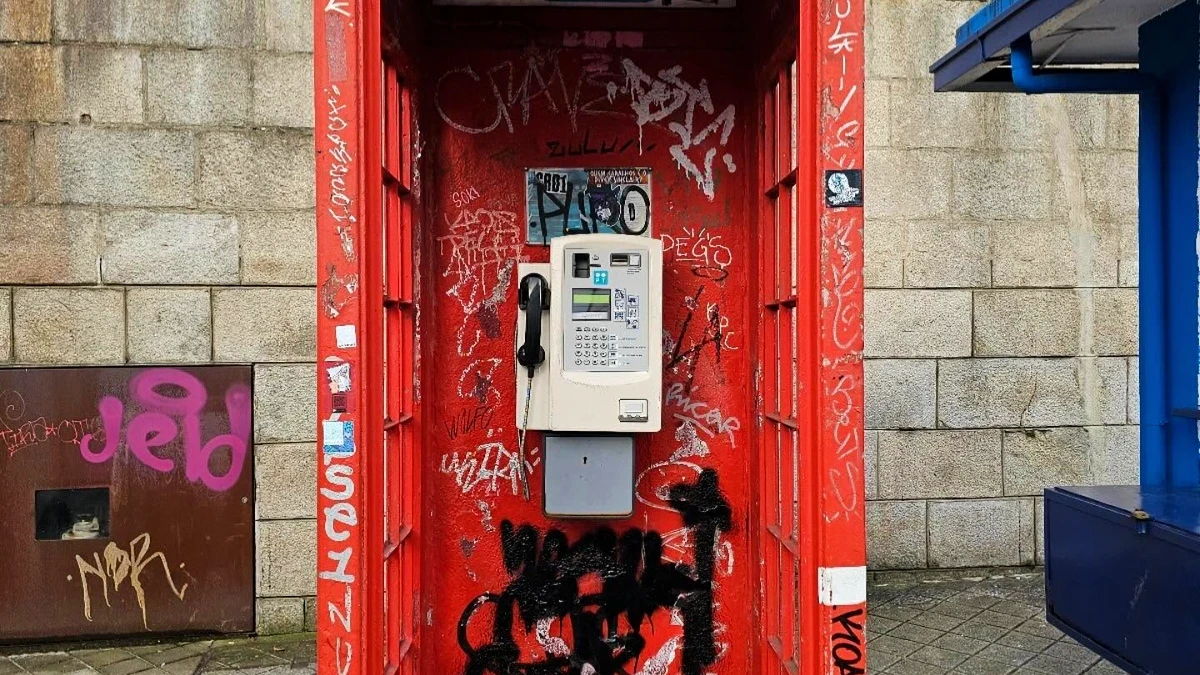
The booths are located in several areas familiar to both residents and visitors. Among the locations identified are Avenida dos Aliados, Praça da Liberdade and Praça da Ribeira, three prominent public spaces closely associated with Porto’s historic center and tourism.
Other booths can be found near Bolhão Market, on Rua de Fernandes Tomás, at Largo de Mompilher and in Praça do Marquês de Pombal. The project also includes locations on Rua Chã, Rua Saraiva de Carvalho, Rua Mouzinho da Silveira and Rua do Infante Dom Henrique.
Their distribution shows that the booths are not confined to a single part of the city. They form part of different urban settings, from Porto’s grand public squares to the narrower streets of its historic neighborhoods.
Preserving them would help retain recognizable features of Porto’s streets while preventing these unused structures from falling further into disrepair.
What new purpose could the telephone booths serve?
That remains the main unanswered question. The proposal, signed by Catarina Araújo, the city councilor responsible for urban planning and public spaces, calls for the booths to be restored and preserved before being given new functions.
No specific future use has been officially announced. The municipality has not yet indicated whether the booths will retain a connection to communications or be transformed into cultural, informational or community facilities.
The idea of repurposing these small structures reflects a broader interest in preserving everyday urban heritage. A telephone booth may lose its practical function while remaining a recognizable part of a city’s identity. Removing it entirely would also erase a reminder of the habits and technologies that shaped daily life for several generations.
For Porto, the challenge is therefore to balance preservation with adaptation. The goal is not necessarily to keep every booth exactly as it was, but to find a useful role that gives these historic structures a reason to remain in the city.
The first step, however, is administrative. Porto’s municipal executive is expected to vote on November 17 on whether to accept MEO’s donation. If the transfer is approved, further details will still be needed on the restoration work, future uses and implementation schedule.