It was supposed to become a major theme park celebrating Portuguese culture. Almost three years after the unveiling of the ambitious Porto Boega project, Boega Island, on the River Minho along the border between Portugal and Spain, is now on sale for €6 million. The announcement raises fresh questions about the future of a tourist attraction that was widely promoted but never reached the construction stage.
The island is listed on Private Islands Online, an international property platform specialising in private islands. Advertised as a wooded natural retreat accessible only by boat or helicopter, it is no longer being marketed around the theme park announced in 2023. The asking price is five times the amount reportedly paid for the property in November 2021.
The sale represents a significant development for a project whose ambitions Portugal.fr covered in January 2025. At the time, Porto Boega promised to turn a largely forgotten island into an international tourist destination. The latest information, however, suggests that this vision remains a long way from becoming reality.
Porto Boega: the theme park that was meant to transform the island
Porto Boega, un parc d’attractions qui devait transformer l’île
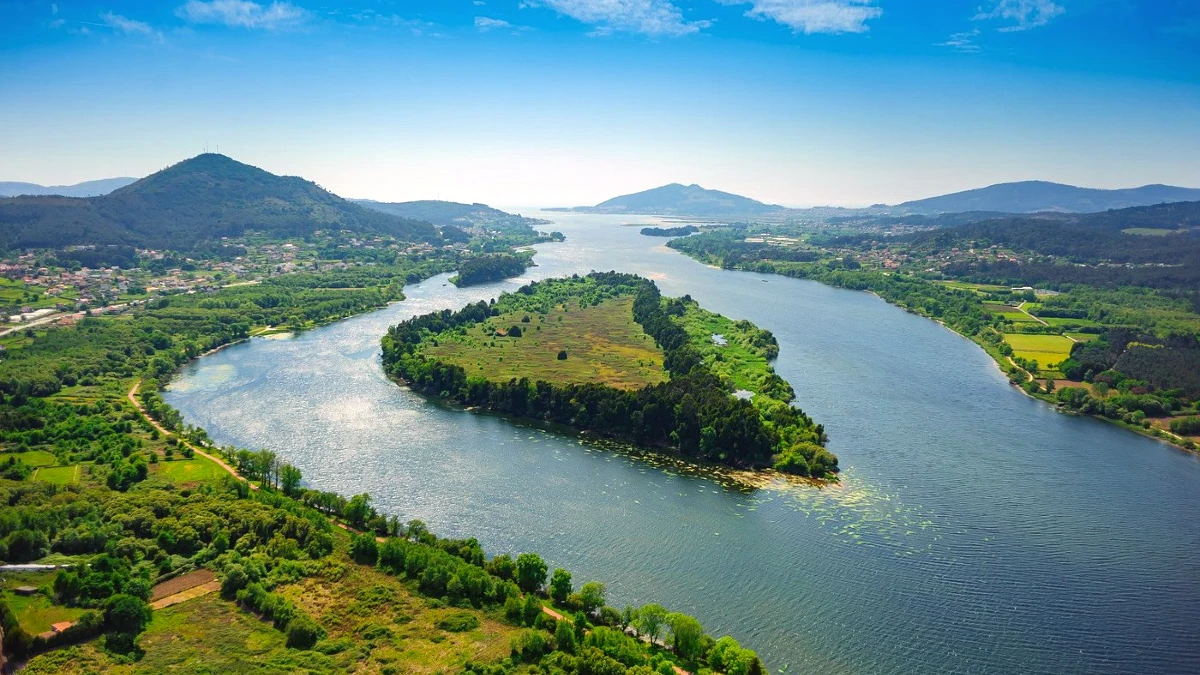
Located opposite Gondarém, in the municipality of Vila Nova de Cerveira, Boega Island occupies an unusual position on the River Minho. Also known as Ilha dos Amores, or Island of Lovers, because of its heart-like shape, it has a history connected to farming, livestock and trade between the two riverbanks. Its isolation and natural surroundings have attracted several tourism proposals over the decades.
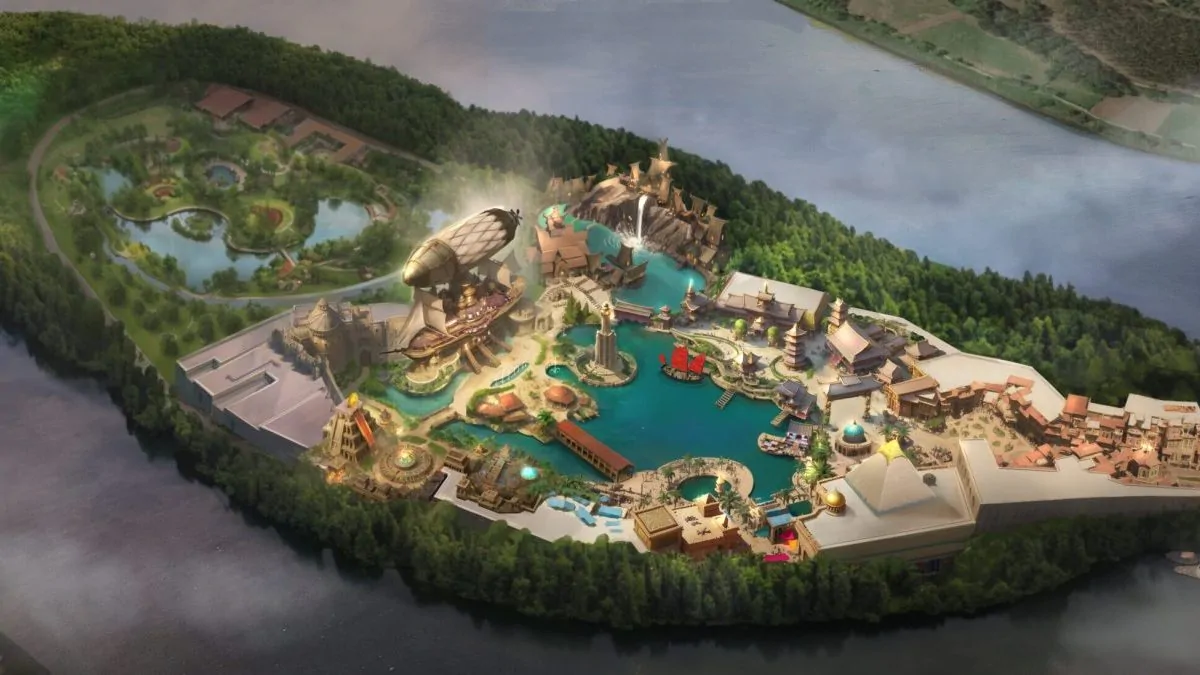
The most ambitious was unveiled in November 2023 at IAAPA Expo in Orlando, Florida. Named Porto Boega, the project brought together investment firm BlueCrow Capital and international attractions design company Storyland Studios. Their vision was to create an immersive destination inspired by Portuguese history, traditions and culture.
Plans included themed attractions, restaurants, shops and a range of visitor experiences. The designers also emphasised the importance of integrating the development into the island’s natural landscape.
In January 2025, Portugal.fr explored those ambitions in an article about the proposed transformation of the island. Even then, the final funding arrangements, construction timetable and necessary permits remained unclear. Nearly two years later, no construction work on the theme park has been announced.
An island listed for €6 million, five times its previous purchase price
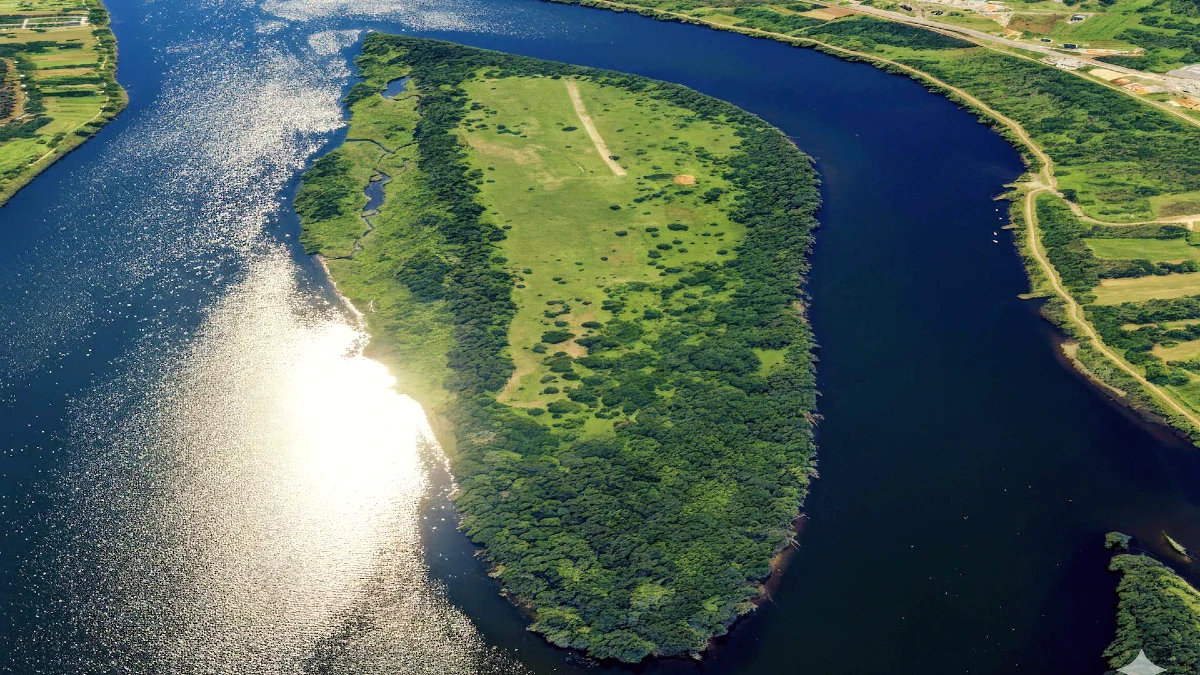
The new property listing presents a very different picture of Boega’s future. According to reports published in early November 2026 by Spanish newspaper La Voz de Galicia and several Portuguese media outlets, the island is being offered to international buyers for €6 million.
BlueCrow Capital reportedly purchased the property in November 2021 for €1.2 million. The current asking price is therefore five times the reported acquisition cost, a difference of €4.8 million. However, this is not a realised profit, as no sale at the new price has been confirmed.
There are also discrepancies over the island’s exact size. Private Islands Online lists it at 40 hectares, while several Portuguese publications refer to 47 hectares. Earlier presentations of Porto Boega described a site covering approximately 50 hectares.
But the most significant change concerns neither the price nor the size. The theme park is absent from the current sales pitch, which instead highlights the property’s privacy and natural setting. The listing mentions potential residential or ecological uses, although any such development would remain subject to the relevant regulations.
The theme park reportedly never reached the municipal planning stage
Information reported by Portuguese media offers further insight into Porto Boega’s difficulties. According to an article published by ZAP on 9 November 2026, Rui Teixeira, mayor of Vila Nova de Cerveira, stated that no application relating to the proposed theme park had been submitted to the municipality.
This is an important distinction. It suggests that the public announcements and design studies were never followed, according to the mayor, by the formal municipal procedures required to develop the tourist complex. The project therefore appears not to have reached a crucial administrative stage.
The situation is less clear from the designers’ perspective. Storyland Studios still features Porto Boega on its official website, describing it as a tourism concept developed with BlueCrow Capital. Its continued presence online does not establish that investment or development work is ongoing, but neither does it confirm that the project has been formally cancelled.
The island’s sale is therefore a strong indication of a possible change in property strategy. Without an explicit statement from the developers, however, it would be premature to declare Porto Boega definitively abandoned.
Environmental restrictions could severely limit future development
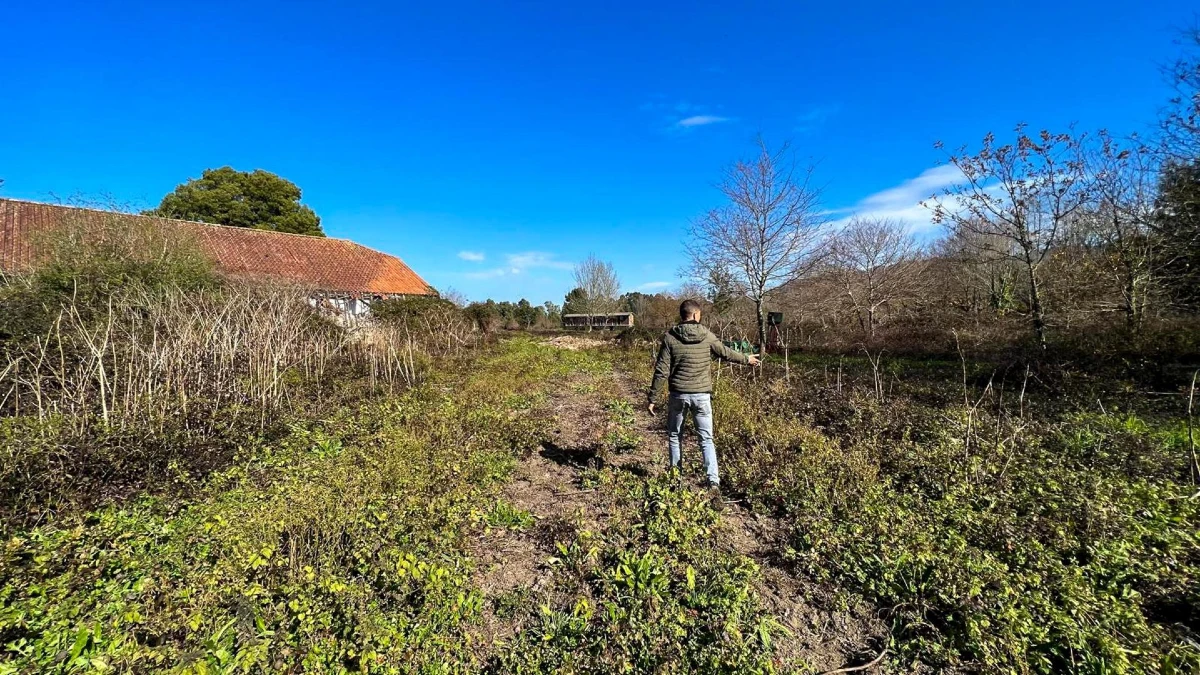
The island’s future also depends on rules that extend well beyond the ambitions of its owners. Situated in a sensitive river environment close to the Spanish border, Boega is subject to environmental and planning restrictions that may limit construction and new activities.
According to statements by Rui Teixeira reported in the Portuguese press, currently permitted uses are largely restricted to agriculture and the restoration of existing buildings. Other proposals would require assessment by the relevant authorities, including the municipality and the Portuguese Environment Agency (APA).
These restrictions contrast with some of the possibilities suggested in property advertisements. The theoretical potential to develop eco-friendly accommodation or a private residence does not amount to planning permission. Any prospective buyer would need to verify the property’s official records, development rights and applicable authorisations before proceeding.
Another discrepancy deserves attention. While the sales listing describes the island as having no buildings, the mayor has referred to the possibility of restoring existing structures. Official property documents would be needed to clarify this point.
The theme park proposal had already attracted opposition when it was presented in 2023. Politicians and environmental organisations on the Spanish side of the river expressed concerns about the potential impact of a major tourism development on this natural area of the Minho.
What next for Boega Island?
The sale follows several decades in which the island has been associated with different development ambitions. Before Porto Boega, golf and hotel projects had also been considered, although none resulted in the transformation originally proposed.
A rather different agricultural activity has also emerged in recent reports. According to Portuguese media, the mayor of Vila Nova de Cerveira confirmed the existence of an authorisation issued by Infarmed, Portugal’s medicines authority, relating to the cultivation of cannabis for medical purposes on the island. This highlights how plans for Boega have extended beyond tourism.
A future owner could therefore acquire an exceptional property in terms of location and scale, but one whose potential uses remain subject to significant restrictions. The €6 million asking price buys a private island, not an automatic right to build a tourist resort.
As for Porto Boega, its future remains uncertain. The ambitious announcement in 2023, the property listing in 2026 and the reported absence of a municipal planning application paint a very different picture from the one originally presented. What happens next will depend not only on the owners’ decisions, but also on the permissions any prospective buyer may be able to obtain.