Portugal has approximately two weeks left to convince Brussels that it is taking adequate steps to protect dolphins threatened by fishing activities. If the response is deemed insufficient, the European Commission could refer the country to the Court of Justice of the European Union. The warning comes as scientific estimates suggest that at least one dolphin dies every day off mainland Portugal as a result of interactions with fishing gear.
On Monday, November 16, 2026, marking Portugal’s National Maritime Day, environmental organization Quercus warned that the country’s plan to reduce accidental catches of dolphins, seabirds and marine turtles had still not been implemented. First presented several years ago, the measures were expected to take effect in 2026 but reportedly remain without dedicated funding.
Portugal now faces an important European deadline. Brussels is concerned not only about the deaths of protected marine animals, but also about the country’s failure to establish sufficient monitoring and prevention measures under EU environmental legislation.
Why the European Commission is threatening legal action
On October 1, 2026, the European Commission sent Portugal a reasoned opinion for failing to meet certain obligations under the EU Habitats Directive. This marked the second stage of an infringement procedure that began with a formal notice in November 2023.
According to the Commission, Portugal has failed to establish an effective system for monitoring the accidental capture of several protected marine species. European authorities have also identified shortcomings in further scientific research and conservation measures, including within certain Natura 2000 protected areas.
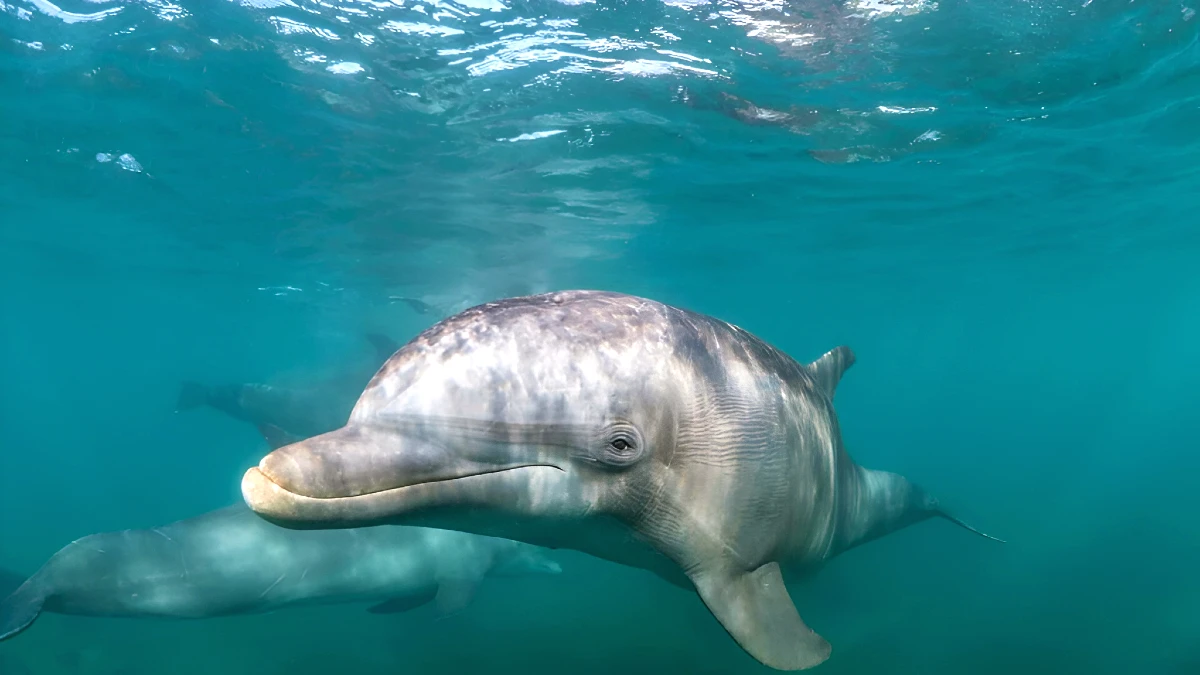
Three species are particularly affected: the bottlenose dolphin (Tursiops truncatus), the common dolphin (Delphinus delphis) and the harbor porpoise (Phocoena phocoena). These marine mammals can become trapped in gillnets, trammel nets and certain types of fishing lines.
Portugal was given two months to respond to the reasoned opinion and take the necessary action. If the Commission considers its response inadequate, it may decide to bring the case before the Court of Justice of the European Union. Such a referral is not automatic, however, and no ruling against Portugal has been issued in this procedure.
At least one dolphin may die every day in fishing gear

Behind the European legal proceedings lies an environmental problem that is largely invisible from the coast. Dolphins accidentally caught in fishing nets can drown when they are unable to reach the surface to breathe. Others die at sea without ever being recovered, making it particularly difficult to assess the true scale of the problem.
According to scientific research highlighted by CESAM, a research center at the University of Aveiro, at least one dolphin is estimated to die every day off mainland Portugal following interactions with fishing gear. The actual number could be higher, as not all deaths are recorded.
Accidental catches also affect other marine wildlife. According to figures cited by Quercus and reported by Público on November 16, approximately 19,774 seabirds are estimated to be caught accidentally each year during fishing activities in Portuguese waters. Based on this estimate, Portugal would rank third in Europe for this indicator.
Marine turtles are also vulnerable, particularly when they become entangled in fishing lines or caught on hooks. These incidents add further pressure to species whose survival also depends on healthy habitats and changing conditions in marine ecosystems.
A protection plan exists, but implementation remains stalled
Portugal already has a proposed national action plan designed to reduce the accidental capture of seabirds, marine mammals and reptiles. Presented at the United Nations Ocean Conference in Lisbon in 2022, the plan underwent public consultation until March 18, 2026.
Its proposed measures include stronger monitoring of fishing activities, changes to fishing equipment and the introduction of devices designed to keep animals away from dangerous areas. The plan also calls for better training for fishing crews and regular assessments of how effectively the measures work.
However, according to Quercus, the plan has still not entered into force, and no specific funding has been allocated to its implementation. The organization also points to coordination problems between the public authorities involved, particularly the Directorate-General for Natural Resources, Safety and Maritime Services (DGRM) and the Institute for Nature Conservation and Forests (ICNF).
Marine biologist Margarida Monteiro, speaking to Público, believes some solutions could nevertheless be introduced relatively quickly. Several techniques have already been tested, meaning targeted measures could begin before the entire national program is fully operational.
Technical solutions could help reduce accidental catches
Among the measures supported by Quercus are acoustic deterrent devices, designed to alert certain cetaceans to the presence of fishing nets. Other equipment can help keep seabirds away from fishing operations, including systems that imitate the silhouette of a predator.
The environmental organization is also calling for fishing vessels to carry appropriate tools to release accidentally captured turtles, remove hooks when possible and improve the animals’ chances of survival.
However, these solutions need to be adapted to different species, fishing methods and marine environments. Their effectiveness must be assessed, while widespread adoption would require funding, enforcement and cooperation with the fishing industry.
The European deadline in early December 2026 now represents an important test for Portuguese authorities. Beyond the formal response expected by Brussels, the central issue is whether Portugal will introduce measures capable of reducing accidental deaths among marine wildlife.
The European Commission will have to determine whether Portugal’s commitments and actions meet its requirements. For dolphins and other affected species, the real measure of progress will be whether these protections move beyond official documents and become part of everyday fishing practices.