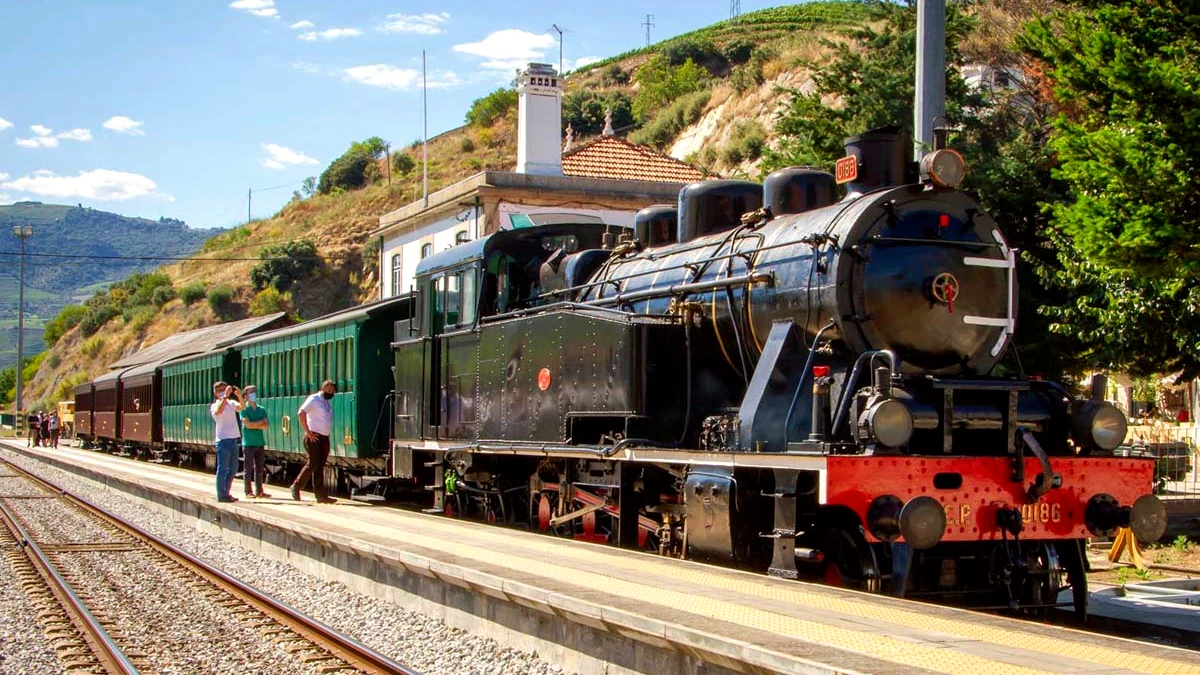
On 28 October 1856, Portugal’s first passenger train travelled from Lisbon to Carregado, marking the beginning of a new era in the country’s transport history. Exactly 170 years later, a historic steam train is set to retrace that pioneering journey, launching a year of celebrations dedicated to Portugal’s railway heritage.
When the first train left Lisbon in October 1856, rail travel was still a remarkable novelty in Portugal. The inaugural journey covered approximately 36 kilometres, linking the capital with Carregado, a small town to the north.
The ceremony took place during the reign of King Pedro V, at a time when travelling across the country largely depended on roads, horse-drawn transport and river connections.
The railway promised something different: faster journeys, more reliable transport for goods and new connections between towns and regions. But Portugal’s first railway adventure did not go entirely according to plan.
Portugal’s First Train Journey Had an Unexpected Twist
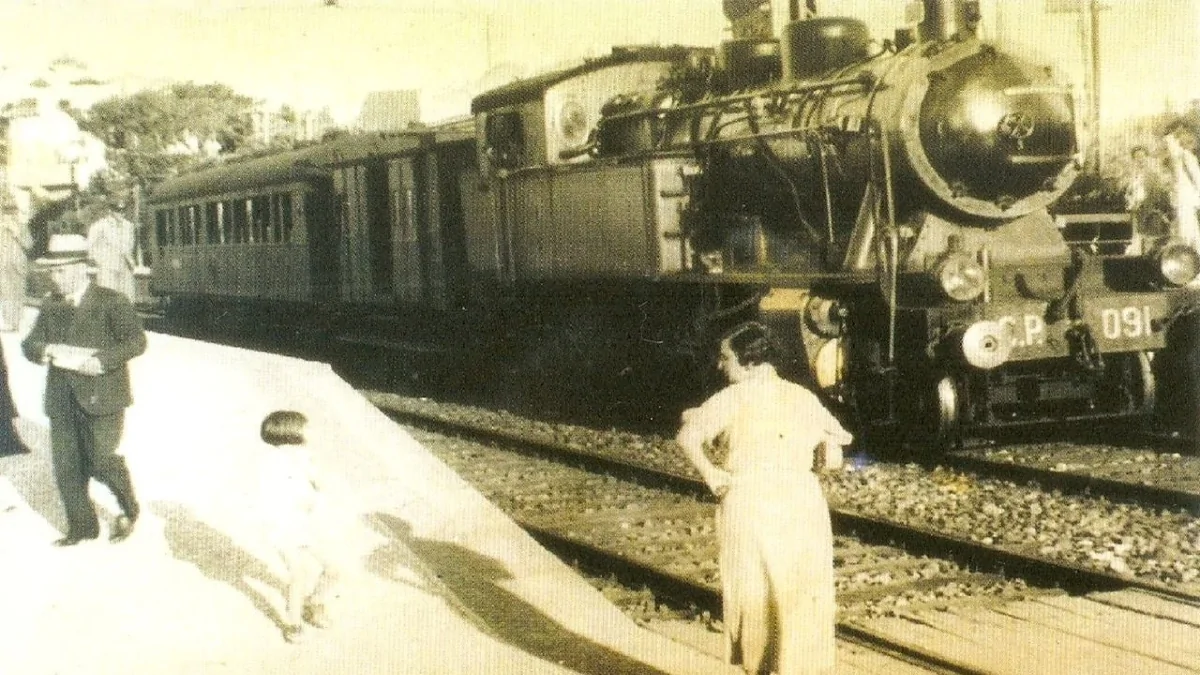
On 28 October 1856, the inaugural train departed from a temporary station at Cais dos Soldados, near the site of today’s Santa Apolónia railway station.
The royal party and invited guests travelled in a train of 14 carriages pulled by two steam locomotives. According to historical accounts preserved in the archives of CP – Comboios de Portugal, the outward journey to Carregado took approximately 40 minutes, accompanied by bells, celebrations and considerable public excitement.
The return trip proved rather less straightforward. The weight of the carriages placed the locomotives under considerable strain, and a mechanical failure caused a lengthy delay. The journey back to Lisbon eventually took around two hours.
Despite the difficulties, the inauguration marked a decisive moment in Portuguese history. Regular railway services began the following day.
Over the decades that followed, tracks gradually extended across the country, connecting major cities, agricultural regions and industrial centres.
New stations, bridges and tunnels transformed the landscape, while rail transport helped reshape trade, travel and everyday life.
A Steam Train Returns to the Original Route 170 Years Later
To mark the anniversary, Infraestruturas de Portugal is organising a commemorative journey between Lisbon and Carregado on Wednesday, 28 October 2026.
The special train is scheduled to depart from Lisbon’s Santa Apolónia station, using a historic steam locomotive and period-inspired staging to recreate the atmosphere of the original journey.
The event is the centrepiece of a year-long programme entitled Uma História em Movimento – A History in Motion.
According to Infraestruturas de Portugal 1, the celebrations will include exhibitions, conferences, guided visits to railway facilities, heritage activities and publications exploring the country’s railway history.
Events are scheduled to continue until October 2027.
The programme also includes opportunities to discover Portugal’s historic royal train, preserved at the National Railway Museum (Museu Nacional Ferroviário) 2 in Entroncamento.
The museum holds an extensive collection of locomotives, carriages and railway equipment documenting the development of rail transport in Portugal. Visitors interested in the anniversary can consult the official 170 Years of Portuguese Railways programme 3 for exhibitions, museum visits and other public events.
The commemorative Lisbon–Carregado train itself has not been advertised as a public excursion with tickets available for purchase.
From Steam Locomotives to Portugal’s Modern Railway Network
Portugal’s railway system has changed dramatically since that first 36-kilometre journey. Today, trains remain an important part of daily life, particularly around Lisbon and Porto and along the country’s main intercity routes.
In 2025, national rail operator CP carried 208.2 million passengers, an increase of 10.6% compared with the previous year, according to the company’s published figures.
Portugal is also investing in railway modernisation, electrification and planned high-speed connections intended to improve journeys between major urban centres.
For Infraestruturas de Portugal, the 170th anniversary is an opportunity both to preserve the country’s railway heritage and to reflect on the future of rail transport.
The steam train journey between Lisbon and Carregado brings those two stories together. What began as a short, occasionally troubled trip in 1856 eventually helped transform the way Portugal travelled, traded and connected its communities.
- https://infraestruturasdeportugal.pt/pt-pt/170-anos-do-caminho-de-ferro-em-portugal-uma-historia-em-movimento ↩︎
- National Railway Museum : https://www.fmnf.pt/en ↩︎
- Official programme : official 170 Years of Portuguese Railways programme ↩︎