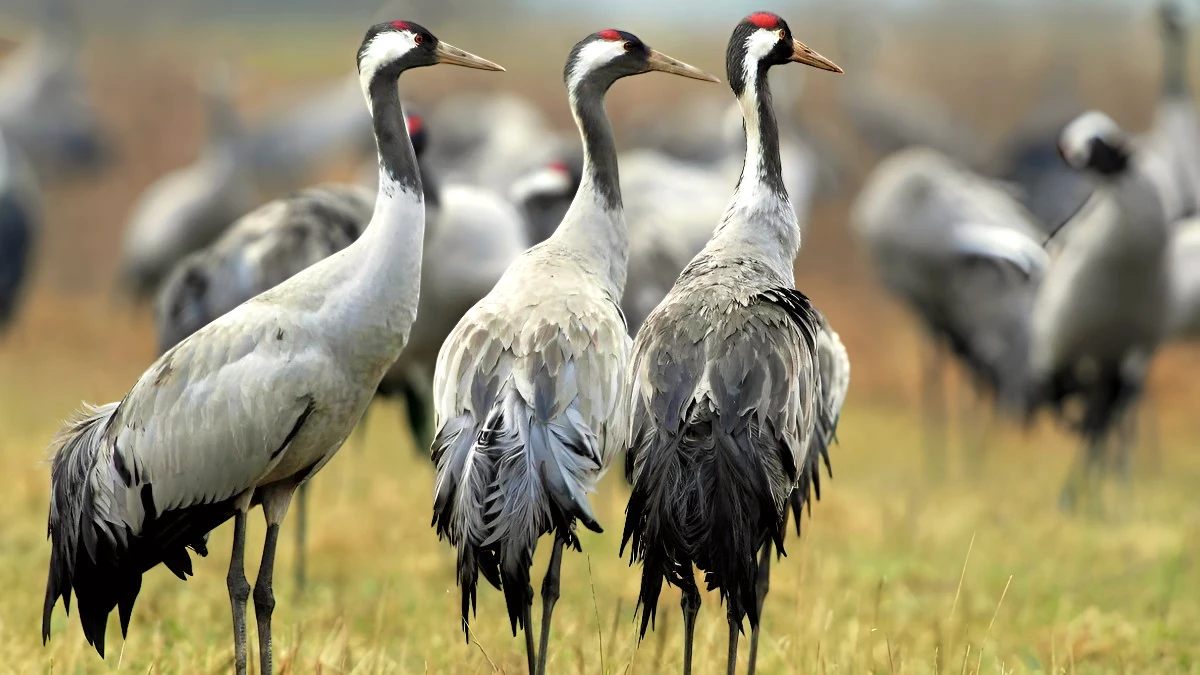
They usually begin arriving in the final days of October. After travelling across much of Europe, thousands of common cranes spend the winter in Portugal’s Alentejo region, gathering on its open plains and wetlands before heading north to their breeding grounds, generally by early March.
During the most recent winter census, carried out in January 2026, 10,147 cranes were recorded in Portugal. Yet just a few weeks earlier, in December, observers had counted only 4,898.
Such a striking difference does not mean the population suddenly doubled. Instead, it reveals just how mobile these remarkable migratory birds can be, and how difficult they are to count accurately. For anyone hoping to witness their arrival, however, one thing is certain: the Alentejo is the place to look.
A remarkable journey from northern Europe
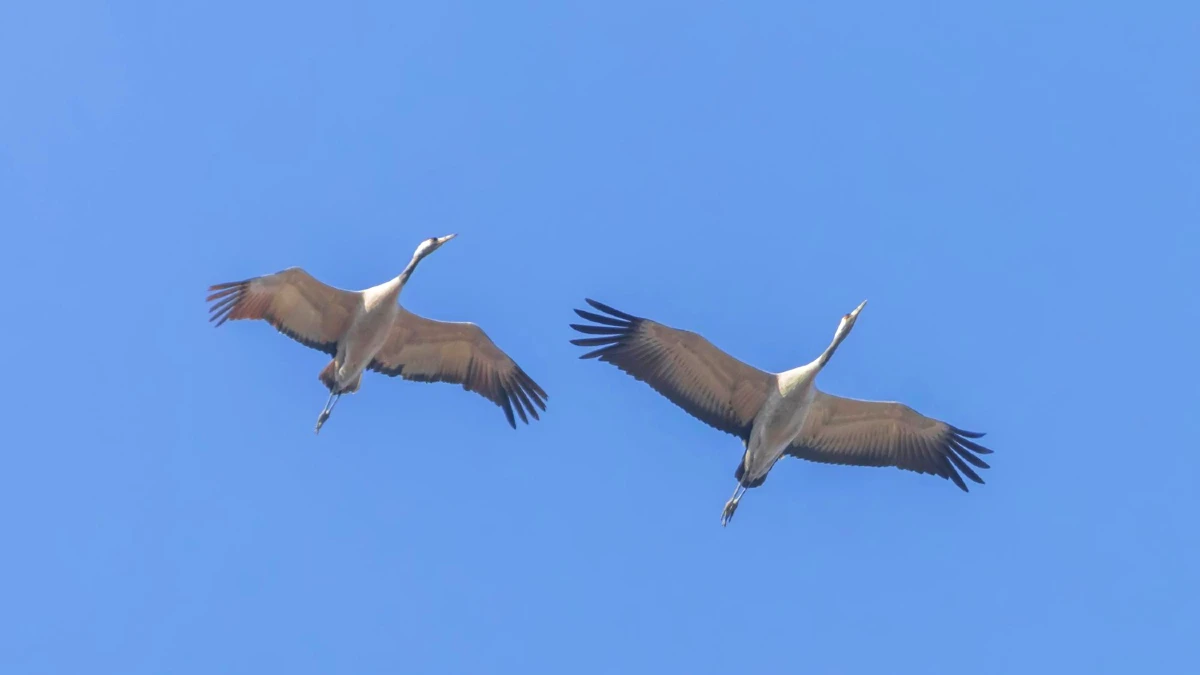
The common crane (Grus grus) is one of the largest migratory birds regularly seen in Portugal. With its elegant silhouette, long neck and distinctive flight formations, it is an unmistakable sight as it crosses the European skies on journeys spanning thousands of kilometres.
According to Portugal’s Institute for Nature Conservation and Forests (ICNF), the cranes wintering in the country originate mainly from Fennoscandia and the Baltic states. They travel south during autumn, returning towards their northern breeding territories as winter draws to a close.
For some of these birds, Portugal marks the southern end of a remarkable seasonal journey. Its agricultural plains provide valuable feeding grounds, while wetlands and other quiet open areas offer places to rest and gather overnight.
But Europe’s winter migration patterns are changing. As winters become milder, increasing numbers of cranes can remain further north rather than completing the traditional journey south.
In France, where large-scale wintering was once relatively unusual, tens of thousands of cranes can now spend the entire colder season. Similar changes have been observed in Germany, suggesting that the geography of crane migration is gradually shifting.
Where can you see cranes in the Alentejo?
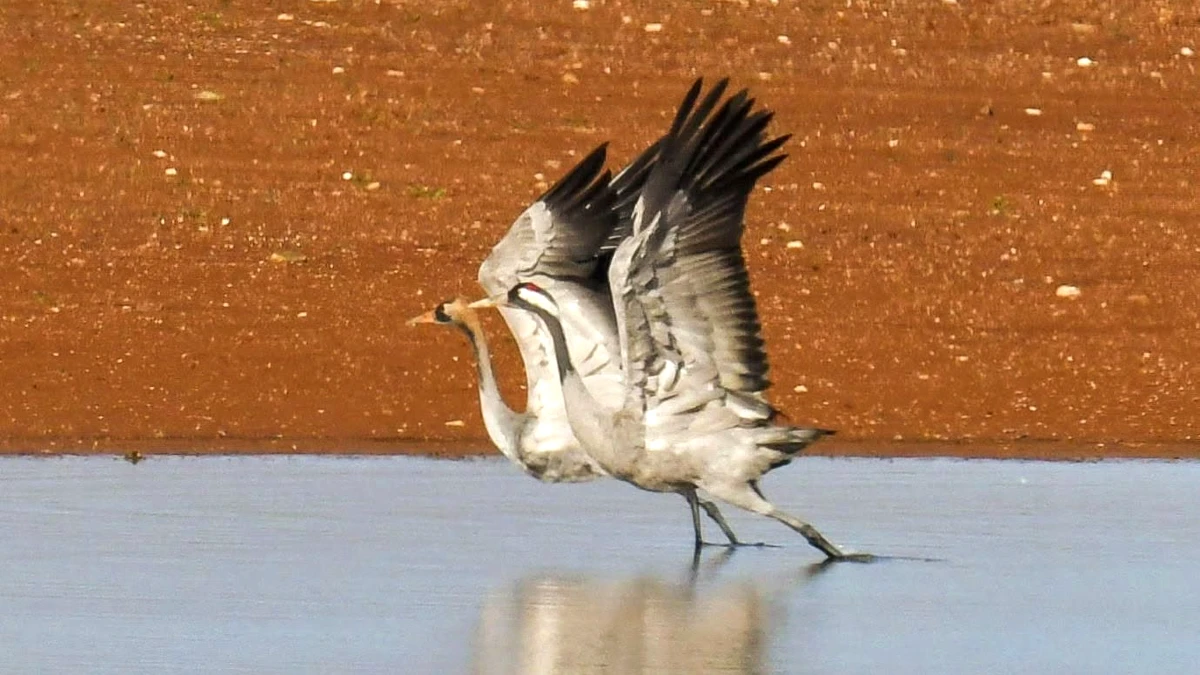
All the areas monitored during Portugal’s winter crane census lie within the Alentejo. Yet this is an enormous region, stretching from the Spanish border to the broad agricultural landscapes of southern Portugal.
In Upper Alentejo (Alto Alentejo), cranes are regularly recorded around Campo Maior, Arronches, Monforte, Elvas and Juromenha. Further south, Central Alentejo includes areas around Évora and Mourão, close to the vast Alqueva reservoir.
In Lower Alentejo (Baixo Alentejo), important observation areas include Moura, Alvito and the Campo Branco plains surrounding Castro Verde. These wide, open landscapes are particularly well known among birdwatchers for their rich birdlife.
However, crane distribution can change considerably during a single winter.
In January 2023, for example, a total of 12,492 cranes were recorded across Portugal. Of these, 5,240 were counted in Central Alentejo and 5,192 in Lower Alentejo, while a further 2,060 were recorded in Upper Alentejo.
For visitors, these figures offer a useful reminder: think of these locations as promising wildlife areas rather than places where sightings are guaranteed. Weather, food availability and seasonal movements can all influence where cranes gather.
Why do crane numbers fluctuate so dramatically?
The Censo Ibérico do Grou, or Iberian Crane Census, takes place twice each winter, once in December and again in January. The counts are coordinated simultaneously across Portugal and Spain.
On the Portuguese side, the ICNF, the Portuguese League for Nature Protection (LPN), GEDA and Herdade da Contenda organise the surveys with the support of numerous volunteers.
Recent results illustrate why individual counts need to be interpreted carefully.
In December 2024, observers recorded 9,296 cranes, followed by approximately 8,000 in January 2025. The following winter brought the opposite pattern: 4,898 cranes in December 2025, rising to 10,147 in January 2026.
Weather conditions help explain some of these variations. Heavy rainfall during the most recent winter created temporary wetlands across parts of the Alentejo. These provided additional places for cranes to feed and rest, sometimes outside the areas traditionally surveyed.
Access to large privately owned estates has also become more difficult for some census teams, adding another challenge to accurate monitoring.
As a result, a temporary fall in recorded numbers does not necessarily indicate a decline in the crane population. Reliable trends can only emerge from consistent monitoring over many years.
Europe’s crane migration is beginning to change
Beyond the annual fluctuations, researchers are observing broader developments in the lives of these migratory birds.
During the winter of 2025–2026, several thousand cranes were reportedly killed by outbreaks of avian influenza along their migration routes, particularly in Germany, France and northern Spain.
At the same time, the timing of seasonal movements appears to be shifting. In 2026, the first cranes began leaving the Iberian Peninsula as early as the first week of February, earlier than would normally be expected.
It would be premature to draw sweeping conclusions from a single season. Nevertheless, disease outbreaks, increasingly variable weather and milder European winters are changing the conditions these birds encounter on their long journeys.
This makes annual monitoring especially valuable. Beyond producing an impressive count of birds, decades of census data can help scientists understand how migration routes, wintering patterns and the distribution of the species evolve over time.
How to watch cranes without disturbing them
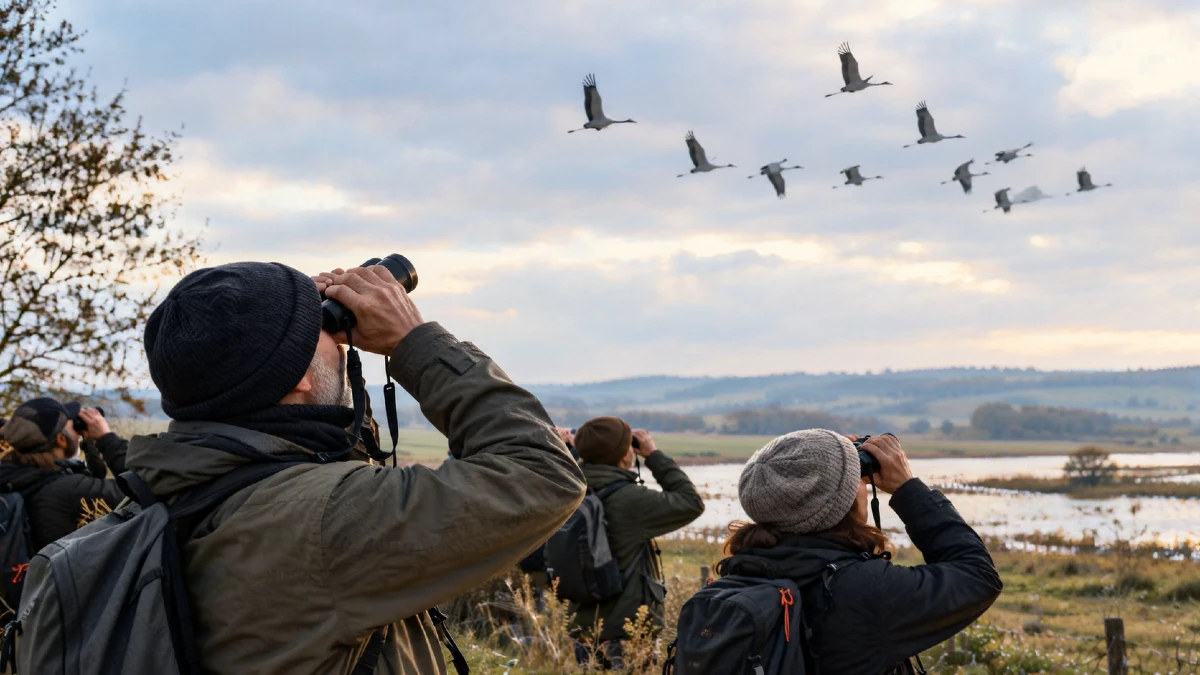
Watching hundreds of cranes gather across an open landscape can be unforgettable. Their unmistakable calls carry across the plains, and the sight of a large flock taking flight together is one of winter’s great wildlife spectacles in the Alentejo.
But observing these birds responsibly is essential.
Binoculars are strongly recommended, allowing visitors to enjoy the experience from a safe distance without disturbing the flocks. Forcing cranes to take flight unnecessarily uses valuable energy at a time when they need to conserve their reserves.
Visitors should also stay on public tracks and paths, respect private property and avoid using drones or devices intended to attract birds.
The most promising period generally runs from November to February, although the precise timing and location of sightings vary from year to year according to weather conditions and migration patterns.
Patience is often rewarded. Rather than trying to approach the birds, finding a quiet viewpoint overlooking open countryside can offer a far more memorable experience.
An exceptionally rare visitor among thousands of cranes
The latest census also produced an unexpected discovery.
In January 2026, two ornithologists spotted a demoiselle crane (Grus virgo) among the wintering common cranes. Native to parts of Asia, this elegant species is an exceptionally rare visitor to Portugal.
The bird had probably strayed from its usual migration route and joined the larger flocks travelling west. Demoiselle cranes breed across parts of Central Asia and regions further east, and the species is considered regionally extinct in Portugal.
Its unexpected appearance highlights another reason why these winter gatherings are so fascinating to birdwatchers.
Every autumn, thousands of familiar silhouettes return to the plains of the Alentejo. Yet behind the apparent regularity of this annual journey lies a constantly changing story of migration, adaptation and survival.
No two winters are ever quite the same.