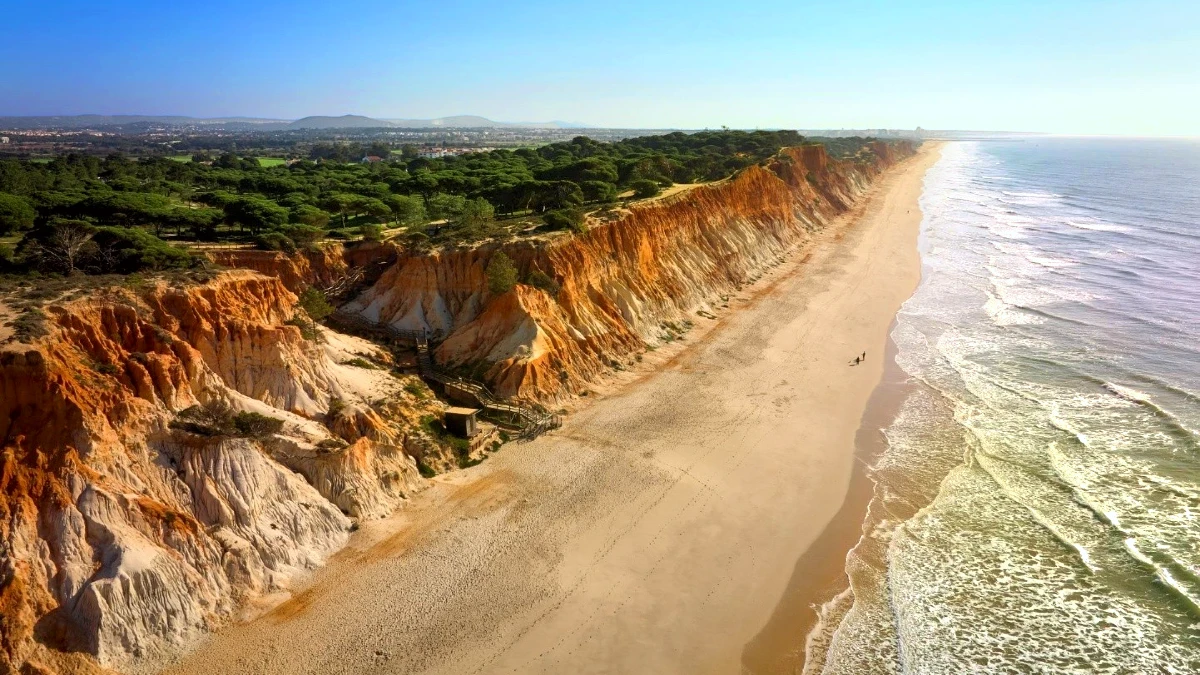
Praia da Falésia, famous for its golden sands and striking red cliffs, has been ranked Europe’s fourth-best beach in the 2026 Condé Nast Traveller Readers’ Choice Awards. The Algarve destination scored 94.70 points, making it Portugal’s highest-ranked beach in the European top 20.
With autumn bringing another wave of international tourism awards, Portugal has plenty to celebrate. Falésia finished behind Italy’s Sperlonga (96.67), Malta’s Blue Lagoon (96) and Turkey’s Patara Beach (95).
The ranking is based on readers’ preferences. More than 296,000 UK readers responded to the wider awards programme across all categories, rather than voting exclusively on beaches.
What makes Praia da Falésia so distinctive?
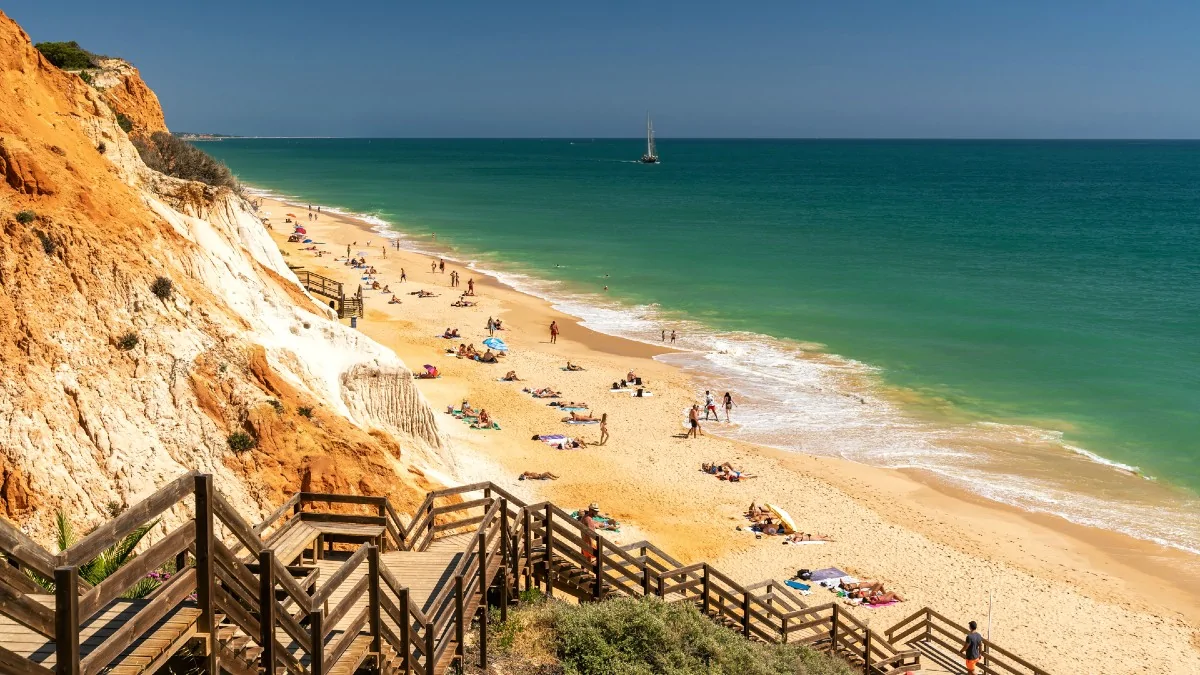
Unlike the small, secluded coves that feature in so many images of the Algarve, Praia da Falésia is defined by its extraordinary sense of space.
Stretching for several kilometres between the Albufeira area and the coastline towards Vilamoura, the beach offers a wide expanse of sand backed by some of southern Portugal’s most recognisable cliffs.
Their colours are part of the spectacle. Layers of reddish and orange sediment rise above the beach, contrasting with the green vegetation along the clifftops and the blue Atlantic beyond.
As the light changes throughout the day, the cliffs take on different tones. In the early morning or towards sunset, their warm colours can be particularly striking. The beach’s length is another attraction. Visitors can walk for considerable distances along the shore, with the landscape gradually changing from one section to another.
That combination of dramatic scenery and room to explore helps distinguish Falésia from the Algarve’s more compact beaches.
It is also a reminder that the region’s coastline is far from uniform. The Algarve contains everything from expansive sandy shores to sheltered bays, rocky headlands and limestone formations.
A second Algarve beach makes the European top 20
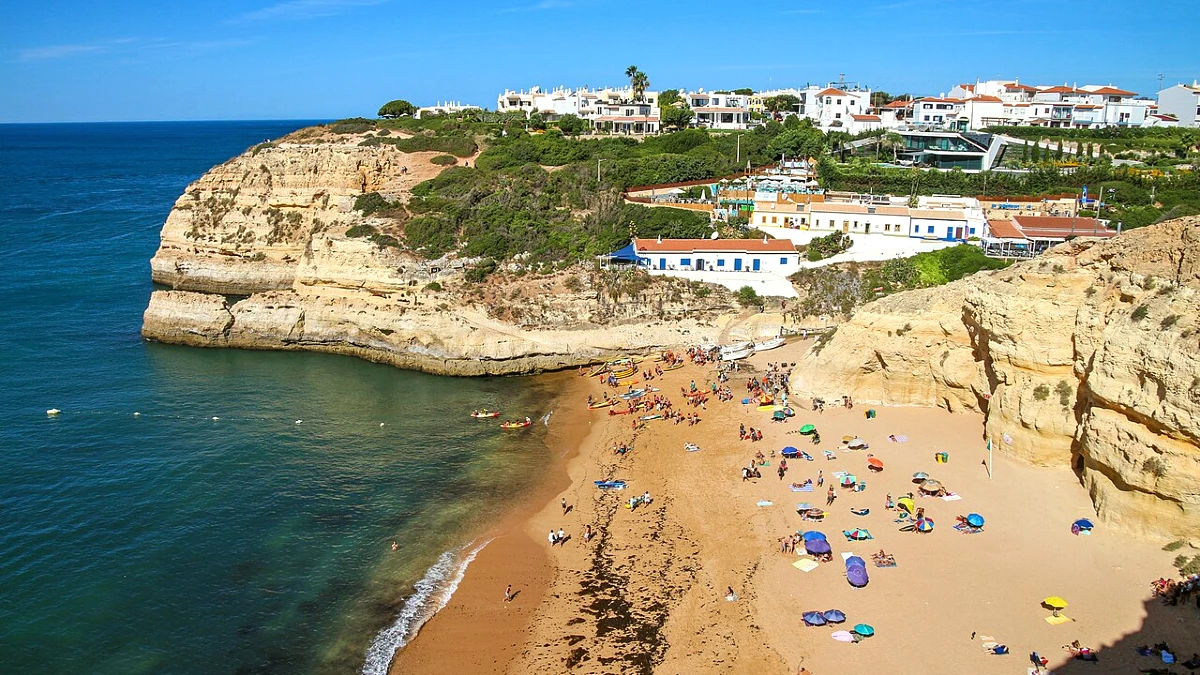
Portugal’s representation in the ranking does not end with Falésia. Praia de Benagil, in the municipality of Lagoa, placed 16th with 81.67 points, giving the Algarve two entries among Europe’s 20 highest-rated beaches in the readers’ selection.
The contrast between the two destinations is striking.
Where Falésia impresses through its length and sweeping cliffs, Benagil is known for its smaller coastal setting, limestone formations and proximity to one of Portugal’s most photographed natural attractions: the Benagil sea cave.
The cave’s distinctive opening in the roof allows daylight to illuminate the interior, creating a scene that has become internationally recognisable.
Benagil’s popularity also brings practical considerations. Access to the cave and activities in the surrounding waters are subject to safety rules and restrictions, so travellers should check current regulations rather than assume they can enter independently.
For anyone exploring the Algarve, the two beaches offer very different experiences of the same coastline: Falésia for long walks and expansive views, Benagil for a more enclosed landscape shaped by rock and sea.
Another award for an Algarve already in the spotlight
The Condé Nast Traveller ranking arrives during a particularly successful awards season for Portuguese tourism.
The Algarve was also named Europe’s Leading Beach Destination at the 2026 World Travel Awards, an industry competition in which the region has been recognised repeatedly over the years.
These are separate honours with different voting processes. The Condé Nast Traveller list reflects the preferences of participating readers, while the World Travel Awards recognise destinations and tourism businesses through their own nomination and voting system.
Neither should be interpreted as an objective declaration that one coastline is universally better than another.
For the Algarve, however, the two results reinforce its international visibility, particularly among travellers seeking beach holidays in southern Europe.
The municipality of Albufeira welcomed Falésia’s fourth-place finish, presenting it as recognition for the destination and the people working in local tourism. It also emphasised the importance of protecting the natural characteristics that make the beach distinctive.
That last point matters. Falésia’s cliffs are not simply a dramatic backdrop for holiday photographs; they are part of a changing coastal landscape. Visitors should respect warning signs and avoid lingering directly beneath unstable cliff faces.
For travellers considering the Algarve outside the peak summer months, the ranking offers another reason to explore its beaches at a slower pace. Even when swimming is less appealing, the coastal scenery remains a major attraction.
And at Praia da Falésia, it is easy to understand why the landscape continues to stand out: miles of sand, an open Atlantic horizon and those extraordinary red cliffs rising above the shore.